Key facts
- On Aug. 2, 2027, the moon will fully block the sun above Luxor, Egypt, for six minutes and 22 seconds, making it the longest total solar eclipse on land this century and the longest until 2114.
- NASA says the eclipse peak will be in Egypt, with totality also visible in Spain, Morocco, Libya and Tunisia, plus Saudi Arabia and Somalia, but not in Brazil.
- August temperatures in Luxor can rise above 104 degrees Fahrenheit (40 degrees Celsius), and the heat will affect the whole trip.
- There is speculation that river traffic on the Nile could be restricted, perhaps from the previous day, making it difficult to plan where to watch the eclipse.
Space.com says that if you are in Luxor, Egypt, on Aug. 2, 2027, you will see the moon fully block the sun for six minutes and 22 seconds, the longest land-based totality this century, with none longer expected until 2114. Partial phases run from 11:40 a.m. to 2:26 p.m. local time (EEST), with totality at 1:02 p.m. EEST, when the sun will be nearly overhead. NASA says the eclipse peak will be in Egypt, with totality also visible in Spain, Morocco, Libya, Tunisia, Saudi Arabia and Somalia, but not Brazil.
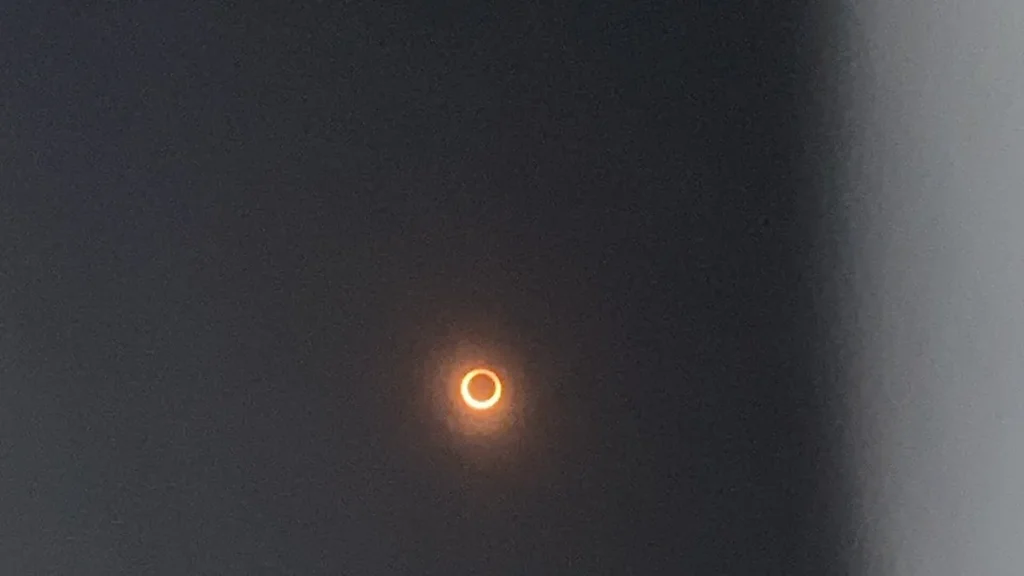
Parts of Brazil will see an annular eclipse on Feb. 6, 2027, lasting seven minutes and 51 seconds, since the Moon will be farther from Earth and too small to cover the Sun completely. Brazil’s next annular eclipse is set for Jan. 26, 2028, and will be visible in the North region.
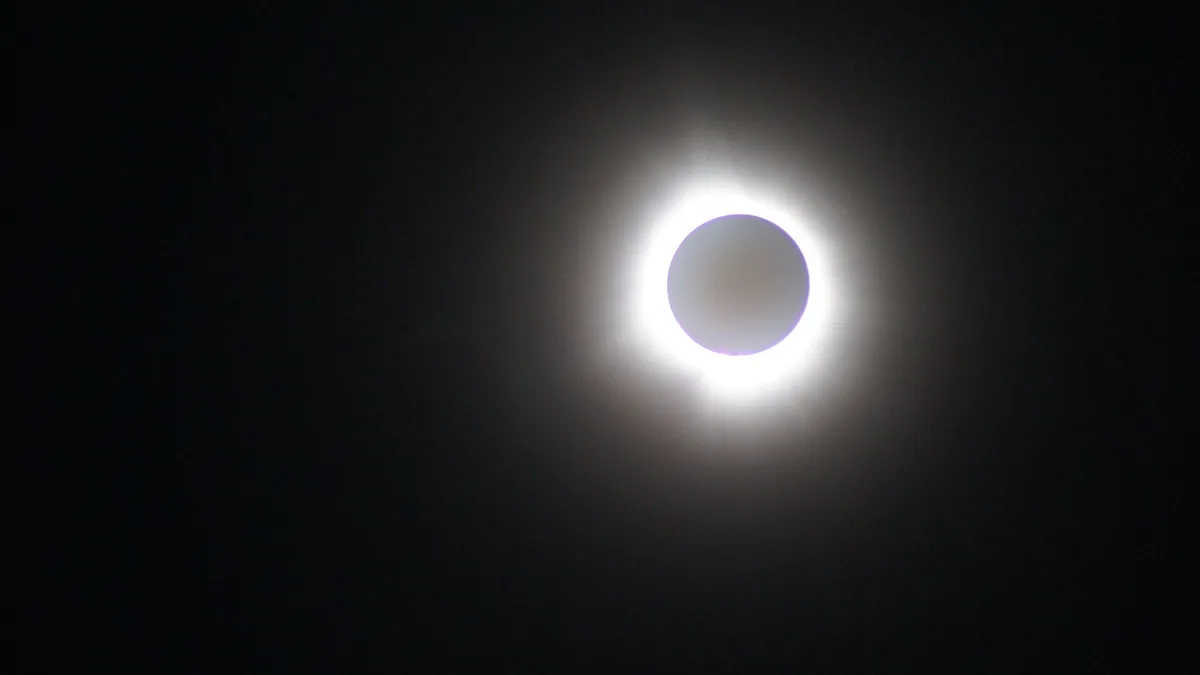
A total eclipse happens when the Moon’s central darkest shadow crosses Earth and the Moon aligns closely enough to block the Sun completely, making the sky intensely dark along the path for a few minutes, NASA says. This explains the basic celestial mechanics behind the Aug. 2, 2027 event. During totality the sky will fall short of full nighttime and resemble twilight about four minutes after sunset, Marcelo Domingues of the Brazilian Meteor Observation Network (Bramon) says, when some stars may be visible.
NASA projects about six minutes and 23 seconds of totality on Aug. 2, 2027, the longest eclipse expected for 87 years, while Space.com gives the land-based duration as six minutes and 22 seconds, a one-second difference. The agency says the eclipse will not beat the July 2009 record of six minutes and 39 seconds, and the next longer eclipse is expected on June 3, 2114, with totality of about six minutes and 32 seconds.
Luxor and Upper Egypt offer nearly certain clear skies in August, Space.com says, odds Space.com calls almost unheard of in eclipse chasing, though dust storms could hide the delicate structure of the solar corona, and airborne dust probably will not ruin the view. Space.com says the moon will arrive exactly on schedule, but weather, crowds, transport, equipment and people are less predictable. The writer will be in Luxor on Aug. 2, 2027, and has personally seen nine total solar eclipses around the world, and calls it the eclipse of the century. The author says the moon’s arrival is guaranteed but everything else about the trip is unpredictable.
Temperatures in Luxor can top 104 degrees Fahrenheit (40 degrees Celsius) in August, and the heat will affect your whole trip, not just the minutes of totality, Space.com says. Many tour groups plan to remain on hotel grounds or cruise ships during the eclipse to stay close to shade and air conditioning. One Egyptologist plans visits for early mornings and late afternoons with midday as quiet time. August is normally a quiet tourism month in Luxor because of oppressive heat, and the expected eclipse influx will create extraordinary pressure on hotels, roads, buses and archaeological sites.
About four million people live in Luxor’s surrounding urban area, and the August 2027 eclipse could draw chasers, tour groups, photographers and visitors, pressing hotels, roads, buses and archaeological sites, Space.com says; Space.com’s biggest concern is the logistical chaos rather than the number of viewers. Space.com points to Mallorca’s 2026 eclipse as an example of roads being shut unexpectedly. The episode shows official eclipse traffic plans can change quickly and create logistical chaos.
Waldram drove to a Mallorca viewing site at eight a.m.; authorities had planned 3 p.m. road closures, but 300 cars were already there and the road shut by 11 a.m. “They were going to start closing roads from 3 p.m. on the afternoon of the eclipse,” Waldram said.
Visitors could find popular archaeological sites overwhelmed, with crowded entrances and long queues at Karnak and Luxor Temple. Sites including Karnak, Luxor Temple, Hatshepsut and the Valley of the Kings could see packed entrances, lengthy lines and few amenities. Because the sun will be close to the zenith, column-framed totality photos may be more fantasy than reality, and you should avoid crowds among the area’s many temples and ruins. Waldram said eclipse chasers should stay away from a site crowded with 10,000 other tourists, and warned that hours in line at Karnak will not make for an enjoyable event.
Space.com reports speculation that river traffic on the Nile could be restricted, perhaps from the previous day, making it difficult to plan where you will watch the eclipse. Khaled ElSamman said sailing on the Nile might be restricted during the eclipse, and the group might end up confined to harbor. The Nile will likely be crowded with cruise ships, traditional dahabiyas and smaller boats during the eclipse, and neighboring vessels might play music, shout or shine bright lights. Space.com hopes nobody leaves floodlights on during totality, recalling lights coming on in boats in Falmouth harbor during the 1999 eclipse.
Khaled ElSamman, an Egyptologist at Nord Nile, will watch the eclipse from a traditional two-masted dahabiya in Luxor and plans early-morning and late-afternoon visits with midday as quiet time. ElSamman says reminders to drink water are easy to forget for visitors unaccustomed to the environment and humidity loss. He said the eclipse will have hiccups but is going to be amazing.
Space.com says Egyptian customs may class big cameras, long lenses and heavy tripods as professional filming gear with no special eclipse arrangements confirmed, while ordinary mobile phones and compact cameras can enter Egypt without issue. Egypt strictly restricts importing and operating drones and requires authorization, and Space.com says bringing a drone to the eclipse would be a mistake. Specialist camera equipment is vexing for eclipse chasers because professional-looking gear is usually difficult to get through customs, and Space.com treats drones as a separate regulatory problem from ordinary camera equipment.
Photographing the eclipse means pointing equipment at the sun for an extended period with solar filters during partial phases, and extreme heat could cause overheating for video or continuous recording, so you must keep your equipment shaded and cool. The Space.com author plans to rely on image-stabilized binoculars bought a decade ago.
Finding a comfortable position for the almost overhead eclipsed sun could make a big difference, with options such as lying flat or reclining on a boat deck, or even floating in a swimming pool. You will need to crane your neck for six minutes during totality. The Space.com author plans to carry water and use a wet towel for cooling during the eclipse.
Space.com says eclipse-week rooms in Luxor hotels, lodges and Airbnbs cost about $600 per person per night, roughly seven times the usual rate, and prices may climb higher. Reservations can be canceled weeks ahead for spurious reasons, owners of remaining hotels and boats are refusing to commit while waiting for higher prices, and Egypt’s average wage is $150-200 per month.
Goway is selling a 10-day Chasing Totality: Egypt & Red Sea Solar Eclipse itinerary for Aug. 2, 2027, with viewing at Akassia Marsa Alam’s Roman-style theater and more than five minutes of total darkness. The package includes five nights at a deluxe Red Sea resort in Marsa Alam and four nights at a deluxe hotel in Cairo. It also offers Egyptologist-led tours of the Grand Egyptian Museum, the Pyramids of Giza and Khan el-Khalili Bazaar among other Cairo landmarks. The operator markets the trip as combining Cairo landmarks with a Red Sea resort and hosted eclipse viewing rather than a standalone sightseeing event.
Nile cruise eclipse programs are sold out or have limited availability, Goway says, so it created a Red Sea alternative advisors can sell with confidence. Bronwyn Hodge, Goway’s VP of Africa & Middle East, said most Nile cruise eclipse programs are already booked or have extremely limited space. “Goway has developed an exciting alternative on the Red Sea coast,” Hodge said. Hodge describes the result as a more relaxed and immersive way to experience the eclipse and explore Egypt’s wonders.
Goway has obtained a limited allotment for the eclipse event and recommends that travel advisors book early. Travel advisors can earn $50 in September through the GowayPro Loyalty Program for Egypt bookings.



Join the discussion