Key facts
- Once orbiting separately, the European and Japanese craft will study Mercury's dense interior, magnetic field, craters, volcanic plains, ridges, and peaks up to 3 miles (4 1/2 kilometers) high.
- BepiColombo launched on October 20, 2018, on an Ariane 5 rocket from Kourou, French Guiana.
- Arrival used "weak capture," drifting into Mercury's grip on a loose path before a burn created a true orbit; Ignacio "Nacho" Clérigo said no one has tried this with a planet before.
Two linked spacecraft entered orbit around Mercury on Nov. 21, 2026, after eight years of travel through the inner solar system.\n\nThe European-Japanese mission called BepiColombo will see its two linked spacecraft separate next month. They will map the planet and study it from different altitudes. It includes the Mercury Planetary Orbiter from the European Space Agency and Mio from the Japan Aerospace Exploration Agency, also known as the Mercury Magnetospheric Orbiter.\n\nOne orbiter will observe the planet itself, and the other will study the space environment around it. It carries a $2 billion price tag, or 1.7 billion euros.\n\nLiftoff came Oct. 20, 2018, aboard an Ariane 5 rocket from Kourou, French Guiana.
It relied on gravity assists from Earth one time, Venus two times, and Mercury six times to reach the planet on a slower path, using repeated flybys of planets to reduce speed against the Sun’s pull. The trip covered more than 6 billion miles, which equals 10 billion kilometers. Those looping maneuvers account for the long distance. The linked craft dropped its propulsion module, also called the engine module, on Sep. 3 before entering orbit. The craft arrived through “weak capture,” drifting into the planet’s hold on a loose path until a burn established a true orbit. Ignacio “Nacho” Clérigo said this kind of planetary arrival has not been attempted before.
Ion thrusters generated thrust roughly equal to two sheets of paper on a hand, and they operated for two years.\n\nESA shared the news on social media after thruster burns slowed the spacecraft enough for Mercury’s weak gravity to pull it in. Controllers in Germany, about 94 million miles or 152 million kilometers from Mercury, spent several anxious hours confirming orbit. Staff reviewed the incoming data, and more details were not available right away.\n\nBepiColombo marks just the third spacecraft to visit Mercury and the first visitor in over ten years. The mission ranks as the second to orbit Mercury and the first to station two orbiters there simultaneously.
Earlier visitors included NASA’s Mariner 10 in the 1970s and Messenger in the 2010s. Mercury ranks among the least explored planets in the solar system, with only Uranus and Neptune receiving fewer visitors, namely Voyager 2 in the 1980s. Earth lies relatively nearby, yet Mercury has attracted few missions. Separation is set for December 9 and 10, after which the orbiters will enter independent polar paths. Science operations are expected to start in April 2027 as the orbit tightens and transfers occur. Geraint Jones, the project scientist, said measurements made at the same time by two spacecraft will begin next spring. Officials hope to operate the mission for at least one Earth year, which equals four Mercury years.
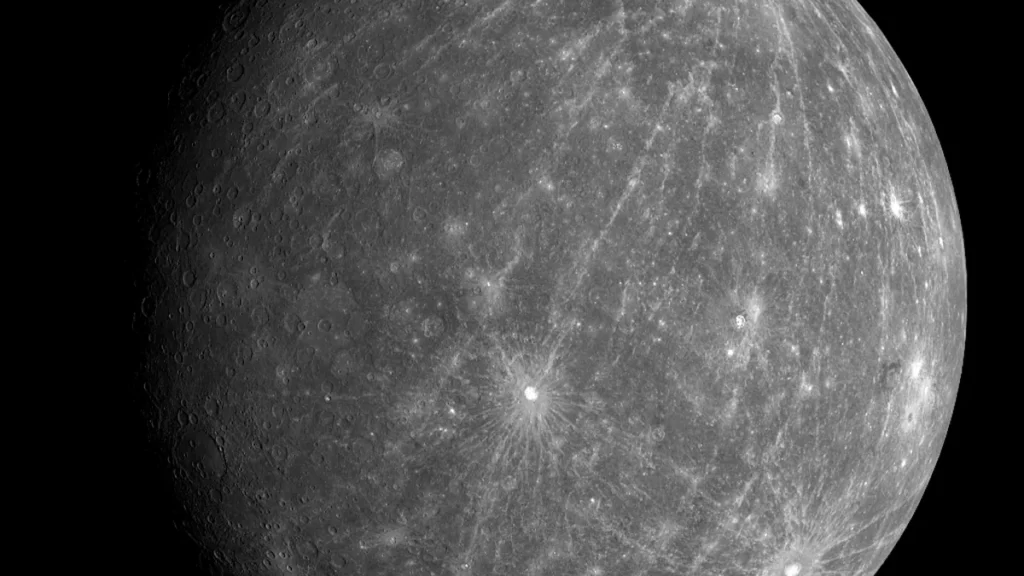
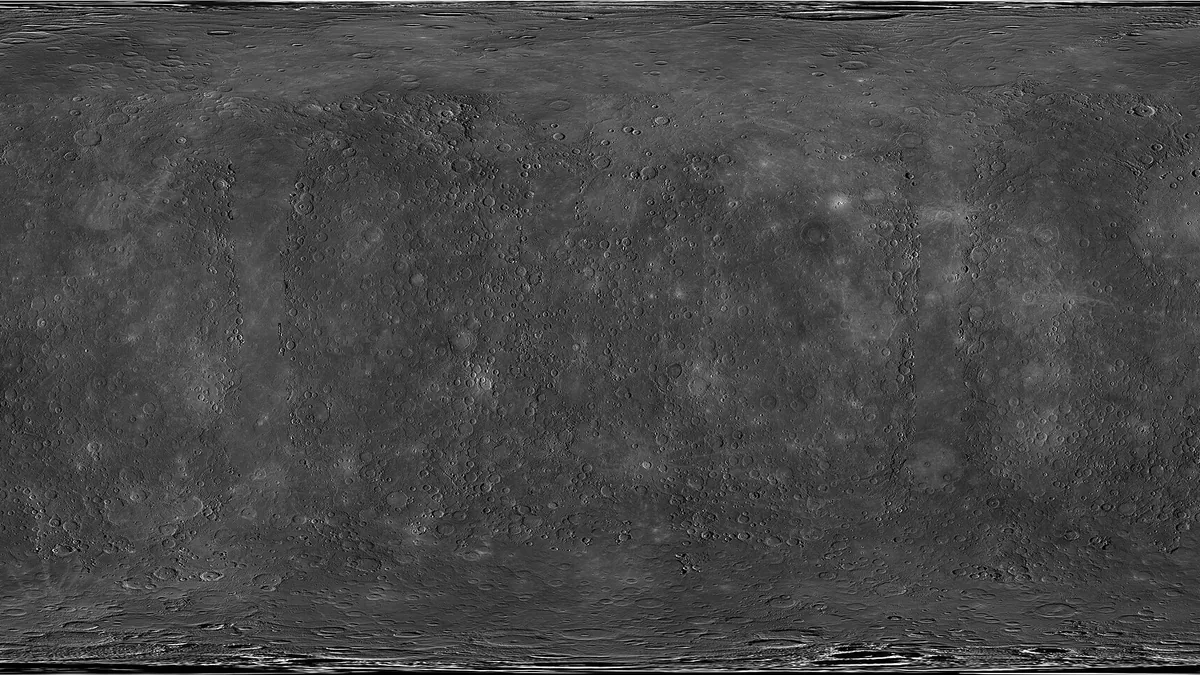
Jones, the lead project scientist, said he looks forward to receiving new data in the spring.\n\nAfter separation, the European and Japanese spacecraft will examine Mercury’s interior, magnetic field, craters, volcanic plains, ridges, and peaks reaching 3 miles, or 4 1/2 kilometers, in height. The paired orbiters will chart the rough terrain and investigate the large iron core.\n\nMercury stands alone among rocky planets besides Earth in having a global magnetic field, and researchers want to know if its large liquid core contains a solid center. Mercury’s temperatures can rise above 800 degrees, or 427 Celsius, and the surface swings from under -290 degrees Fahrenheit at night to over 750 degrees by day. Maintaining cool temperatures for the craft and its instruments presents a major technical difficulty.\n\nResearchers expect the findings to reveal how rocky planets such as Earth form and evolve near their star.
“The spacecraft and its instruments need to be kept as cool as possible, which is a huge technical challenge in itself,” Geraint Jones said.\n\n”It’s a very difficult mission and very challenging because we are flying into a very, very harsh environment,” Bruno Sousa, ESA’s head of operations definition and engineering, said. Getting to Mercury is more difficult than traveling to Pluto since the craft must shed enough energy to avoid flying past the planet.\n\nBepiColombo takes its name from Italian mathematician and engineer Giuseppe “Bepi” Colombo, whose gravity-assisted steering work aided earlier Mercury missions and shaped this mission’s path. Colombo was part of the Mariner 10 team. A thruster power problem in 2024 held up arrival by almost a year.
In Sep. 2024, the spacecraft flew within roughly 100 miles of Mercury, a closer planetary pass than any before.




Join the discussion