
Key facts
- Roman's Wide Field Instrument is a 300-megapixel infrared and near-infrared imager with 18 4K detectors designed to survey the universe about 1,000 times faster than the Hubble Space Telescope.
- Roman also carries a Coronagraph Instrument demonstration designed to block starlight and directly image exoplanets, including Jupiter-like planets, using an electron-multiplying CCD to detect faint reflected starlight.
- Roman's science goals include exploring dark matter, dark energy, and exoplanets, with surveys supporting a broad range of research far beyond the mission's main objectives.
- NASA will post a recording of the media briefing on the AGU website once the embargo lifts at 3:30 p.m. on Dec. 7, and will offer embargoed interviews to registered media after the briefing concludes.
NASA plans to unveil the first pictures from the Nancy Grace Roman Space Telescope during a livestream at the American Geophysical Union Annual Meeting in San Francisco on Monday, Dec. 7, 2026, beginning at 3:30 p.m. EST.
The agency will put a recording of the media briefing on the AGU website when the embargo ends at 3:30 p.m. on Dec. 7, and registered media can receive embargoed interviews once the briefing finishes. Jared Isaacman, the NASA administrator, will take part in a fireside chat at the AGU meeting at 2:45 p.m. EST on Dec. 7. Journalist Alex Witze will moderate the discussion, which will cover Earth and space science and NASA’s advancing role. Members of the public can claim a pixel from one of Roman’s chosen first images and receive a digital trading card containing key details that they can share on NASA social accounts.
Roman lifted off Aug. 30, 2026, from NASA’s Kennedy Space Center in Florida on a SpaceX Falcon Heavy rocket, starting a three-month, million-mile journey toward the Sun-Earth Lagrange Point 2, a point about a million miles from Earth. While traveling to its destination, the observatory has gone through commissioning, with teams switching on its systems, adjusting them, calibrating them, and getting them ready for science work during a roughly three-month commissioning, calibration, and testing period. Under an earlier plan, NASA expected to release the first images by early 2027; the Dec. 7 event replaces that timeline.
The Wide Field Instrument aboard Roman is a 300-megapixel imager that sees in infrared and near-infrared light, using 18 4K detectors to scan the universe roughly 1,000 times faster than the Hubble Space Telescope. The mission serves as Hubble’s successor, matching Hubble’s mirror size and observing in visible and infrared light while offering a field of view up to 200 times larger. The James Webb Space Telescope sees more sharply, but its much smaller field of view makes it impractical for watching millions of objects at once, while Roman pairs high resolution with a wide field.
Roman will return to the same areas of sky repeatedly to record changes that play out over periods ranging from hours to years, something no single image could show. Watching the same regions again and again exposes different physical processes as objects evolve. The mission’s two main surveys will examine different parts of the sky: the High-Latitude Time-Domain Survey will look at distant events such as supernovae, while the Galactic Bulge Time-Domain Survey will watch the crowded center of the Milky Way.
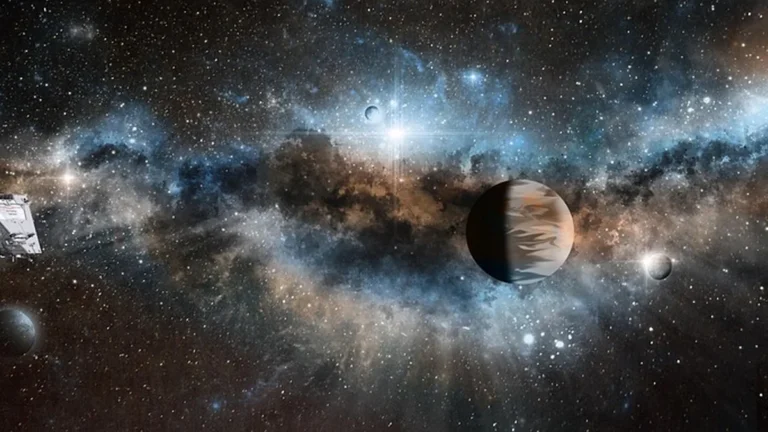
Microlensing happens when the gravity of a passing object bends and brightens light from a more distant star behind it. The passing object might be a star, a planet the size of Mars, or a black hole hundreds of times the mass of the sun. The Galactic Bulge Time-Domain Survey will observe the Milky Way’s crowded center and use microlensing to locate these objects. Thousands of stars, along with gas and dust, block the view of the center to the naked eye, but Roman can pick out individual stars and use them as a background.
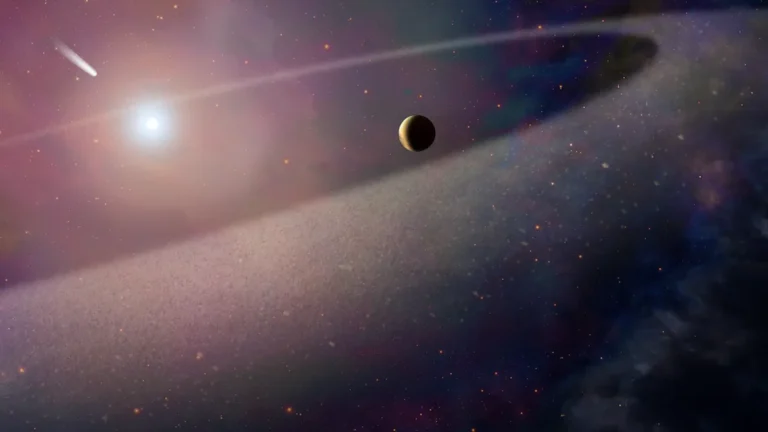
Astronomers predict Roman will discover roughly 100,000 transiting planets, which block a little starlight as they cross in front of their stars, because of the large number of stars in the galactic bulge. Transits are one of two ways Roman will hunt for planets; microlensing is the other.
Roman will examine how the smallest and coolest stars spin and behave, focusing on those cooler than about 2,500°C (4,500°F), by watching magnetic spots and clouds move in and out of sight as the stars rotate. As these dim, red stars turn, spots and clouds appear and disappear, allowing astronomers to measure how fast they spin. TESS has scanned nearly the whole sky across eight years and recorded rotation periods for hundreds of small stars, yet its visible-light views and limited resolution make crowded regions difficult to study. Roman’s wide-field, high-resolution, near-infrared views can greatly expand the number of small stars studied, showing how their surroundings differ and helping astronomers learn about the planets around them.
Dark matter, dark energy, and exoplanets anchor Roman’s science goals, and its surveys will support a wide range of research extending well beyond the mission’s core objectives. The Wide Field Instrument will chart dark matter across the largest scales by studying the distribution of matter, and physicists hope to determine the structure of dark matter super-threads believed to run through the universe. Physicists currently think the network of dark matter super-threads runs through the universe like a root system. Roman’s sharp, wide-field views can also shed light on dark energy, which many astronomers believe drives the universe’s expansion, by following how matter moves through time.
A Coronagraph Instrument demonstration aboard Roman also aims to block starlight and directly photograph exoplanets, including ones like Jupiter, using an electron-multiplying CCD to pick up faint reflected starlight. Roman cost roughly $4 billion in 2021 dollars, or about $5 billion in current dollars, and will run for a five-year primary mission plus another five years, with the possibility of operating for 20 years or more. By comparison, Hubble cost roughly $20 billion when adjusted for inflation.
NASA’s Goddard Space Flight Center in Greenbelt, Maryland, oversees Roman, working with the Jet Propulsion Laboratory, Caltech/IPAC, and the Space Telescope Science Institute. Leading industrial partners include BAE Systems, Inc., L3Harris Technologies, and Teledyne Scientific & Imaging. International contributions include ESA, JAXA, France’s CNES, and Germany’s Max Planck Institute for Astronomy. A science team drawn from multiple research institutions also takes part.
Jared Isaacman said, “Delivered ahead of schedule and on budget, this mission reflects more than a decade of dedication from the NASA workforce and our industry partners.” Isaacman serves as NASA administrator.
The first images come near the end of commissioning and ahead of the wider science program, offering a preview of the deep panoramic views Roman will use to study dark energy, dark matter, and exoplanets. Because Roman surveys the sky about 1,000 times faster than Hubble, its Wide Field Instrument can gather far more observations over the mission’s lifetime, which matters for surveys that follow sky changes across periods from hours to years. Roman pairs sharp images with a wide field of view, closing a gap between Hubble and the James Webb Space Telescope, which sees more sharply but has a field too small to watch millions of objects at once.

Join the discussion