
Key facts
- A U.K.-built instrument aboard the ESA-JAXA BepiColombo spacecraft returned its first observations of a bright X-ray source during cruise to Mercury.
- MIXS could see into space and make calibration measurements only in September after the Mercury Transfer Module separated from the joined science orbiters.
- The main MIXS observation sequence used 55 spacecraft slews and 39 hours of observations on September 11-12.
- MIXS angular resolution is slightly better than its 2015 laboratory measurement.
The U.K.-built MIXS instrument aboard the ESA-JAXA BepiColombo spacecraft returned its first observations of a bright X-ray source on November 20, 2026, while cruising toward Mercury.
The composite spacecraft will enter orbit around Mercury on November 21, 2026. The arrival phase began on September 3 when the Mercury Transfer Module separated from the joined science orbiters. After orbit insertion, the Mercury Planetary Orbiter and the Mercury Magnetospheric Orbiter, or Mio, will separate from each other on December 9-10. Science operations begin in April 2027.
MIXS gained its first view of space only in September, after the Mercury Transfer Module separated from the Mercury Planetary Orbiter and Mio. That separation let calibration measurements proceed before orbit insertion. The main observation sequence used 55 spacecraft slews and 39 hours of observations on September 11-12. The team pointed the telescope at the Crab Nebula, a well-known X-ray source about 6,500 light-years away, to work out MIXS performance characteristics in space.
Measuring how much the Crab Nebula image spreads across the detector lets scientists determine angular resolution, or how sharply MIXS will distinguish features on Mercury’s surface. Early results show the angular resolution is slightly better than the instrument’s 2015 laboratory measurement. MIXS’s detector has also shown no radiation damage after eight years in space, according to principal investigator Emma Bunce. Bunce said the instrument is generally performing fantastically well.
Bunce leads MIXS and heads the University of Leicester’s Institute for Space. She said there are no image effects associated with stray light, which happens when optical photons get in when they should not. The team continues to see effects from galactic cosmic rays and understands them, she added.
We have waited a long time to make measurements with MIXS and it is fantastic to see it operating brilliantly in space.
Emma Bunce, Phys.org
Some self-fluorescence appears when the sun illuminates the optic, but it will not affect dayside observations of Mercury’s surface. MIXS will be fine-tuned during the Mercury commissioning phase before the science phase. The team is still studying some instrument effects and expects to undertake optimization procedures to prepare the telescope for science operations after orbit insertion.
About eighty percent of MIXS technology is new, Bunce said, and she credited the engineering and technical team and international partners who worked over many years to build it. No other planetary science mission has flown an imaging X-ray telescope like MIXS before. Developed by a Europe-wide consortium led by the University of Leicester and supported by the UK Space Agency, MIXS is the only BepiColombo science instrument led by the United Kingdom.
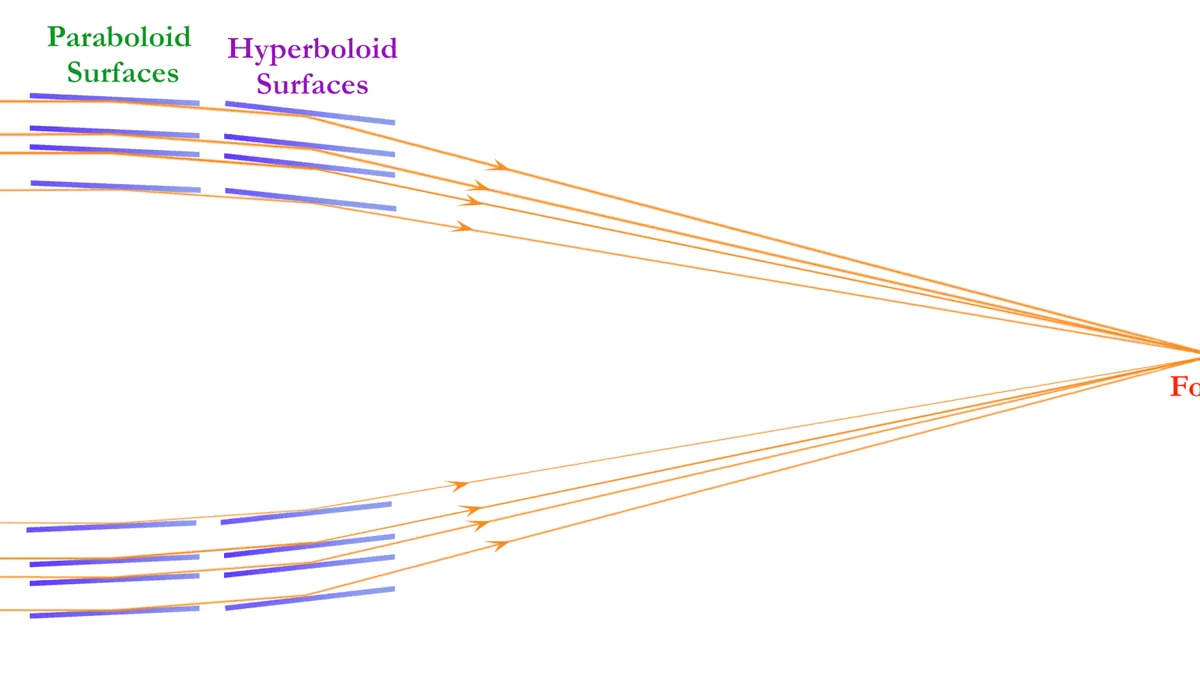
MIXS will determine Mercury’s surface composition by measuring fluorescent X-rays from rocks stimulated by high-energy solar X-rays, assisted by the Solar Intensity X-ray and particle Spectrometer, or SIXS. It will also observe nightside X-rays produced by magnetospheric particles. Those observations will investigate the connection between Mercury’s space environment and its surface. Working with other instruments, MIXS will map Mercury’s surface atomic composition in fine detail.
BepiColombo began its journey on October 20, 2018, launching from Kourou, French Guiana. Its path included one Earth flyby, two passes of Venus, and six Mercury flybys after the 2018 launch. The flybys helped put on the brakes because orbiting Mercury is difficult as the spacecraft picks up speed near the sun. Before BepiColombo, only NASA’s Mariner 10 and MESSENGER had visited Mercury.
Scientists hope to solve five mysteries about the planet: where it came from, whether there is water, whether it is dead or alive, why it is dark, and why it has a magnetic field. The mission plan calls for at least one year in orbit around Mercury. BepiColombo will use high-resolution instruments to study mineralogical and elemental surface composition, scan polar regions for ice, and look for changes since MESSENGER visited 10 years earlier. Both orbiters will travel through different areas of the magnetosphere.
BepiColombo’s ion engine is the most powerful ever mounted on a spacecraft and emits 290mN. Mission goals include examining Mercury’s shape, geological makeup, internal layout, craters, and thin atmosphere. The goals also include studying the formation of a planet close to its host star and verifying aspects of Einstein’s theory of relativity.
MIXS instrument scientist Adrian Martindale joined the mission in 2003 while still an undergraduate. He said the last time the team could see through the telescope it was in a basement under the University of Leicester’s School of Physics and Astronomy. Professor George Fraser was the original MIXS principal investigator and designed the novel optic before his death in March 2014.


Join the discussion