Key facts
- The object appeared as a bright streak smeared across several images and was surrounded by a fuzzy cloud, a sign of an active comet shedding dust and gas.
- Euclid was designed to map distant galaxies and study dark matter and dark energy, not to track comets and asteroids.
- Euclid's six-year mission avoids sky areas laden with comets and asteroids, and its step-and-stare approach generally images each region only once.
- Visible stars, planets and galaxies account for only about 5 percent of the universe, while dark matter makes up roughly 27 percent and dark energy about 68 percent, said Alessandra Silvestri.
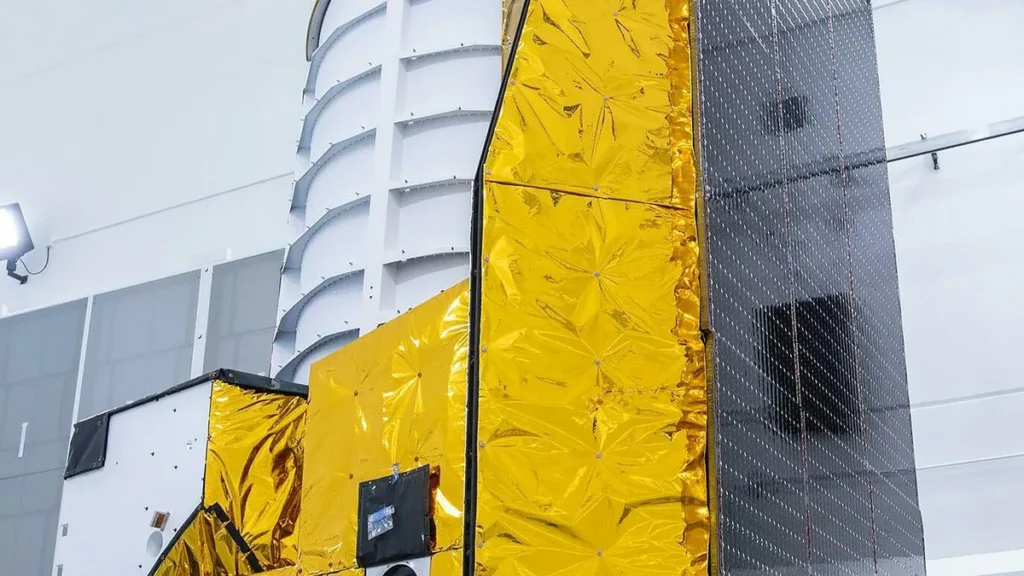
The European Space Agency’s Euclid telescope captured its first new comet, C/2026 S1 (Euclid), in images taken between September 16 and 24, 2026, about 1.3 billion kilometers from Earth.
That puts the comet roughly between Jupiter and Saturn as measured from the Sun, placing the icy body in the outer solar system.
Mikko Pöntinen, a researcher at the University of Helsinki, found the comet using software he built himself to flag moving bodies in the solar system within Euclid’s images. He worked on the detection with the Euclid Consortium’s Solar System Objects Science Working Group. He saw signs of the comet in five image sets spanning five fields of view over several days in the Deep Field North region.
In the images, the object looked like a bright streak smeared across several frames, with a fuzzy cloud of gas and dust around it from an active comet. Before reporting it, Pöntinen checked existing comet and asteroid catalogs and found no match, then sent his observations to the International Astronomical Union’s Minor Planet Center, which prompted ground-based follow-up observations. He said he felt excited when his software flagged the streak.
The comet travels on a multi-thousand-year orbit that stays far above the plane of the planets’ path around the Sun. Under its step-and-stare approach, Euclid images each region just once, so sightings of a moving object across several days were unusual.
The six-year mission steers clear of sky areas crowded with comets and asteroids, and the telescope was built to chart faraway galaxies and study dark matter and dark energy rather than comets and asteroids. Those design choices limit opportunities to follow moving objects across time. Bruno Altieri, Euclid archive scientist, described it as a happy coincidence: “Very few comets are expected to be discovered by Euclid so it was a happy coincidence”
Spotting moving objects serves Euclid’s primary science because comet trails and stray light can interfere with precise measurements of faraway galaxies. The detection also gives ESA teams a real test case for coordinating with the future Comet Interceptor mission, though this comet is not a suitable target, said Valeria Pettorino, Euclid Project Scientist, who said researchers elsewhere can now follow up on the new comet.
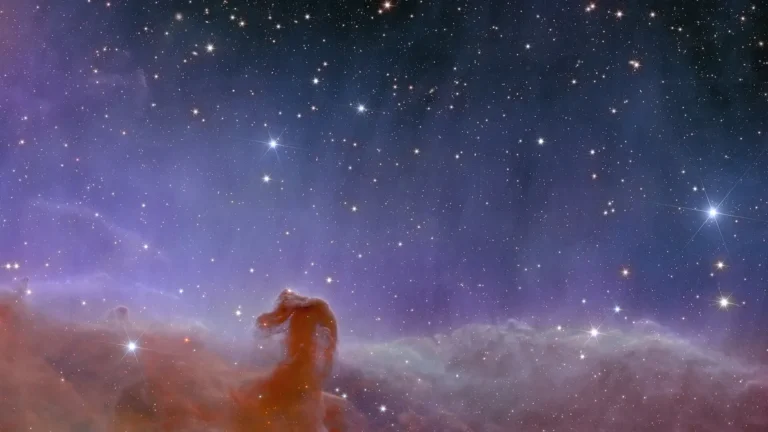
The telescope launched on July 1, 2023, for a six-year mission to build the largest, most detailed map of the universe and picture one third of the whole sky. Its wide-field view covers more than 100 times the sky per image compared with Hubble or the James Webb Space Telescope, and the spacecraft sends down around 20 new images daily.
The first major data release spans an area almost 10,000 times as large as the full moon and catalogs about 900 million galaxies and 60 million quasars, adding up to roughly 2.5 trillion pixels and 1.7 million gigabytes. The release logged more than a billion objects during 13 months of observing. Carole Mundell, ESA science director, called the release “This major Euclid data release represents the largest space-based survey of its kind,” and said it demonstrates the strength of European technology, science and international collaboration.
Only about 5 percent of the universe consists of visible stars, planets and galaxies, while dark matter makes up roughly 27 percent and dark energy about 68 percent, said Alessandra Silvestri. Euclid studies that dark part of the cosmos, serving as a dark-universe detective working to pin down what makes up the rest of it. Silvestri said the first results of tests on whether gravity’s laws hold across cosmic scales are due in June 2027, and she framed the stakes with a question: “Is our current understanding of gravity complete, or not?”
Some galaxies in the dataset existed when the universe was just 700 million years old, only 5 percent of its current age, offering researchers insight into how the universe changed over time. Researchers have already published 20 scientific papers on the data and their first analyses, with dozens more still in the pipeline, and combined cosmological analyses of the observations are the next major step.


Join the discussion