Key facts
- The Planetary Society assesses how SpaceX’s Starship success and ULA’s Vulcan failure reflect on the health of the commercial launch sector and what those outcomes mean for NASA’s future access to space.
- The day after Starship flew, United Launch Alliance's Vulcan failed to reach orbit while launching 40 Amazon Leo communications satellites on a return-to-flight mission after a partial failure the previous year.
- It is unclear how much Falcon capacity SpaceX will preserve for U.S. government needs or for how long.
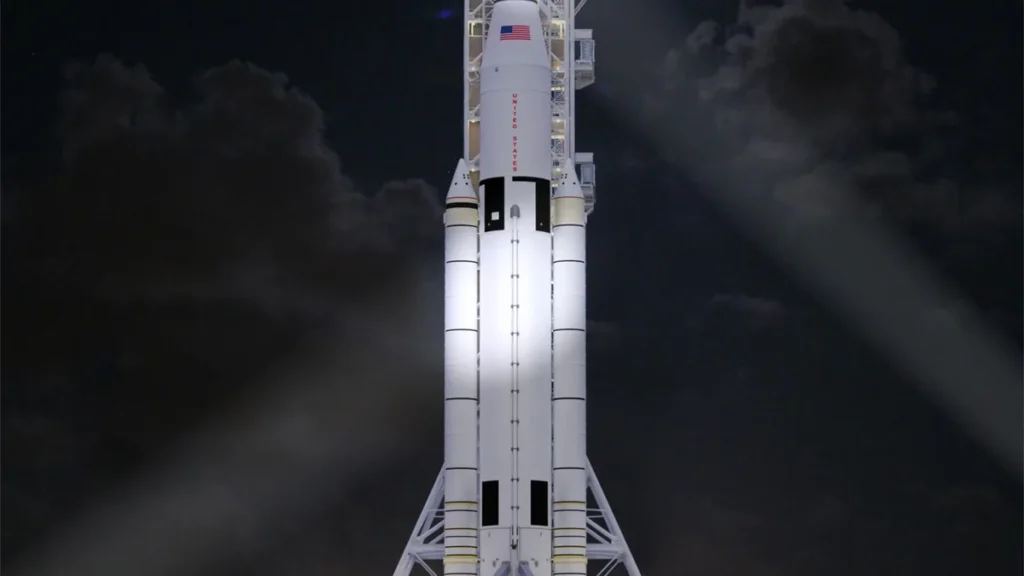
SpaceX’s Starship reached orbit on Nov. 14, deployed Starlink satellites, returned to its launch site and the launch tower’s chopsticks arms caught it, while United Launch Alliance’s Vulcan failed to reach orbit the following day while carrying 40 Amazon Leo communications satellites on a return-to-flight mission after a partial failure the previous year, according to The Planetary Society.
The Planetary Society assesses how SpaceX’s Starship success and ULA’s Vulcan failure reflect on the health of the commercial launch sector and what those outcomes mean for NASA’s future access to space. The publication calls the Starship flight a historic milestone for the world’s largest, most audacious rocket, contrasting it with a conventional rocket failing the next day. The assessment uses that juxtaposition to weigh the condition of a market where one company has captured most of the demand. The Planetary Society also asks what the paired results imply for NASA’s future access to space.
The Planetary Society assesses that SpaceX dominates the U.S. launch industry to the point where government and commercial space companies functionally depend on one company to place their assets into space. The assessment says SpaceX’s achievements have made the U.S. launch industry lopsided. Both government and commercial space companies now rely on one firm to place assets in orbit. This dependence shapes the stakes of Starship’s success and Vulcan’s failure.
The Planetary Society frames the issue as a consequence of one firm carrying the load for both government and commercial spaceflight.
Vulcan is a single-use medium-to-heavy-lift rocket built by the Boeing-Lockheed Martin joint venture United Launch Alliance, and its primary customer is the U.S. national security market. The rocket failed while launching 40 Amazon Leo communications satellites. The flight was a return-to-flight attempt after a partial failure the previous year. It did not reach orbit.
Its main customer is the U.S. national security market.
SpaceX Chief Executive Elon Musk has stated that SpaceX will wind down Falcon 9 and Falcon Heavy rockets once Starship flies reliably because space-based AI data centers and Starlink are so lucrative. Musk linked the wind-down to the profitability of space-based AI data centers and Starlink. The statement implies Starship will replace Falcon for SpaceX’s own priorities. This creates uncertainty for customers who currently book Falcon launches.
SpaceX’s stated shift would leave Falcon’s external customers without a guaranteed future manifest.
Using Starship to deploy space-based AI data centers as rapidly as possible interests SpaceX more than allocating capacity to other customers, The Planetary Society said. The Planetary Society links this priority to Musk’s stated plan to wind down Falcon 9 and Falcon Heavy once Starship flies reliably. That preference means SpaceX reserves Starship for its internal projects rather than external buyers. External customers face reduced access to SpaceX launch capacity as a result.
Bookings for both upcoming rideshare missions and new commercial flights on Falcon have reportedly been halted. The Planetary Society reports these moves as evidence that SpaceX is deprioritizing external launch customers. A private company does not have to provide launch services to outside customers or to the government, and NASA is no longer a big enough customer for SpaceX, according to the assessment. The Planetary Society calls this a novel risk of commercial-led launch, where nurturing a commercial industry worked too well.
It is unclear how much Falcon capacity SpaceX will preserve for U.S. government needs or for how long, The Planetary Society said. The Planetary Society says it appears some capacity will be preserved, but the details are uncertain. The uncertainty means government planners do not yet know how much Falcon will remain available for public missions. The lack of a firm commitment complicates long-term planning for U.S. government space access.
Since 2020, seven out of every 10 NASA launches have been on SpaceX rockets, The Planetary Society reported. The Planetary Society presents this figure to show NASA’s dependence on SpaceX for space science missions. Eight upcoming NASA science missions, including Dragonfly, NEO Surveyor, and the Rosalind Franklin Rover, will launch on SpaceX rockets. The Planetary Society says these consequences affect NASA’s space science missions.
Starship has no means to deploy most military and NASA payloads once in space because its Pez dispenser-like system is custom-designed for Starlink satellites, The Planetary Society said. The Planetary Society says this limits Starship’s government utility even though it can send large payloads to space.
SpaceX could build a disposable upper stage with a standard payload fairing, but there are no indications this is a priority, according to The Planetary Society. The Planetary Society raises this as a possible but unlikely path to making Starship compatible with military and NASA payloads.
Some spacecraft going beyond the Moon would need a dedicated kick stage beyond what Starship could provide, The Planetary Society said. The Planetary Society says this remains true even if Starship had a standard fairing, limiting deep-space utility.
Potential Falcon 9 replacements under development include Rocket Lab’s Neutron, ULA’s Vulcan, Blue Origin’s New Glenn, and Relativity Space’s Terran R, but all face delays and none will immediately replicate Falcon 9’s reliability and launch cadence, The Planetary Society said. The Planetary Society lists these as the handful of alternatives to Falcon 9 after Vulcan’s failed flight. Rocket Lab’s Neutron has been delayed to 2027, while Relativity Space’s Terran R has shared no public timeframe for first launch.
Blue Origin’s New Glenn suffered a pad explosion that temporarily derailed its launch capacity. This is one of the setbacks delaying potential alternatives to Falcon 9, alongside Vulcan’s failed flight. The Planetary Society cites these schedule uncertainties among the potential replacements for Falcon 9.
Many in the space industry and in federal agencies with space-based assets are growing increasingly anxious about launch vehicle availability in the coming years, The Planetary Society said. The Planetary Society attributes this anxiety to Vulcan’s failure and the absence of immediate alternatives to Falcon 9.
The NASA Administrator is now presenting the Space Launch System and Orion as the agency’s primary long-term access to the Moon after they were once considered likely for cancellation in the wake of Starship, according to The Planetary Society. The Planetary Society describes this as a reversal in NASA’s posture toward SLS and Orion. The change follows a period when Starship’s rise made SLS and Orion appear vulnerable to cancellation.
SpaceX will wind down the Dragon crew capsule, forcing NASA to rely on Boeing’s troubled Starliner for low Earth orbit rides after 2030, according to the assessment. The Planetary Society connects this crew transition to SpaceX’s shift away from Falcon and toward Starship.
Musk said, “it doesn’t make sense to retain limited engineering resources on older rockets such as Falcon when Starship is the company’s top priority”. The remark explains SpaceX’s plan to concentrate engineering work on Starship instead of maintaining older vehicles.
No other company has come close to competing with SpaceX on reliability or availability, and none will do so anytime soon; the conservative approach is not a guaranteed path to stability. The Planetary Society concludes that NASA and customers must hope the launch industry can provide enough options soon to replace capability SpaceX is keeping for itself.




Join the discussion