Key facts
- The work supports NASA's Artemis goal of a sustained lunar presence by enabling food production on the moon instead of costly Earth resupply.
- Lunar-grown potatoes showed no statistically significant increase in glycoalkaloids, toxins linked to green skin discoloration, and maintained nutritional quality.
- The team tested five regolith simulants representing lunar mare and highland regions and used Hermiston, Oregon soil, known for the world's highest potato yields, as a control.
- Potatoes were chosen for their high calorie output per growing area, substantial nutritional value, and role as a staple food on long missions.
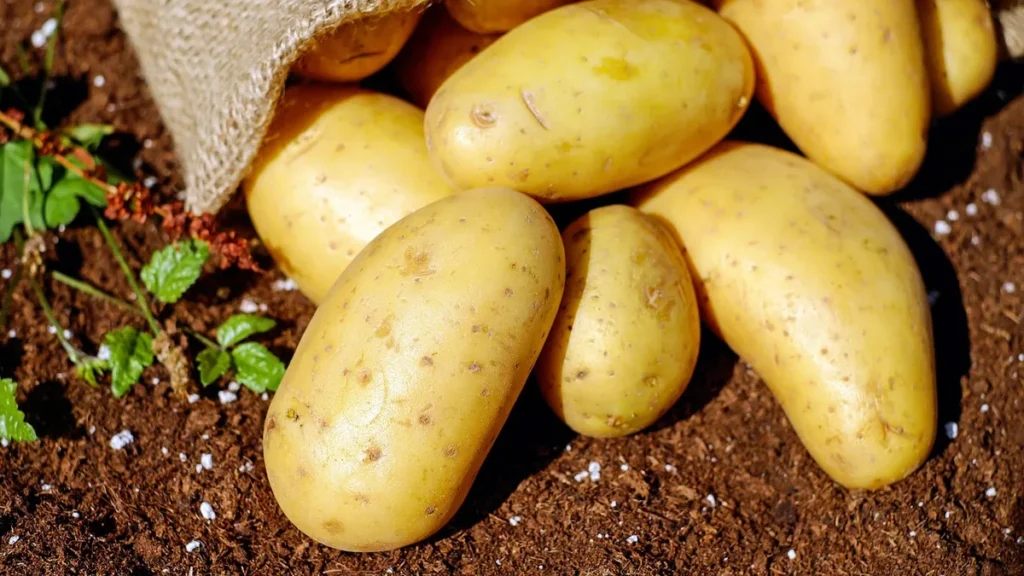
Oregon State University researchers grew potatoes through a full life cycle in simulated lunar soil amended with organic matter, yielding edible tubers comparable to Earth-grown potatoes, according to an npj Microgravity paper published Nov. 19, 2026. The Oregon State team tested five regolith simulants representing darker lunar mare and lighter highland regions. Simulated mare soil represents dark, volcanic material from lower elevations, while simulated highland soil is lighter gray with glass-like microparticles from meteor impacts. Highland regolith performed better than mare regolith in the trials, suggesting highland sites for bases, though both types contain no nitrogen and little phosphorus. The researchers used Hermiston, Oregon soil—known for the world’s highest potato yields—as the Earth control. Companies made the simulated moon dirt by shipping Earth mineral matches or grinding pure bulk minerals into lunar-proportionate ratios. Oregon State researchers found that when simulant included 30 percent vermicompost, potato growth matched that in Earth soil. Without vermicompost, plants were severely stunted, with underdeveloped roots and no usable tissue. Mixes of 5 percent to 15 percent vermicompost produced only partial recovery. The team’s experiments used vermicompost plus slow-release pellet fertilizer to produce edible, nutritious vegetables in simulated lunar regolith. Vermicompost is a nutrient-rich organic amendment made by earthworms breaking down organic matter. The lunar potatoes did not show a statistically significant increase in glycoalkaloids, toxins tied to green skin discoloration, and their nutritional quality held steady. A 15 percent vermicompost blend would function for food production, while a 5 percent mix is being tested to see if potatoes remain productive or become inedible under stress. The researchers chose potatoes for their high calorie output per growing area, substantial nutritional value, and role as a staple food on long missions. The work supports NASA’s Artemis goal of a sustained lunar presence by enabling food production on the moon instead of costly Earth resupply, since rocket fuel costs make regular provision shipments prohibitively expensive and food occupies valuable spacecraft volume. NASA’s priority is ready-to-eat crops with little waste, including leafy greens and tomatoes, while potatoes serve as a caloric-dense staple. Oregon State’s NASA-funded study did not simulate solar radiation or low gravity, instead varying potato varieties, organic matter ratios, and simulant types. Lunar regolith contains elevated heavy metals that can damage roots, consists of sharp-edged particles from billions of years of asteroid impacts, and has essentially no organic material to support plant life alone. Surface temperatures swing between 250 degrees and -410 degrees Fahrenheit. The team was unsure whether additives could overcome heavy metals and irradiation in moon soil before testing. “We believe the compost helps balance some of the toxicity we see in lunar regolith,” added OSU botanist and study co-author David Handy. The researchers believe organic matter binds heavy metals in the regolith to reduce plant exposure and protect root development. Handy is testing 10 potato varieties. One is Upstate Abundance, a white, golf-ball-sized potato bred in New York for organic farms that need hardy plants. Handy said in May 2026 that Upstate Abundance appeared to perform well. An upcoming paper will describe the simulator trials and help select potato varieties for future lunar farming. Handy has pulled two red-skinned Modoc potatoes from simulated moon regolith in the NASA-funded work. The team identified challenges beyond soil chemistry. Questions remain about how plants would take up water in less gravity, and radiation shielding is necessary. The Moon has 14 days of light followed by 14 days of dark. Handy proposed a subterranean greenhouse with grow lights for lunar farming, with plants supplying oxygen and humans supplying carbon dioxide in a closed loop. Handy said shipping large amounts of compost to the Moon is impractical. “We can’t just ship metric tons of compost to the moon,” Handy told KLCC. Astronauts could bring a small amount of vermicompost to the Moon and create more from food scraps and plant waste, cutting transport of growing materials from Earth. The researcher identified clover as one option for building organic matter in lunar agriculture, and the first few lunar plant generations would likely not feed astronauts but would serve as till-in crops to build organic matter over generations. Treated human waste compost would likely use a septic tank system with sterilized wastewater before entering agricultural beds. The NASA-funded project runs two years on a $300,000 grant expiring in July. NASA runs 15-20 lunar regolith projects, and Oregon State is the only one growing potatoes. “In terms of crops, we are one of the very few. We are the only one doing potatoes,” Goyer said. He worked 17 years at the OSU Extension station in Hermiston, Oregon, and said potatoes are adaptable to different environments with great genetic diversity. Other lunar crop research is moving in parallel. A University of Texas at Austin and Texas A&M study grew chickpeas in as much as 75 percent simulated lunar soil with vermicompost and mycorrhizal fungi, though safety and nutrition remain unconfirmed. The study used Exolith Labs simulant designed to resemble Apollo mission samples, and chickpea seeds were coated with arbuscular mycorrhizae fungi that aid nutrient uptake and reduce heavy metal absorption. Vermicompost is produced by red wiggler earthworms digesting organic waste, and worms in space could break down food scraps or cotton clothing and hygiene products. Sara Santos and Jessica Atkin initially self-funded the chickpea project, which later received a NASA FINESST grant and appeared in Scientific Reports, 2026; 16 (1). Handy said he hopes for more funding but might switch to growing food in tough Earth environments, and he thinks success in space could apply to growing food anywhere. The potato work could also help with crops in harsh Earth settings like inner cities, deserts, and places with poor soil.


Join the discussion