A Kanazawa University-led team has identified a previously overlooked mineral component in asteroid Ryugu samples at Japanese synchrotron facilities, resolving a long-standing contradiction about how water altered the asteroid’s clay-like minerals, according to a paper published in 2026 in Communications Earth & Environment. The results describe a poorly crystalline magnesium silicate hydrate, or M-S-H, that appears to be common in Ryugu and in carbonaceous meteorites. The researchers examined the samples with soft X-ray absorption spectroscopy at the KEK-PF and SPring-8 synchrotron facilities.
Ryugu and similar carbonaceous chondrites present an apparent puzzle involving aqueous alteration, where contact with water creates mineralogical and chemical changes in rocks and minerals. The asteroid’s fine-grained material is generally thought to consist of serpentine- and saponite-like phyllosilicates, which are clay minerals that form when rock undergoes aqueous alteration. Universe Today reports that the puzzle stems from the asteroid’s matrix seemingly containing two components that were altered under different aqueous conditions. While an asteroid can be clumpy on a large scale, it is unlikely to have two distinct components within the same mineral matrix.
The new study found that alongside the expected serpentine and saponite, a previously unrecognized component resembling poorly crystalline magnesium silicate hydrate is common in Ryugu and in carbonaceous meteorites. This M-S-H material had been overlooked because its properties do not fully match those of well-crystalline terrestrial layered silicates, even though the clay-like minerals in Ryugu are generally interpreted as serpentine and saponite. Both serpentine and saponite occur on Earth, where they form through the aqueous alteration of rock, but the Ryugu versions do not match their terrestrial counterparts exactly.
The key to resolving the contradiction lies in M-S-H’s ability to take on a wide range of magnesium-to-silicon ratios. Keisuke Fukushi, Kanazawa University‘s corresponding author for the study, said this flexibility might help explain how water interacts with rock without removing pre-existing chemical differences from parent asteroids. Generally speaking, materials with different compositions tend to be stable under different aqueous conditions, but M-S-H with different magnesium-to-silicon ratios can coexist under similar aqueous conditions, according to laboratory experiments combined with previously published solubility data.
These results indicate a way for alteration minerals to form without erasing the original compositional differences found in different locations. The serpentine and saponite observed in the samples might have originated from precursor M-S-H with corresponding compositions before transforming into these more crystalline minerals. If M-S-H precipitated first and was later transformed, the different compositions of clay-like minerals found in the matrix could have arisen without requiring separate, distinct water environments for different regions of the parent asteroid. Assuming M-S-H precipitated first and then transformed into other minerals, the authors say a broad range of compositional differences can emerge without calling for different water conditions in each area.
This means M-S-H could help explain how these rocks underwent extensive water alteration while keeping their original chemical makeup. Ryugu and some carbonaceous meteorites likely trace back to similar origins in the early solar system, and scientists consider them chemically primitive since they retain the early solar system’s chemical composition. These rocks also underwent extensive reaction with water after they formed, transforming many of their original minerals into new ones. Cosmochemists have long puzzled over how rocks could react so heavily with water and still preserve the chemical makeup tied to the early solar system.

The Ryugu samples that made this research possible were collected by JAXA’s Hayabusa2 mission, which launched in 2014 to gather samples from above and below the asteroid’s surface. In 2019, Hayabusa2 fired a 5-gram tantalum projectile at the asteroid, gathering the ejected pebbles and sand and sealing them inside a capsule, according to Physics World. The sealed capsule returned to Earth on Dec. 6, 2020. Ryugu was initially discovered by the Lincoln Near-Earth Asteroid Research project in 1999 and is diamond-shaped, rotates once every 7.6 hours, and orbits the Sun between Earth and Mars.
The Ryugu samples avoided terrestrial alteration, the interaction with oxygen and water in Earth’s atmosphere, unlike meteorites derived from similar hydrous asteroids, according to SciTechDaily. This makes them chemically pristine. Physics World reports that Tachibana, a University of Tokyo professor of space and planetary science on the sample analysis team, described the samples as the freshest CI chondrite, closer in elemental composition to the Sun than any other meteorite. The samples have been producing valuable scientific results for nearly six years since their arrival, Universe Today notes, and the newest findings are just the latest in a long series of discoveries.
Previous studies had already produced conflicting results about Ryugu’s mineralogy. Some research suggested Ryugu’s sample mineralogy resembled CI chondrites, while other studies contradicted this by showing a significant difference in reflectance spectra between Ryugu samples and CI chondrites, SciTechDaily reports. A 2023 study published in Science Advances found that heating CI samples under reducing conditions at 300 °C produced Ryugu’s sample mineralogy well, resulting in spectra closely matching those of Ryugu samples. Those findings challenged previous assumptions about the parent bodies of CI chondrites and highlighted the susceptibility of primitive meteorite spectra to terrestrial weathering.
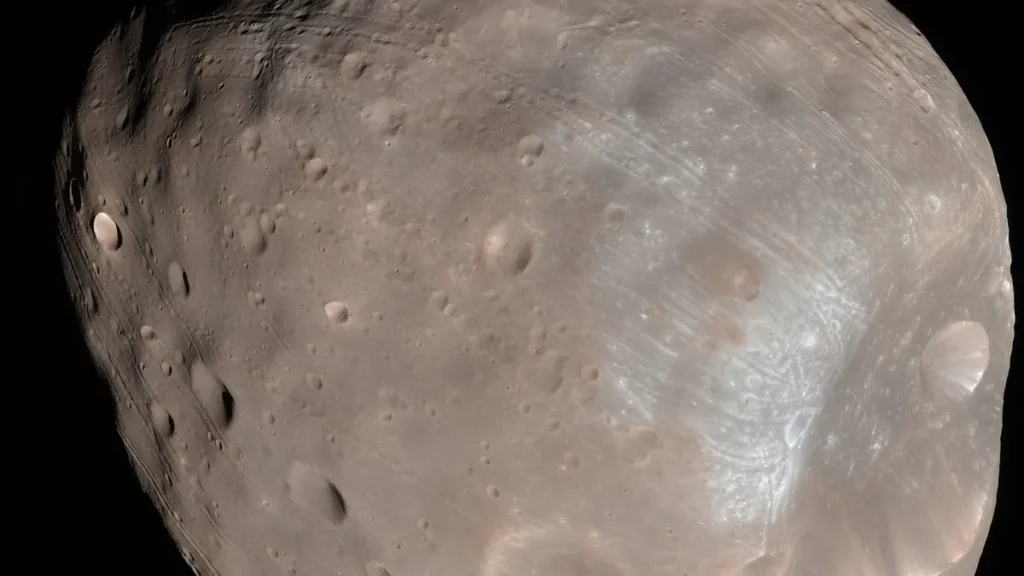
The new M-S-H framework extends beyond Ryugu. The study suggests that much of the matrices of carbonaceous chondrites could consist of poorly crystalline M-S-H, which could mean the findings apply to a broad class of meteorites that fall to Earth. JAXA’s Martian Moons eXplorer mission is en route to collect a sample from Phobos, the largest of Mars’ two moons, with that sample expected on Earth in about five years, Universe Today reports. Meanwhile, part of the Ryugu sample is currently on display in Japan, while a further fraction remains stored in a chamber filled with nitrogen gas, according to Physics World.


Join the discussion