Key facts
- Mercury reaches greatest western elongation on November 20, appearing at its farthest point west of the sun, offering one of the best chances to glimpse the planet before dawn.
- The Southern Taurids meteor shower peaks overnight from November 4 to 5, yields about five meteors per hour, is known for bright fireballs, and is best viewed after midnight away from city lights.
- The Northern Taurids meteor shower reaches its crescendo from November 11 to 12, produces bright slower-moving fireballs, and typically yields only a handful of meteors per hour.
- Uranus reaches opposition on November 25, when the planet sits directly opposite the sun, appears brighter than usual, rises at sunset, peaks around midnight, and sets at sunrise.
FOX Weather and National Geographic say November 2026 brings a beaver supermoon, three meteor showers and planet pairings to the night sky.
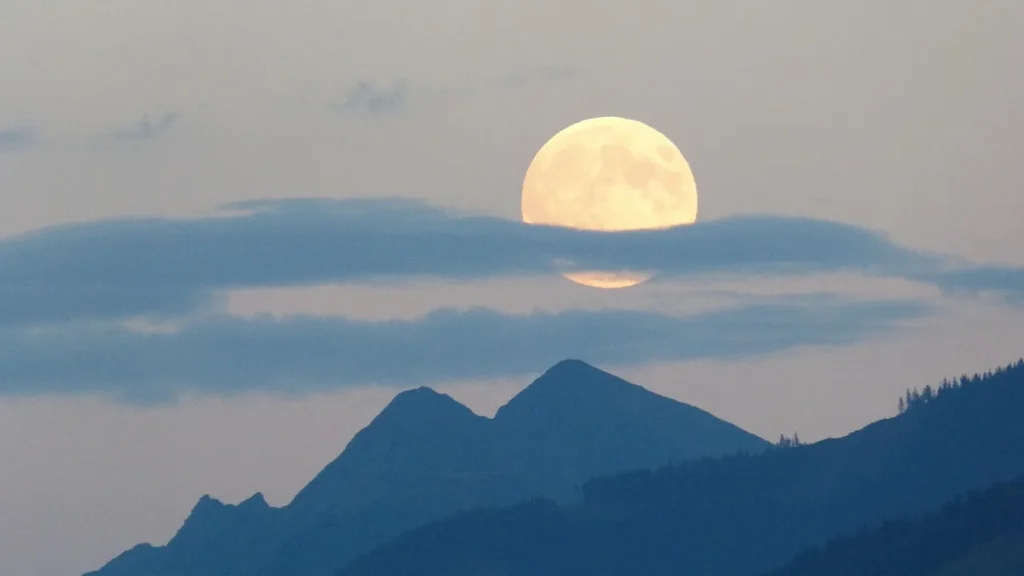
The full Beaver Moon rises on the night of November 24 and reaches its peak at 9:53 a.m. EST, beginning a run of three consecutive supermoons. FOX Weather says the name comes from the time of year when small mammals begin hibernating for winter.
National Geographic says the November 24 beaver supermoon appears up to 30 percent brighter and 14 percent larger than the moon at apogee, the farthest point in its orbit. It is best viewed at moonrise or moonset, when the moon illusion enlarges it at the horizon, and golden hour gives the oversized orb an eerie orange glow. Moonrise occurs at sunset and moonset at sunrise, so the most striking views happen at the horizon rather than at the 9:53 a.m. EST peak.
Three meteor showers will occur during November 2026, according to FOX Weather and National Geographic. The Southern Taurids, the Northern Taurids and the Leonids each peak on different dates across the month, and the two Taurid showers are companion streams that coincide with a dim moon, reducing lunar light.
The Southern Taurids meteor shower peaks overnight from November 4 to 5, yielding about five meteors per hour and bright fireballs, and it is best viewed after midnight away from city lights. National Geographic says the Southern and Northern Taurids can be seen in the northern and southern hemispheres, and both are best after midnight when Taurus is highest in the sky.
The Northern Taurids meteor shower reaches its crescendo from November 11 to 12, producing bright slower-moving fireballs and typically only a handful of meteors per hour. FOX Weather places the Northern Taurids peak in mid-November and describes bright fireballs that briefly light up the sky.
The Leonid meteor shower peaks overnight from November 17 to 18, and forecasters disagree on how many meteors will appear. FOX Weather forecasts 10 to 20 meteors per hour, while National Geographic puts the rate at around a dozen or fewer per hour.
National Geographic describes the Leonids as fast, bright sky streaks that frequently burst into color when they strike Earth’s atmosphere. It advises watching after midnight from an open site like a large field or observation deck, noting the meteors seem to come from Leo but can streak anywhere.
FOX Weather cites NASA in saying the Leonids generate a meteor storm of at least 1,000 meteors per hour roughly every 33 years, with the last major event in 2002. Each preceding shower should get more vivid until the peak, according to FOX Weather.
Mercury reaches inferior conjunction on November 4, passing between Earth and the sun and appearing close to it, which makes the planet difficult to observe because of the sun’s overwhelming brightness. Inferior conjunction occurs when Mercury passes between Earth and the sun. After inferior conjunction, FOX Weather reports, Mercury will slowly separate from the sun and become visible before sunrise.
Mercury reaches greatest western elongation on November 20, appearing at its farthest point west of the sun and offering one of the best chances to glimpse the planet before dawn. FOX Weather calls this a top chance because Mercury is usually hard to see. National Geographic advises looking for Mercury above the southeast horizon before sunrise around November 20, near bright Venus just above it, and says viewing will be exceptional on mornings just before, during and after November 20.
National Geographic reports that five planets make appearances throughout November 2026 and previews eight night sky events for the month. Mars and Jupiter make a close approach on November 15, passing within 1.12 degrees of each other and appearing in the same part of the sky, visible to the naked eye depending on conditions. FOX Weather notes the two planets stay millions of miles apart in space despite looking close together.
Around midnight on November 2 and 3, the moon, Mars and Jupiter appear in a tight line above the eastern horizon and travel higher until sunrise, within roughly six degrees on November 2. National Geographic says Regulus, the brightest star in Leo, is visible just below them, and the trio stands about six degrees apart, roughly a binocular field.
The Beehive Cluster, an open star cluster in Cancer, looks like a smudge to the naked eye under dark skies but reveals roughly 1,000 stars through binoculars or a telescope. National Geographic suggests using a stargazing app to navigate the night sky when hunting for the cluster after locating the moon, Mars and Jupiter line.
National Geographic describes a predawn planet parade from around November 14 to 16, with Mars and Jupiter in the southern sky as close as roughly one degree while Mercury and Venus rise before the sun. The best viewing for the planet parade is mid-month, but November 30 offers a later chance to see Regulus and the moon join Mars and Jupiter throughout the night.
Uranus reaches opposition on November 25, when the planet sits directly opposite the sun, appears brighter than usual, rises at sunset, peaks around midnight and sets at sunrise. FOX Weather places the event on November 25 and notes Uranus will appear brighter than usual at opposition. National Geographic reports Uranus moves from east to west all night in November, with the best viewing occurring mid-month, and says the planet is easiest to see with telescopes or good binoculars near the Pleiades star cluster.
The new moon occurs on November 9, leaving dark skies ideal for spotting deep-sky objects such as the Orion Nebula and Andromeda Galaxy, especially with a telescope. National Geographic says this evening and nights around it are perfect for galaxies and nebulae, and some observatories stay open late for public stargazing around the November 9 new moon night.
National Geographic reports the northern lights season remains in full swing in November, with impressive autumn displays likely continuing as winter’s long dark hours begin, especially in Iceland and Norway. Solar maximum has passed, but the sun’s peak activity still produces mid-latitude shows, including one in early October.
National Geographic says the new moon on November 9 leaves dark skies ideal for deep-sky objects, and the Taurid showers coincide with a dim moon that reduces light. By contrast, the November 24 beaver supermoon is up to 30 percent brighter than the moon at apogee and is best viewed at moonrise or moonset.
Much of the month is visible to the naked eye, including the beaver supermoon at moonrise and the Mars-Jupiter close approach, though visibility depends on conditions. Binoculars or a telescope reveal roughly 1,000 stars in the Beehive Cluster and bring deep-sky objects such as the Orion Nebula and Andromeda Galaxy into view around the new moon. Uranus is easiest to see with telescopes or good binoculars near the Pleiades at opposition on November 25.
National Geographic advises using a stargazing app to help navigate the night sky, which can be useful when tracing the moon, Mars and Jupiter line or hunting the Beehive Cluster in Cancer. Some observatories remain open late for public stargazing around the November 9 new moon night.
Look toward the eastern horizon around midnight for the moon, Mars and Jupiter line on November 2 and 3, the southern sky before dawn for the November 14 to 16 planet parade, and the southeast horizon before sunrise for Mercury and Venus around November 20. The beaver supermoon rises at sunset on November 24, while Uranus rises at sunset and peaks around midnight at opposition on November 25.


Join the discussion