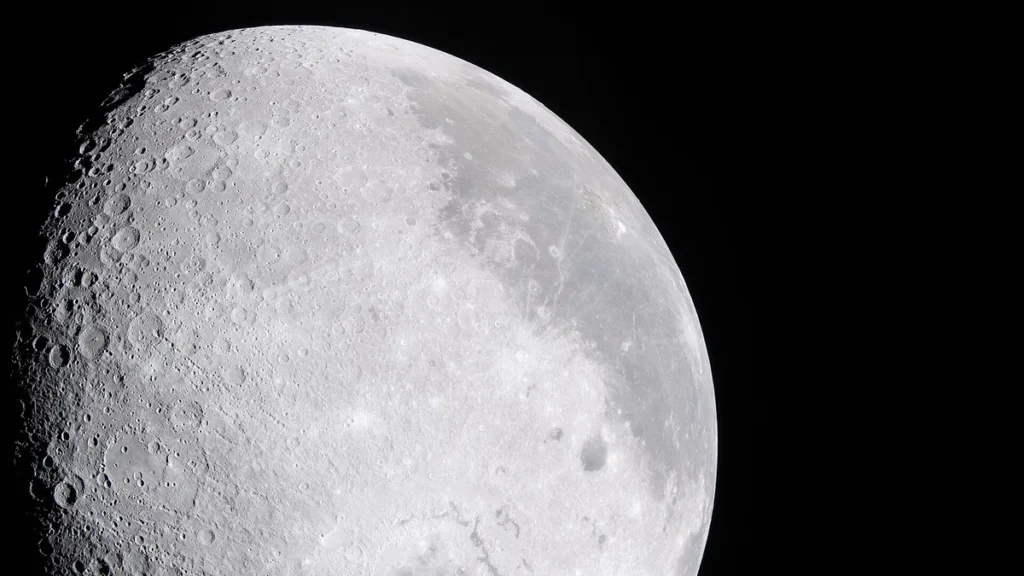
NASA selected the Gimli Mission to explore the Marius Hills Pit on the Moon, a roughly 50-meter-wide opening that may connect to a lava tube, according to This Week in Space podcast discussion published Oct. 30, 2026.
Space.com’s This Week in Space podcast released Episode 234, Living in Lunar Caves, with hosts Tariq Malik and Mike Wall interviewing Than Putzig of the Planetary Science Institute about using the lunar subsurface to support a moon base. The pit is seen as a possible entry to a lava tube and as a site for early human habitats, supporting efforts to make the Moon habitable below the surface. The episode’s outline of main topics covers lunar caves, pits, and lava tubes.
The Gimli Mission’s science goals cover detecting and mapping lunar lava tubes as possible shelters for humans, and the mission also seeks to gather more data on lunar formations. “Putzig explains how geophysical instruments on a rover could detect hidden voids beneath the surface and measure the size of these lava tubes,” the episode description states. Such instruments could reveal hidden subsurface voids and tube dimensions to support future habitation.
The program discussed how lunar lava tubes form, what a later robotic explorer might reveal, and how the work supports NASA’s Artemis goal of a moon base at the south pole. The program framed subsurface caves as part of efforts to make the Moon habitable under its surface, and presented lava tubes as possible shelters for sustained human habitation. Reaching and operating inside the tubes brings technical and logistical challenges for mission planners.
The episode compared lunar lava tubes with Martian lava tubes as part of planetary science collaboration, and it described the Planetary Science Institute‘s work assembling teams and drafting proposals for similar missions. The episode’s agenda covered next steps for the Gimli Mission along with outreach efforts once the initial payload reaches the pit.




Join the discussion