Key facts
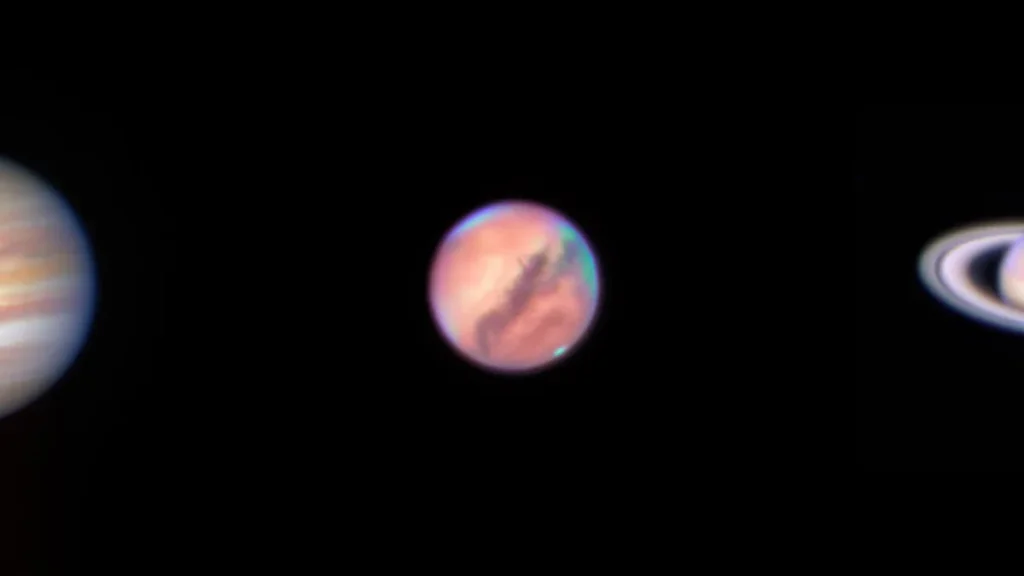
- On Monday, November 16, 2026, Mars and Jupiter will come closest at dawn, separated by about 1.2 degrees.
- The 1.2-degree gap on November 16, 2026 equals roughly 2.4 full-moon diameters.
- The November 16, 2026 close approach involves only the two planets, with no Moon alignment.
- Jupiter will shine around magnitude -2, while Mars will be near magnitude 0.8 in early November 2026; lower magnitude means brighter.
Mars and Jupiter will come closest at dawn on Nov. 16, 2026, passing within about 1.2 degrees of each other in the predawn sky, according to Note’s skywatching guide.
At dawn on Monday, November 16, 2026, Mars and Jupiter will appear at their closest.
S1 source text, Note(ノート)
Note presents the Nov. 16 dawn meeting as a standalone planetary event, set apart from the Moon’s earlier alignment on November 3. It stresses that the planets themselves drive the pairing. On Nov. 16 there will be no Moon between the worlds: the close approach involves only Mars and Jupiter.
The closeness is apparent rather than physical. Angular separation is the apparent gap between two objects as seen from Earth, and that is what the 1.2 degrees measures. Mars and Jupiter remain far apart in space even as they look close together in the sky.
The moon’s apparent diameter gives readers a yardstick for visualizing how close the pair will look. The gap will span roughly 2.4 full-moon diameters, because the full moon covers about 0.5 degrees of sky. That familiar width works as a measuring stick for the close gaps seen during November.
In early November 2026, Jupiter shines around magnitude -2 and Mars near 0.8, and Note explains that a lower number on the scale means a brighter object. That difference helps observers tell the two planets apart.
Note calls Jupiter a very bright planet, saying it will appear far brighter than Mars during early November 2026. The contrast offers a practical clue: an exceptionally bright object near the Moon is likely to be Jupiter. Beginners can use the brightness gap to tell Jupiter apart in the November predawn sky. Viewers can use the brightness difference to pick out the bright planet.
Mars’s reddish color comes from iron oxide in its surface sand and rock. To the naked eye, the planet may look orange or pale red rather than bright red. People have long called Mars the Red Planet, linking the name to its reddish surface color. The nickname ties the world to its iron-rich surface.
Regulus is a first-magnitude star in Leo, a name that means little king. It shines with its own light, unlike the planets. The star appears nearby in the predawn sky. Observers could use it as a point of interest on the morning of November 3.
Mars travels around the Sun in about 687 days, while Jupiter takes about 11.9 years, and those different periods make the planets’ sky positions shift gradually as seen from Earth. Because the two worlds orbit at different speeds, Mars can seem from Earth to catch up with and pass Jupiter.
Note explains that the Moon goes around Earth once every 27.3 days or so, moving roughly 13 degrees each day against the stars, which works out to about 0.5 degrees per hour on average. Its actual speed varies, so the shift is not uniform from hour to hour. Even so, the Moon’s movement against the stars is noticeable within a few hours.
The shift happens because the Moon orbits Earth, so meetings like the one on November 3 let viewers watch the Moon move against the stars in real time. The effect is easier to track when bright planets are nearby.
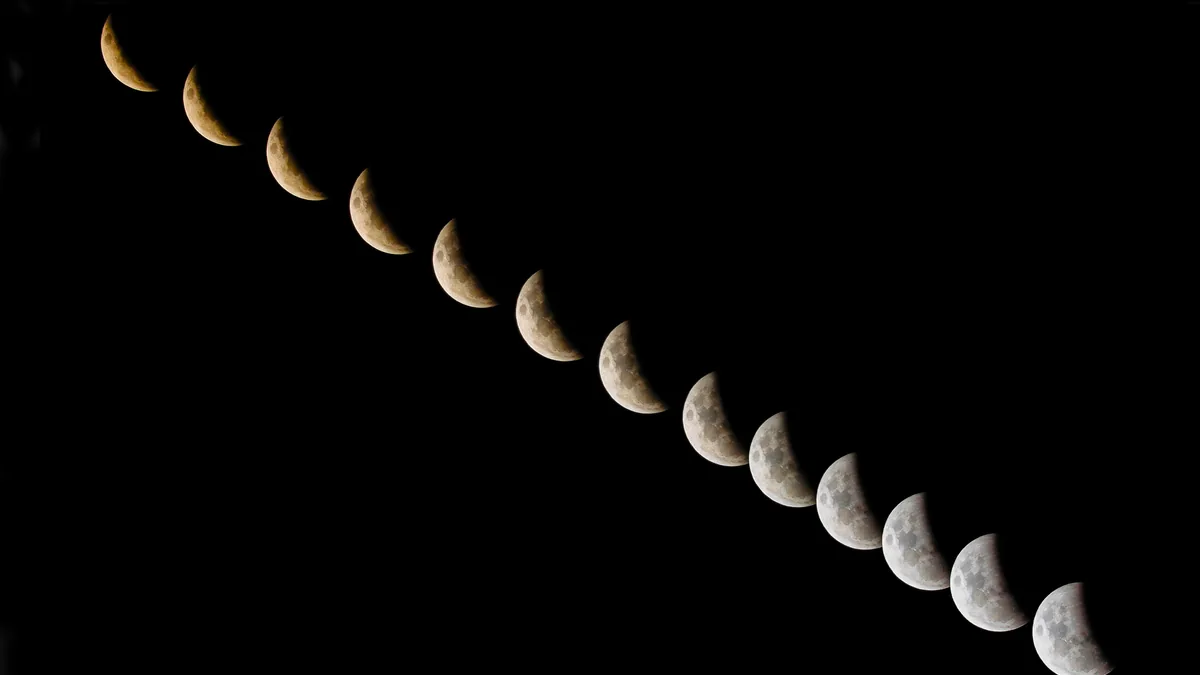
The Moon stood between Mars and Jupiter at about 1:00 AM in the southeastern to southern sky on Nov. 3, and the times are estimates for Japan. The guide anchors this predawn Moon-and-planet alignment to the holiday date in Japan. Nov. 3, 2026, falls on a Tuesday, and Japan observes it as Culture Day, a public holiday.
Around 5:00 AM on that morning, the Moon had drawn nearer to Jupiter, with the gap at about 1.3 degrees, or roughly 2.6 full-moon diameters. The viewing period ran from about 1:00 AM to 5:00 AM. It recommends 4:00 AM to 5:00 AM as the best window. It highlights the tightest Moon-Jupiter approach nearer 5:00 AM as one of the morning’s two main sights.
The listed times and sky directions are Japanese estimates and differ a bit by viewing area. Local geometry changes the exact hours and the placement of the objects in the sky. Viewers outside Japan should expect different timing and adjust accordingly.
Note says that after the Nov. 16 approach, the Moon will line up near Mars and Jupiter again from Nov. 30 to Dec. 1, 2026. By then the alignment geometry between the planets will differ from the geometry on Nov. 3. It calls the late-November gathering another chance to see the Moon near both worlds after the pair’s close pass.
Viewers can see dawn sky events with the naked eye and need no tools. Pick an unobstructed site without buildings or trees blocking the sky. Dress for early November cold, and check cloud cover before going out.
The Moon and planets will not be visible if cloudy, so checking the weather forecast and cloud movement is advisable. Viewers can see the bright worlds from a city even under light pollution. It recommends an unobstructed viewing spot and clear weather for the best experience.
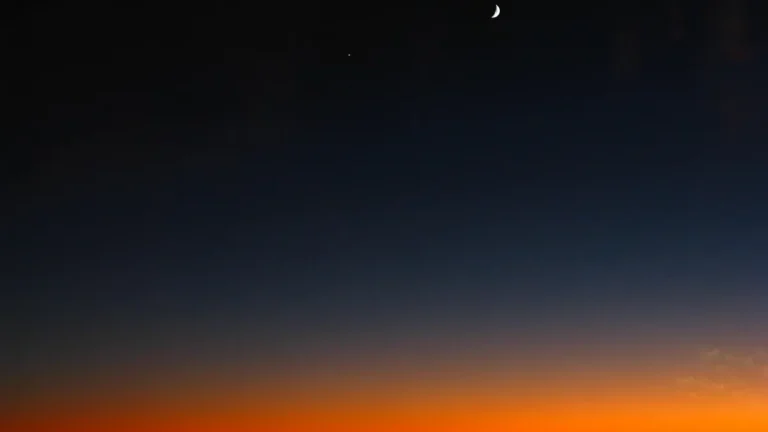
The sky starts brightening around 4:38 AM in Tokyo, and sunrise happens around 6:04 AM. As twilight advances, dimmer objects become harder to see. The predawn window matters for viewers in Tokyo.
The skywatching guide that Note published covers dawn sky events in Japan. Its material includes the earlier Nov. 3 alignment, when the Moon passed between Mars and Jupiter, and the coming Nov. 16 close approach of the two planets.

Join the discussion