Key facts
- NASA's November 2026 "What's Up" skywatching guide spotlights Taurid and Leonid meteors, a close Mars-Jupiter pairing, Voyager 1's one light-day milestone, and the month's supermoon.
- NASA invites the public to join the Shine Bright for Voyager's Light-Day activation on November 17, 2026, with details at nasa.gov/voyager.
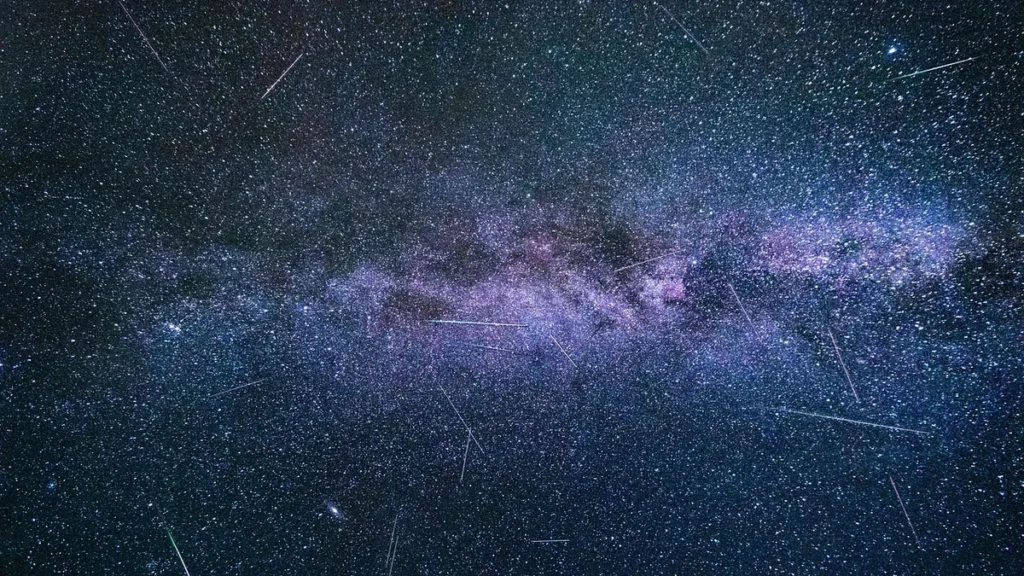
- The Southern Taurid meteor shower peaks around Nov. 5 and can produce occasional bright fireballs.
- NASA's guide lists the Northern Taurids as peaking near Nov. 12 and producing roughly five meteors per hour when conditions are ideal.
NASA’s monthly skywatching roundup for November 2026 highlights Taurid and Leonid meteors, a close pairing of Mars and Jupiter, Voyager 1 reaching one light-day from Earth, and the month’s supermoon. NASA Science released the roundup on Nov. 2, 2026, as a monthly guide with timing and viewing tips for celestial events visible that month. Raquel Villanueva of NASA’s Jet Propulsion Laboratory presents the guide.
The Southern Taurid meteor shower reaches its peak around Nov. 5 and may produce occasional bright fireballs. The shower started on Sept. 20 and runs through Nov. 20. Its peak falls on the evening of Nov. 4 and the morning of Nov. 5. NASA says each Taurid shower produces only a few meteors per hour, about five under ideal conditions, though an occasional bright fireball may reward patient viewers.
The shower is part of a pair of Taurid meteor showers NASA highlights for early November viewing.
On the night of the Southern Taurids peak, the moon is 22% illuminated, which the American Meteor Society calls favorable conditions. Observers should seek dark skies away from light pollution and dress for the weather. The Southern Taurids seem to come from Taurus. That constellation rises in the east soon after sunset and sets in the west shortly before sunrise.
NASA’s guide says the Northern Taurids peak near Nov. 12 and produce roughly five meteors per hour in ideal conditions. The Northern Taurids started on Oct. 20 and continue until Dec. 10. The peak arrives on the evening of Nov. 11 and the morning of Nov. 12. A skywatching guide says the moon’s illumination reaches just 5% on Nov. 11, which offers darker skies for the Northern Taurids than for the earlier Southern Taurids.
Both Taurid showers trace back to comet 2P/Encke, which means the Northern Taurids arrive about a week after the Southern Taurids. NASA explains that the Taurid shower names refer to two areas in Taurus, the constellation from which the meteors seem to radiate. Since both come from the same comet, NASA describes the two showers as virtually identical apart from timing. The meteors seem to come from Taurus, a constellation that rises in the east shortly after sunset and sets in the west before sunrise.
The Leonids begin on Nov. 6 and continue through Nov. 30. The best viewing comes before dawn on Nov. 17 and 18 after the Moon has set. Ideal conditions might bring about 15 meteors per hour, though most observers will see fewer. NASA says ideal conditions might yield about 15 meteors per hour for the Leonids.
The meteors seem to come from Leo, a constellation positioned near Mars and Jupiter in the sky. The radiant for the Leonids does not rise until around midnight, so this is a shower for night owls. A moon that is 41% illuminated will create natural light pollution and obscure fainter meteors.
Previous Leonid storms have reached hundreds of meteors per hour, but no outburst is forecast for 2026. The odds stay nonzero and could increase when the comet circles the sun again in 2031. This year’s roundup does not call for a storm. NASA’s roundup does not forecast a storm for this year.
Mars and Jupiter sit roughly 1.2 degrees apart in the predawn sky on the mornings of Nov. 15 and 16. NASA describes the gap as a bit wider than two full Moons side by side, and Jupiter shines brighter than nearby reddish Mars. Both planets rise at about the same time all November and remain near the star Regulus as a trio visible to the naked eye.
People can watch Mars and Jupiter on multiple mornings as the planets move closer and then drift apart. Mars and Jupiter are visible without a telescope during their mid-month pairing, though they remain far apart in space and only appear almost side by side from Earth.
A four-planet alignment involving Mercury, Venus, Mars, and Jupiter occurs just before sunrise from around Nov. 14 to Nov. 25, 2026, with Jupiter and Mars right next to each other. Mercury is visible for only about a 30-minute period before sunrise, and Nov. 20 offers the best viewing. Uranus is visible during this time but is not technically part of the alignment because it sits on the other side of the sky, while Saturn and Neptune stay below the horizon.
On Nov. 2, 2026, the Moon sits closer to Mars. On Nov. 3 it moves to the other side of Regulus while the Moon, Mars, Jupiter, and Regulus stay close together. The guide describes the opening week as a gathering of the Moon, Mars, and Jupiter, with Regulus also there. It notes the Moon moves farther away after Nov. 3.
On Nov. 30, 2026, the Moon, Mars, and Jupiter come together again in the night sky for one night, with Regulus also present. Viewers might spot Algieba, the second-brightest star in Leo after Regulus, without optical aid.
Mars rides high in the sky all November, rising shortly after midnight at the beginning of the month and earlier as the weeks pass. Early morning or around midnight late in the month provides the best views. The source describes Mars’s rising time moving earlier over the course of November.

Saturn appears in the east at sunset and sets in the west shortly before sunrise every night in November. Viewers need binoculars or a telescope to see its rings. The source names right after dark as the best time to spot Saturn. Neptune stays close to Saturn in the November sky and follows a similar path, and observers need binoculars or a telescope to observe it.
Uranus appears every night in November, rising in the east shortly before sunset and setting in the west around sunrise. Uranus reaches opposition on Nov. 25, 2026, when it is farthest from the sun and most visible. Even at opposition, viewers will still want binoculars or a telescope to get the best results.
Venus begins November just ahead of the sun at sunrise and becomes easier and safer to see toward the end of the month as it moves farther from the sun. The source says Venus is technically visible every morning in November even though it sits close to the sun early in the month. Mercury reaches western elongation on Nov. 20, 2026, after which it is visible just before sunrise for the rest of the month. The guide explains that Mercury had been at eastern elongation in October and begins November too close to the sun to view safely.
A full supermoon rises on Nov. 24, 2026, starting a series of three consecutive supermoons in November, December, and January. November’s Beaver Moon happens just two days before Thanksgiving. According to The Old Farmer’s Almanac, the Beaver Moon reaches peak illumination on Nov. 24, 2026, at 9:53 a.m. ET, after sunrise for most people in the U.S.
The moon stays more than 90% full from Nov. 22 through Nov. 27, creating strong natural light pollution for observers. This broad full phase means viewers should plan around the bright moon when they want darker skies for other targets.
NASA says Voyager 1 will reach one light-day from Earth in November 2026, becoming the first human-made object to travel that far. Once Voyager 1 is one light-day away, a signal moving at light speed takes 24 hours to reach the spacecraft, and another 24 hours for Earth to hear a reply. NASA presents this round-trip delay as the practical meaning of the light-day distance for talking with the spacecraft.
To picture Voyager 1’s current travel direction, look toward the constellation Ophiuchus, also called the Serpent Bearer. NASA uses this constellation as a visual reference for where the spacecraft is heading in the sky. NASA invites the public to take part in the Shine Bright for Voyager’s Light-Day activation on November 17, 2026, with details at nasa.gov/voyager. The activation is scheduled for the same month that Voyager 1 reaches the one light-day mark.
For the best viewing experience, pick a dark site, allow about 30 minutes for night vision to adjust, and scan as much of the sky as possible. NASA provides these general tips along with the specific dates for meteor showers, the planetary pairing, and the supermoon.
Daylight saving time ends on Nov. 1, 2026, so sunsets come earlier and skywatchers gain more evening hours to observe without staying up late or waking before dawn. November is the final full month of fall, and the earlier sunset after the time change creates more convenient viewing chances.
Nov. 9, 2026 is the new moon and the darkest night of the month, making it ideal for stargazing and night-sky photos. The date is also known as Carl Sagan Day. The guide explains that the moon is a major source of light pollution, so its absence makes faint stars and planets easier to spot.
The guide describes November 2026 as arguably the most active month for amateur astronomers, with observable events running from Nov. 2 through Nov. 30. The same guide notes that no major celestial events occur, but a series of smaller ones fills the month for skywatchers.
Prominent constellations visible in November include Taurus, Pegasus, Capricornus, Aquila, Pisces, and Aries. The Big Dipper and Little Dipper can be difficult to see from locations too far south. Lesser-known asterisms worth seeking in November include the Pleiades, the Great Square of Pegasus, and the Circlet of Pisces. The Summer Triangle stays visible while the Winter Triangle becomes easier to spot as it rises earlier in the evening.
Raquel Villanueva of NASA’s Jet Propulsion Laboratory presents the roundup. “I’m Raquel Villanueva from NASA’s Jet Propulsion Laboratory and that’s What’s Up this month.”


Join the discussion