
Key facts
- Venus is the third brightest object in the sky after the sun and moon, so it is outshone only by the sun and moon.
- Venus reaches peak morning-sky brilliance on November 29, 2026, at 14 UTC, at magnitude -4.4, far brighter than any star.
- Venus went between Earth and the sun on October 23-24, 2026 and is now moving away from Earth around the sun.
- The 2026 evening-sky brightness high came on September 18, 2026, when Venus outshone everything it had done all year.
Venus appears as a bright object low in the eastern sky before sunrise, Astronomy Magazine says, and EarthSky says it reaches peak morning brilliance on November 29, 2026, at 14 UTC, at magnitude -4.4, far brighter than any star.
EarthSky and Astronomy Magazine rank Venus as the third-brightest object in the sky, outshone only by the sun and the moon. EarthSky describes the planet as especially bright around its greatest brilliance while still holding that third-place position.
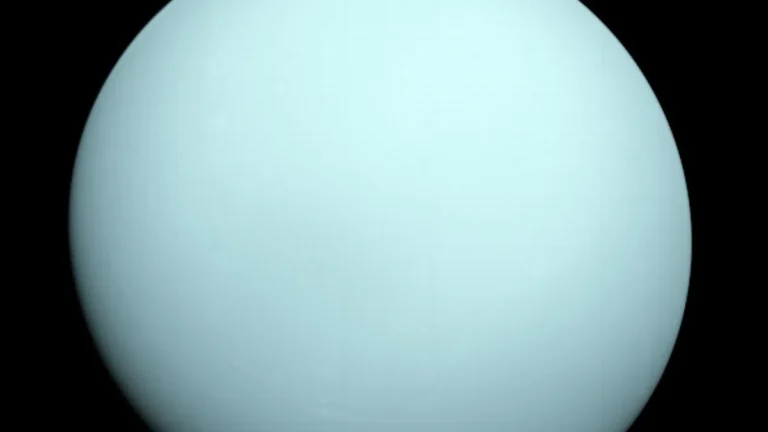
Science Times says Venus creates no light of its own. The roughly Earth-sized planet looks bright because reflective clouds wrap it and act as sunlight mirrors. The outlet also considers Venus the solar system’s hottest planet.
UAP.Global notes that Venus travels nearer the sun than Earth and sits beneath thick, highly reflective clouds, so it outshines every star. The outlet calls Venus the single brightest candidate for a bright light that is not moving. Venus never strays far from the sun.
Venus is never seen in the middle of the night and is always an evening star after sunset or a morning star before sunrise, UAP.Global adds. The reason is that Venus orbits closer to the sun than Earth, keeping it close to the sun in our sky.
Before sunrise, Venus sits low in the eastern sky, rises about an hour before the sun, and stays visible nearly until sunrise as twilight brightens, Astronomy Magazine says. Venus looks brightest during roughly 30 minutes of civil twilight, the light when the sun is just below the horizon, just before sunrise or just after sunset, UAP.Global says. EarthSky says Venus can be seen in the morning before sunrise and is blazing in the morning sky.
Planets including Venus shine steadily because they appear as discs rather than points, letting atmospheric flicker average out, UAP.Global explains. A planet’s disc is large enough that the flicker of the air evens out, unlike a star’s point of light. Stars twinkle, and Sirius flashes red, blue and green low near the horizon because its light crosses more atmosphere. The outlet calls this color-flashing atmospheric scintillation, and it is exactly what makes a low star look like a flashing red, green and white object often mistaken for a UFO.
EarthSky traces Venus’s 2026 path from superior conjunction on the far side of the sun on January 6, 2026. At superior conjunction, Venus was at full phase with a small disk, and it appeared in evening twilight during March 2026. Superior conjunction means Venus is on the far side of the sun.
EarthSky says the 2026 evening-sky brightness high came on September 18, 2026, when Venus outshone everything it had done all year. At superior conjunction Venus is at full phase with a small disk, then its disk grew as its phase shrank until it reached that evening peak.
Venus went between Earth and the sun on October 23-24, 2026 and is now moving away from Earth around the sun, EarthSky says. It describes this alignment as inferior conjunction, when Venus goes between Earth and the sun. EarthSky says brightness peaks roughly five weeks before and after that moment.
Near greatest brilliancy, telescopes reveal Venus as a waxing crescent with a disk of about 40 arcseconds because the planet is comparatively close to Earth, EarthSky says. An arcsecond is a unit of size in the sky. It explains that at greatest brilliance Venus is a crescent, not full, because the inferior conjunction has already occurred, and that greatest brilliance combines a large disk with a large phase.
Following the November 29 peak, Venus will not be this bright in the evening sky again before April 2028, EarthSky says. The next morning-sky peak arrives in July 2028.

Join the discussion