Key facts
- Curiosity completed a drilling campaign at a site nicknamed Nazca, where bedrock contains thin, flat disk-shaped crystal formations that the mission team compared to potato chips, according to NASA.
- Curiosity planned or used its Mars Hand Lens Imager (MAHLI) on its robotic arm to take nighttime close-up images of the crystal formations using white-light and ultraviolet LED lamps.
- A key objective of the Nazca campaign is to better characterize the chip-shaped crystal features, according to NASA.
- The Nazca bedrock contains disk-shaped crystal forms, or potato-chip-shaped ones under a liberal interpretation, according to NASA's Curiosity blog.
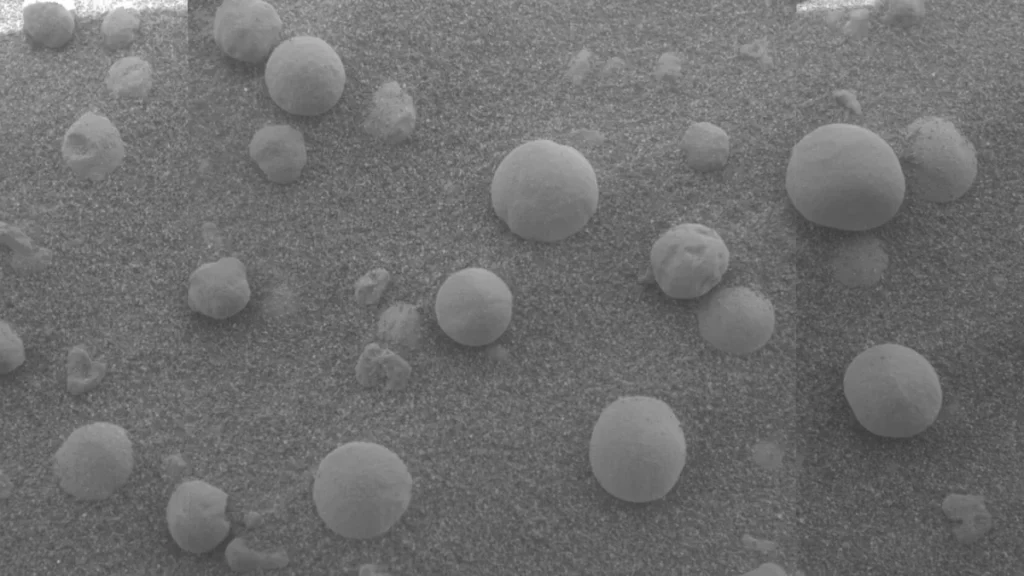
Curiosity completed a drilling campaign at a Martian site nicknamed Nazca on Nov. 6, 2026, where bedrock holds thin, flat disk-shaped crystal formations and irregular, curled formations embedded in the rock, some shaped like potato chips, according to NASA.
Perseverance imaged pale, ghostly-looking rocks at Idubi in the Lac de Charmes region outside Jezero Crater on Oct. 29, 2026 (Sol 2023, a Martian day). The stones stand out against darker, dust-covered terrain.
NASA’s Perseverance rover found that the Idubi rocks are rich in hydrated silica rather than typical igneous rock. Hydrated silica can form on Earth in settings involving hydrothermal activity or groundwater, and such deposits may preserve microscopic fossils, according to NASA.
Perseverance is conducting a closer investigation of the Idubi formations, using its instruments to collect detailed chemical and mineralogical information. NASA said the closer investigation might show how these rocks came to be and whether they contain potential signs of past microbial activity. NASA said the rocks and mineral deposits could help researchers piece together Mars’s watery past and identify environments that may once have been capable of supporting microbial life.
At Nazca, the team fed powdered rock from a fresh drill hole into SAM, the Sample Analysis at Mars instrument, an onboard chemistry lab that breaks down the exact mineral makeup of Martian samples. Curiosity continues to study other crystal formations, rock layers and dark lenses along its route.
On Nov. 7, 2026 (Sol 5067, a Martian day), Curiosity used its Mars Hand Lens Imager (MAHLI), mounted on its robotic arm, to capture detailed close-up pictures of the Nazca formations. Nighttime MAHLI close-ups using white-light and ultraviolet LEDs capture fine surface textures and mineral details invisible in daylight.
Several Nazca formations have warped, curled-up edges and look like ruffled chips. Researchers are trying to figure out what the Nazca formations are made of and how they got there. Determining the crystals’ exact chemistry should reveal the type of water or environmental conditions present when the rocks formed.
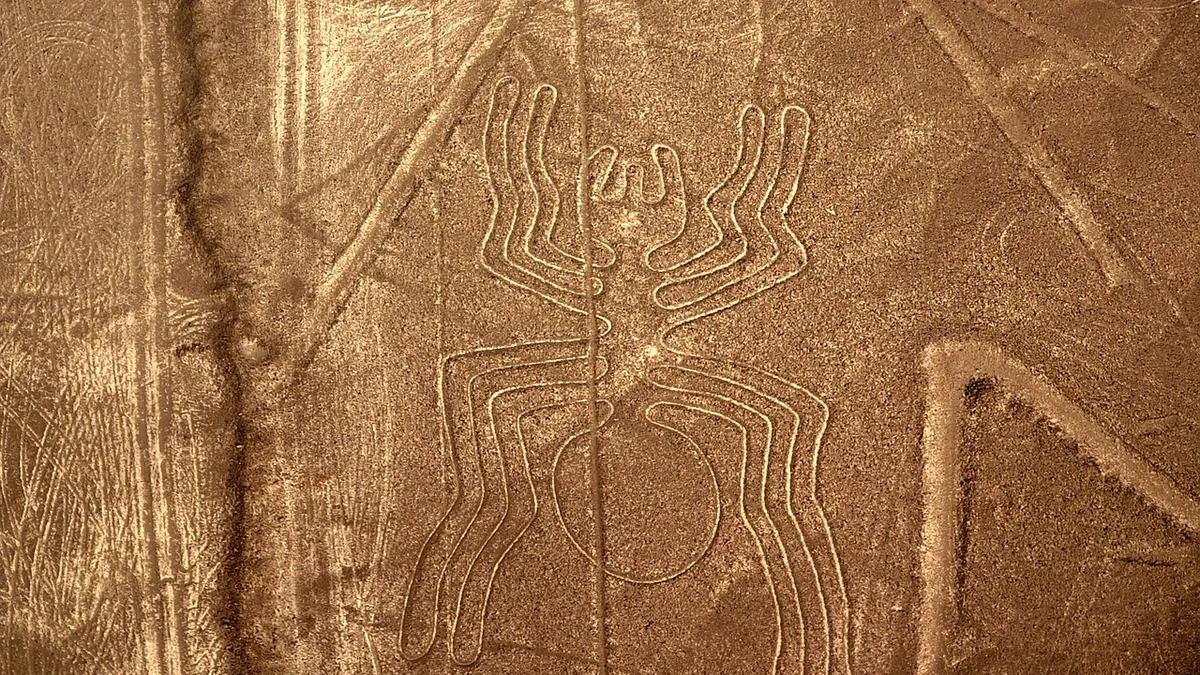
A key objective of the Nazca campaign is to better characterize the chip-shaped crystal features, according to NASA. NASA’s Curiosity blog announced the news about the formations on Nov. 11, 2026. The Nazca bedrock contains disk-shaped crystal forms, or potato-chip-shaped ones under a liberal interpretation, according to NASA’s Curiosity blog. “This is an area characterized by bedrock containing disk-shaped (or, in a liberal interpretation, potato-chip shaped) crystal forms,” the NASA blog said.
Curiosity’s plan on Friday, Nov. 6, 2026, covered three sols and three targeted science blocks before driving away from the Nazca drill site. Once its work at Nazca ended, Curiosity was expected to leave the drill site and head back along its southward route to keep exploring Mars. During the Nazca campaign, Curiosity prioritized imaging a solar eclipse while Mars’ moon Phobos crossed in front of the Sun.
On Monday, Nov. 9, 2026, Curiosity’s plan included a ChemCam LIBS observation of crystal-form Ahi Veremos, Mastcam frames for a Nazca mosaic, a large dust devil survey, and horizon plus atmospheric zenith movies. On Wednesday, Nov. 11, 2026, the plan included LIBS depth measurements of the Colca crystal form and LIBS observations of the Bermejo target.
Curiosity collected a long-distance RMI mosaic of rock clusters beneath the Cordillera ridge. It also planned an RMI mosaic of dark lenses beneath a flat surface on Mishe Mokwa ridge. A MAHLI mosaic of the drill block’s Nazca drill hole side was part of the plan.
Images taken Nov. 13, 2026 (Sol 5073, a Martian day) showed the return of small, regularly shaped polygon patterns outlined by raised ridges across bedrock at Mount Sharp. Scientists say the Mount Sharp polygons could have developed through mineral shrinkage as water evaporated, temperature changes, or expansion and compaction of buried sediments, according to NASA. Researchers hope to determine which processes shaped the polygon terrain through analysis of rock composition and the cementing material on the raised ridges around the polygons.
The rocky slopes of Mount Sharp preserve a record of Mars’s changing climate and ancient watery environments. Curiosity has been exploring Mars since landing in August 2012, studying geology, climate, rocks, soil, and past conditions for microbial life. While Curiosity keeps climbing Mount Sharp and Perseverance examines ancient terrain beyond Jezero Crater, both rovers help piece together Mars’s geological history.



Join the discussion