Key facts
- According to NASA's blog, the rover was supposed to depart the Nazca drill site and head back along its southerly path to keep exploring Mars during Friday's planning.
- NASA's Curiosity rover has been completing a drill campaign at the "Nazca" drill hole during the week with Earth planning date Friday, Nov. 6, 2026.
- NASA announced the Nazca chip-shaped crystal investigation in its "Curiosity" blog on Nov. 11, 2026.
- Wednesday's schedule featured two targeted science blocks, including a LIBS depth profile of "Colca" and a separate LIBS observation of "Bermejo.".
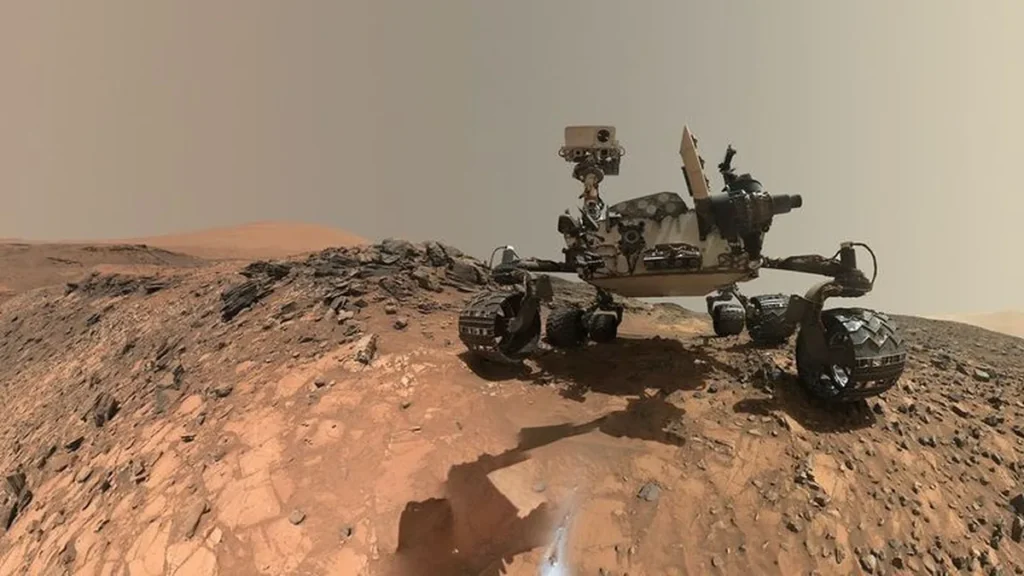
NASA’s Curiosity rover was completing a drill campaign at the Nazca drill hole on Mars during the week whose Earth planning date was Friday, Nov. 6, 2026, and the work targeted disk-shaped and potato-chip-shaped crystal forms in the bedrock. NASA announced the investigation through its Curiosity blog, with the post appearing on Nov. 11, 2026.
The NASA Curiosity blog post came from William Farrand of the Space Science Institute. It described the Nazca area as bedrock containing crystal forms shaped like disks or potato chips. The blog said, “This is an area characterized by bedrock containing disk-shaped (or in a liberal interpretation, potato chip shaped … see linked image) crystal forms.”
Curiosity delivered drill samples from the Nazca hole to its Sample Analysis at Mars instrument. The onboard laboratory analyzes the chemical makeup of samples from Mars. The delivery took place during the Nazca campaign. Scientists hope the chemical analysis will show how the unusual shapes developed and what those shapes consist of.
The rover planned to use ChemCam, its laser-equipped instrument, on Colca, a crystal-shaped formation, to gather information about the formation’s chemical composition. NASA’s blog framed the examination as part of a broader effort to learn the composition of the chip-shaped features. NASA’s blog said ChemCam’s laser observations would take place every sol (a Martian day), with targets including a cluster of crystal forms, a resistant layer beside the Nazca block, and a dark float rock. NASA scheduled these observations for every sol during the Nazca campaign.
Monday’s plan scheduled a LIBS observation of Ahi Veremos, another crystal form, and added more Mastcam frames for the site’s near to mid-field mosaic. The environmental block covered a large dust devil survey. Horizon and atmospheric zenith movies were also included. According to NASA’s blog, written by William Farrand, these observations were scheduled alongside a ChemCam LIBS observation of Ahi Veremos, plus additional Mastcam frames for the Nazca mosaic, and the blog placed the Monday plan within the continuing Nazca drill campaign.

On Wednesday, the schedule featured two targeted science blocks, with one block holding a LIBS depth profile of Colca and another holding a LIBS observation of Bermejo. The rover gathered rock cluster images beneath the Cordillera ridge at long distance using its Remote Micro-Imager. Mastcam gathered more frames of the Nazca mosaic, and more environmental observations occurred, all part of Wednesday’s science plans at the Nazca drill site.
Scientists planned to use Curiosity’s robotic arm and its Mars Hand Lens Imager camera to photograph the crystal-shaped formations by night. They would use white-light and ultraviolet LED lamps. Planners also scheduled a MAHLI mosaic showing the side of the block that contains the Nazca drill hole. The nighttime imaging was part of Friday’s three-sol plan before the rover drove away from the site, and the mosaic was separate from the planned nighttime imaging with white-light and ultraviolet LED lamps.
Planners set Friday’s schedule to three sols and three targeted science blocks, ending with departure from the Nazca drill site. Planners included MAHLI imaging of the side of the block containing the Nazca drill hole, nighttime crystal-form imaging, ChemCam LIBS, and imaging of a Phobos eclipse of the Sun, which the rover team made a priority. Mission planners intended to create a long-distance Remote Micro-Imager mosaic showing dark lenses under a flat surface along the Mishe Mokwa ridge.
The rover was supposed to leave the Nazca drill site and head back along its southerly path so Curiosity could keep exploring Mars. Planners intended the departure to happen after the three-sol plan, which included additional environmental observations before the rover headed south to continue its trek along a southerly route.



Join the discussion