Key facts
- Postdoctoral researcher Keiya Hirashima from RIKEN developed the AI model at the heart of PHEASANT, which predicts how gas surrounding supernova explosions changes over time.
- Professor Michiko Fujii from the Department of Astronomy at the University of Tokyo said improving resolution for a Milky Way-sized galaxy is not straightforward even as computational power increases.
- Hirashima said the simulation allows researchers to follow material circulation directly, and he is interested in the relationship between spiral arms and the formation of molecular clouds where stars are born.
- The PHEASANT paper presented at SC 2026 is titled "Architecture-Agnostic Exascale Star-by-Star Simulation of Our Galaxy" by K. Hirashima et al.
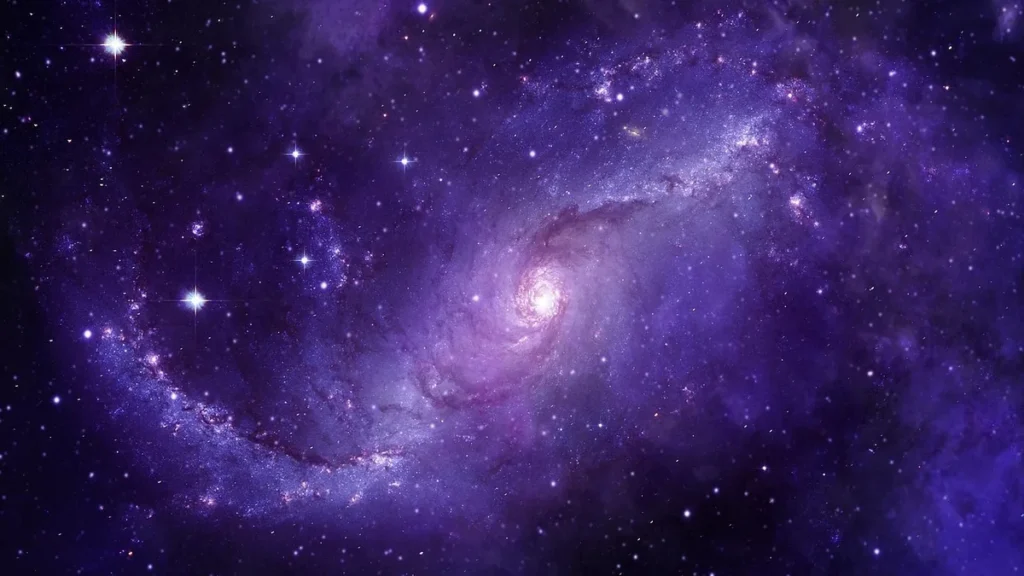
A research team including University of Tokyo scientists presented PHEASANT, a Milky Way simulation resolving the galaxy down to individual stars at record resolution, at SC 2026 in Chicago from Nov. 15 to Nov. 20, 2026.
PHEASANT is an architecture-agnostic exascale star-by-star simulation of the Milky Way. Architecture-agnostic means the software is built to run across different computing designs. Exascale indicates it is made for the largest class of supercomputers. Star-by-star means the model resolves individual stars rather than grouping them into larger averages.
The researchers presented the work at the International Conference for High Performance Computing, Networking, Storage and Analysis in Chicago from Nov. 15 to Nov. 20, 2026. They sought to improve understanding of galactic evolution by combining three of the world’s most powerful supercomputers with an AI-accelerated model that works across different hardware platforms.
The PHEASANT paper presented at SC 2026 is titled “Architecture-Agnostic Exascale Star-by-Star Simulation of Our Galaxy” by K. Hirashima et al. SC 2026 is the International Conference for High Performance Computing, Networking, Storage and Analysis. The paper’s citation appears under “More information” in the source as the conference paper for the simulation work shown at the International Conference for High Performance Computing, Networking, Storage and Analysis in Chicago.
Hundreds of billions of stars fill galaxies along with gas and other materials, and gravity and other forces shape how it all moves. These vast scales of time and space make galactic modeling difficult, which is why simulations rely on simplifications. Representing small regions closely raises computational cost sharply. In a large galaxy like the Milky Way, some areas change rapidly and require many more calculation steps than other areas.
The PHEASANT team pursued new computational methods to address this challenge.
The team modified PHEASANT software to operate efficiently on three different supercomputer systems using CPUs and GPUs from AMD, Intel and NVIDIA. CPUs and GPUs are types of processor chips that handle calculations in different ways. Making the code perform well on all three systems needed special tuning because each machine uses different hardware. This adaptation was described as the team’s most recent key development.
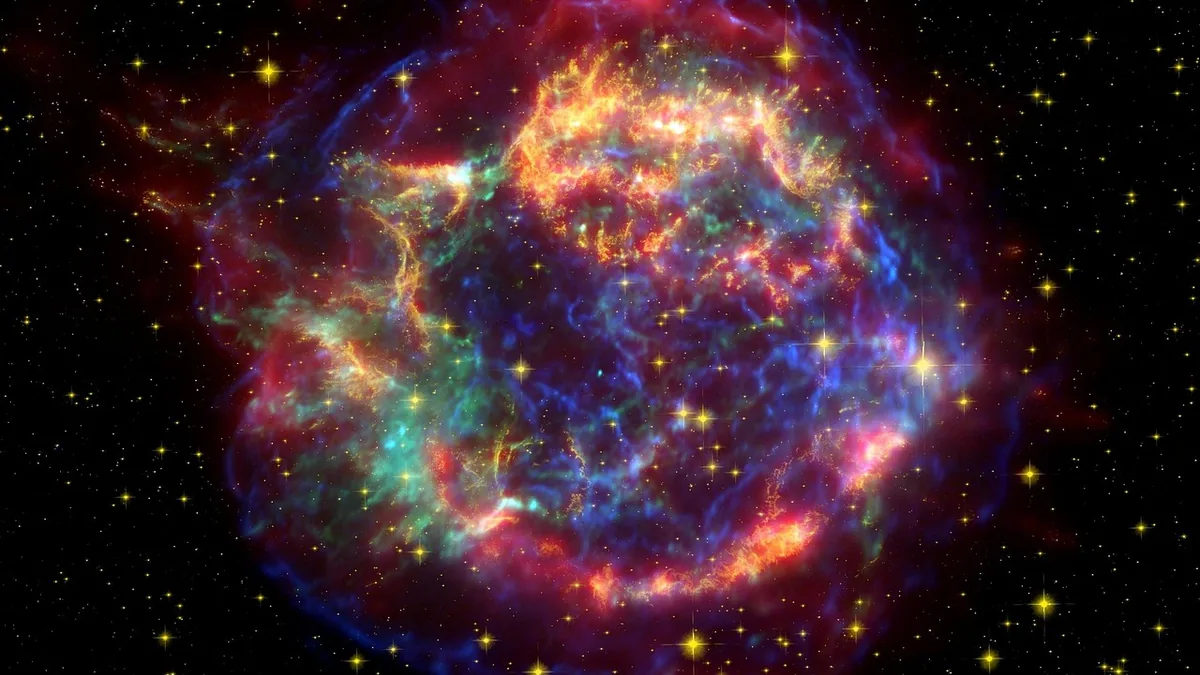
At the heart of the simulation is an AI model developed by Keiya Hirashima, a postdoctoral researcher at RIKEN. The model predicts how gas surrounding supernova explosions changes over time. A supernova is an exploding star that heats and pushes nearby gas outward, a process that normally demands very small calculation time steps. The AI model lets the larger galaxy simulation bypass many of these smaller calculations.
“My model predicts gas distribution after 100,000 years,” Hirashima said.
Direct calculation of supernova gas evolution requires time steps of around 100 years, while Hirashima’s AI model predicts gas distribution after 100,000 years. The AI method makes the PHEASANT simulation around 20 times faster than directly calculating supernova gas evolution in the usual exhaustive way. According to the researchers, this speedup comes from letting the AI predict gas changes rather than computing every small step directly. By predicting gas distribution far ahead, the model avoids the need to calculate every small step.
That approach greatly reduces the computational burden of simulating dense, rapidly changing gas regions and permits much longer time steps for the full galaxy simulation.
Professor Michiko Fujii from the Department of Astronomy at the University of Tokyo said improving resolution for a Milky Way-sized galaxy is not straightforward even as computational power increases. She explained that smaller regions contain denser gas that changes rapidly, forcing simulations to take much shorter time steps and greatly increasing calculation requirements. Fujii made the point while explaining that improving resolution is not straightforward, and immediately before describing the AI model that predicts gas around supernova explosions.
It matters to include individual stars in simulations, astronomers say, because their effects reach well past their immediate surroundings. Groups of massive stars frequently arise in spiral arms fed by cold gas, and some eventually go supernova. The stars warm the gas surrounding them. When several explosions happen near each other, they form massive hot gas bubbles that spark new star formation while pushing matter out of the disk.
Close groupings of supernova explosions create enormous bubbles of hot gas that trigger further star formation and drive material away from the galaxy’s disk. Simulations with insufficient detail can miss connections between individual stellar events, producing a very different picture of gas distribution and changing how the simulated galaxy evolves. Scientists consider it important to model individual stars since their influence reaches well past their immediate surroundings, affecting wider galactic structure through events such as supernova-driven outflows. The researchers aim to learn how star-scale events link to the Milky Way’s broader structure.
Fujii said the simulation lets researchers investigate how individual supernovae affect star formation numbers, the size of giant gas bubbles, and material flowing out of the galaxy, plus how star groups may develop into clusters. The team confirmed PHEASANT produces a star formation rate similar to the rate estimated from observations of the real Milky Way, demonstrating the model’s reliability. This validation supports using the simulation to study how matter moves through the galaxy and how small-scale stellar activity shapes broader galactic structure.
Elements, including those that make up humans, are produced inside stars and released into interstellar gas through processes including supernova explosions, then mixed through the galaxy before becoming part of new stars. Interstellar gas is the material between stars. It covers how matter travels between the disk and the surrounding halo and back, which Hirashima called an important open question. Hirashima said the simulation allows researchers to follow material circulation directly, and he is interested in the relationship between spiral arms and the formation of molecular clouds where stars are born.
Molecular clouds are the birthplaces of stars. Understanding how material moves around the Milky Way remains a central goal of the work. The team hopes tracing element production inside stars and their release into gas will reveal how the Milky Way grows richer in different elements across time and how small-scale stellar activity shapes its larger structure. They also hope their simulation will allow investigations into how material circulates through the Milky Way.
The team has not yet simulated the full process through which a galaxy like the Milky Way forms, and understanding that history will be an important next step. The current simulation resolves individual stars and studies stellar feedback and element circulation, but reconstructing the complete formation history of the Milky Way remains future work. Simulations are always based on simplified models, often in temporal resolution or spatial complexity, because finer detail requires more computing power.

Join the discussion