Key facts
- NASA's AutoNav system was used for more than 90 percent of the total distance Perseverance has traveled (S2, S3).
- On Sol 2006, which was October 11, 2026, the Perseverance rover reached a total driving distance of 45.22 kilometers or 28.10 miles (S1).
- The original mission plan for Perseverance specified a maximum driving distance of 12.4 miles (S2, S3).
- NASA is exploring the use of generative AI to improve the autonomy of future robotic exploration (S1).
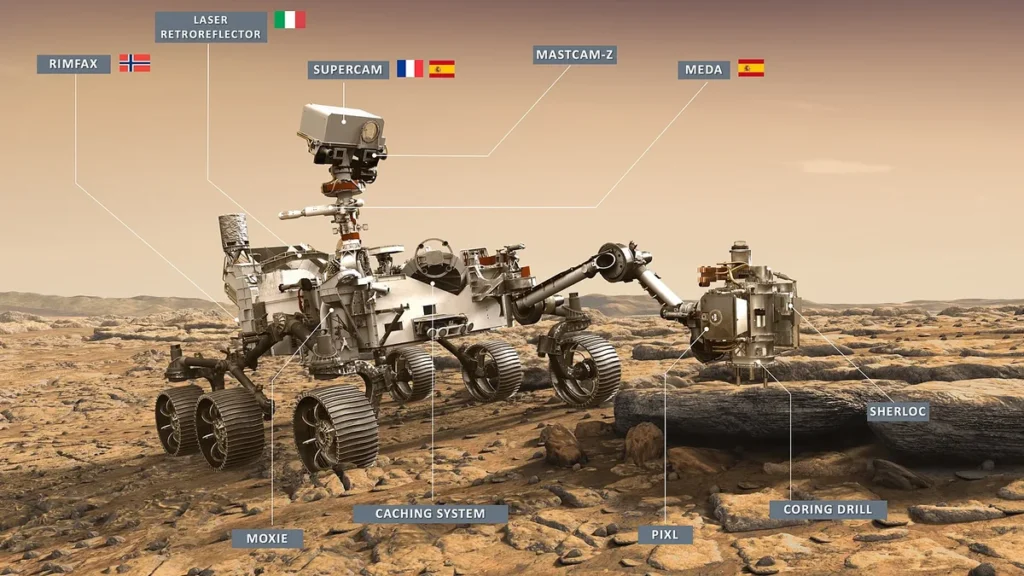
NASA’s Perseverance rover reached 45.22 kilometers, or 28.10 miles, of driving on Mars on Oct. 11, 2026, setting a record for the farthest distance traveled by any vehicle on another celestial body.
The mark came on Sol 2006, a total accumulated over about five and a half years, or approximately 2,006 Martian sols, since Perseverance touched down in Jezero Crater, an ancient river delta, on Feb. 18, 2021. The driving time was shorter than the nearly 15 years Opportunity needed to cover its own record distance.
Opportunity’s previous mark stood at 28.06 miles, a distance the older rover logged before its communications with NASA ceased on June 10, 2018. Sojourner traveled 330 feet in 1997, and Curiosity has traveled 23.65 miles, offering earlier benchmarks for travel on the Martian surface.
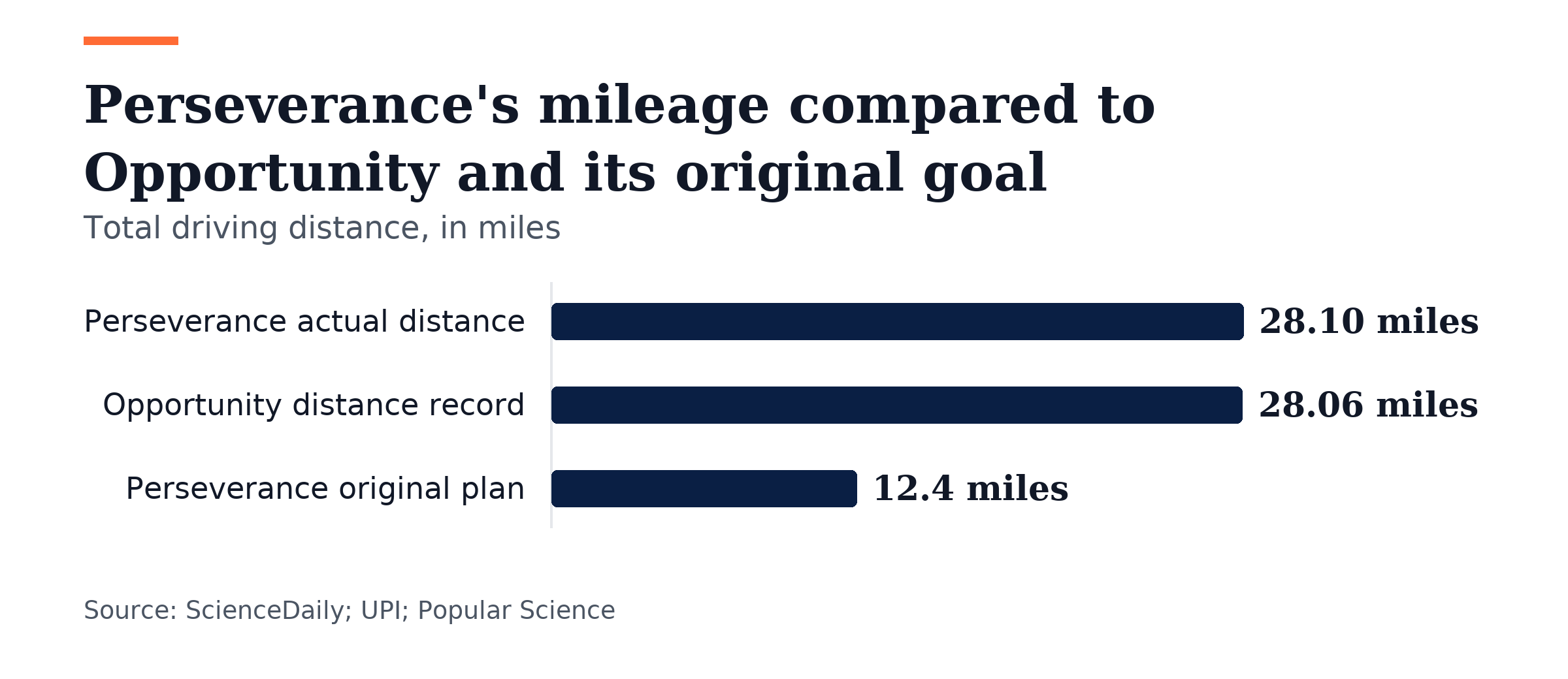
AutoNav, the rover’s autonomous navigation system, steered Perseverance for more than 90 percent of the total distance, while Opportunity and Spirit used a first version of a piloting system only about 5 percent of the time. The original mission plan specified a maximum driving distance of 12.4 miles, a limit Steven Lee, a project manager at NASA’s Jet Propulsion Laboratory, said the rover has far exceeded.
Engineers expanded driving capacity by letting the rover tolerate tilts of up to 24 degrees and by reducing the minimum required clearance under the rover’s belly pan to 20 centimeters. Engineers intended the change to enable safer navigation through difficult terrain.
Perseverance determines its location without Earth-based directions using the onboard Global Localization system, or GBLC. The system relies on a commercial processor from the Ingenuity Helicopter Base Station to compare surface images with orbital photography and fix the rover’s position.
“Given the autonomy to just go, Perseverance is a better driver than the one that landed, and we’re not done,” said Mark Maimone. Dr. Ken Farley said, “The rover has to drive itself, it has to find the route itself.”
NASA has extended Perseverance’s mission operations through approximately the end of 2028, approving the extension in October. The agency is exploring generative AI to improve the autonomy of future robotic exploration. This technology could help create driving plans for complex segments of a journey, assisting the AutoNav system.
Mars presents radiation challenges, including transient bit flips that can disrupt computer memory. Perseverance continues collecting and analyzing rock samples to search for biosignatures and signs of past microbial life.
NASA says the autonomous driving achievement demonstrates maturing technology required for complex future missions like Mars Sample Return and crewed surface exploration.

Join the discussion