On Nov. 2, 2026, Rocket Lab will conduct its 99th launch overall, sending a radar satellite for Japanese company iQPS into orbit from New Zealand on a mission named The Sea God Surveys.
The Electron launch window opens at 16:30 GMT, or 11:30 a.m. U.S. Eastern Time, at Rocket Lab‘s New Zealand site on Nov. 2, 2026. Rocket Lab plans to start its broadcast about 30 minutes before liftoff, giving viewers a chance to watch the countdown.
The company’s broadcast plan lets viewers watch the commercial smallsat deployment live. A dedicated deployment reserves the entire rocket for one customer’s spacecraft rather than combining multiple payloads on a single flight.
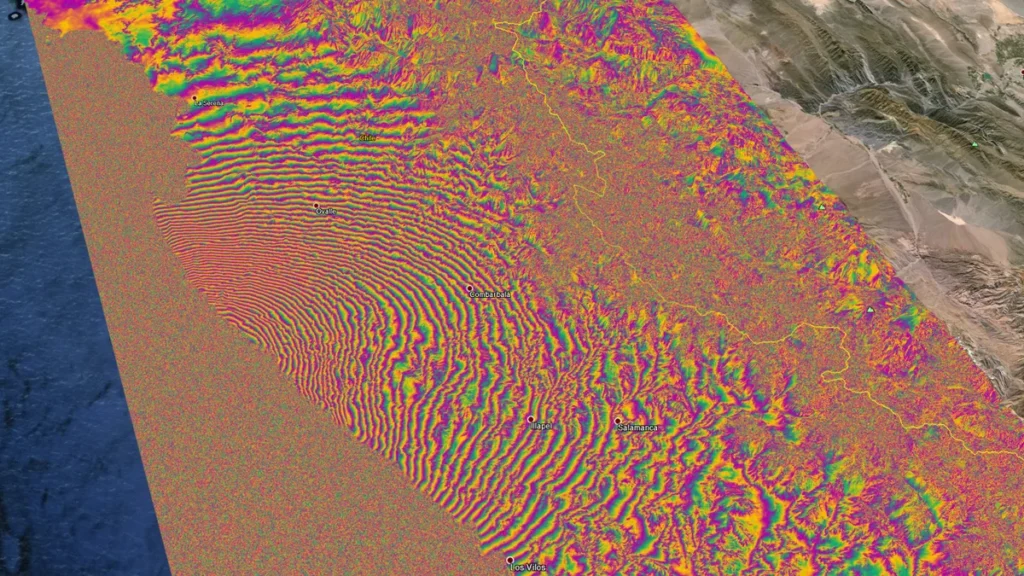
This flight will be Rocket Lab‘s tenth launch for iQPS. iQPS is building a radar satellite constellation, and this deployment marks Rocket Lab’s tenth mission for the company. The company plans 36 synthetic aperture radar satellites for a low Earth orbit constellation. Synthetic aperture radar uses radio signals to form images of the ground. The method lets the spacecraft see the ground from orbit regardless of daylight.
The radar spacecraft’s Earth-observation capability for the iQPS constellation is defined by cloud-penetrating imaging and day-night operation. The spacecraft can observe Earth’s surface through cloud cover and operate during both day and night. That means the imaging works without sunlight and is not blocked by clouds, supporting steady coverage of the ground below. The constellation will use these capabilities for Earth observation. Radar imaging works in conditions that block optical cameras.
Electron is an 18-meter-tall, two-stage launch vehicle, and this mission will be the rocket’s 90th flight.
Rocket Lab’s yearly launch activity includes 16 Electron flights so far this year, with additional missions flown using a different variant. The company has also flown nine HASTE missions, a suborbital version of Electron used to test technologies in hypersonic flight. The HASTE program runs alongside Electron operations at the company.

Join the discussion