Key facts
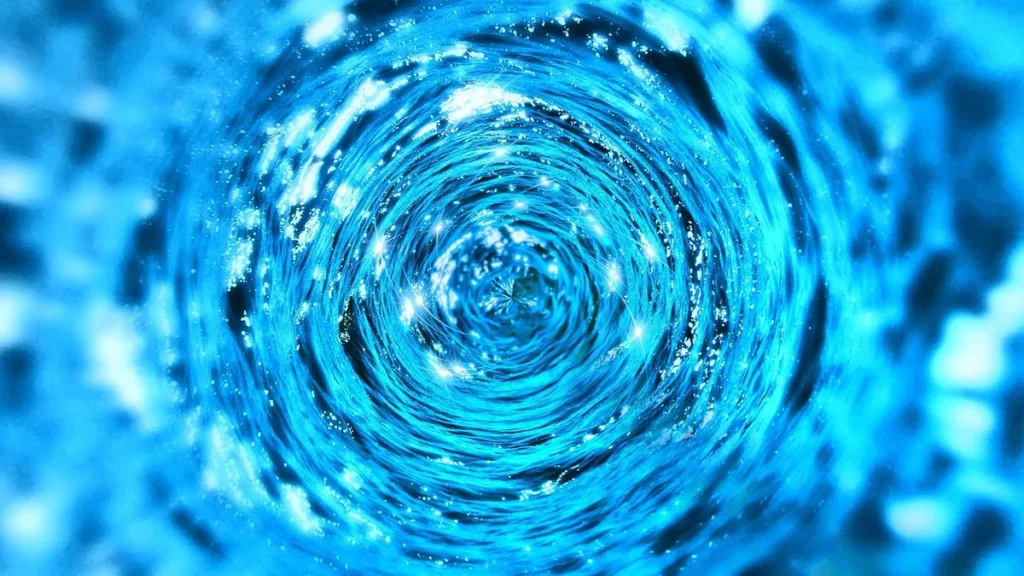
- The researchers identified a phenomenon called Coronal Swirling Conduits, or CoSCos, which are large rotating plasma columns that could extend into the solar corona.
- Researchers propose that CoSCos could solve the coronal heating problem by transporting energy from the lower atmosphere into the corona.
- CoSCos are massive whirlpools hundreds of kilometers wide that rotate at speeds reaching up to 20 kilometers per second.
- The research findings were produced using the Pencil Code computer simulation tool to model magnetohydrodynamics from the convection zone to the lower corona.
A research team from the University of Newcastle, the Indian Institute for Astrophysics, and the University of Sheffield suggests solar spicules are three-dimensional plasma curtains rather than individual cylindrical jets.
Spicules are spike-like geysers of plasma that shoot into the solar atmosphere at tens of kilometers per second. These plasma jets collapse back toward the Sun’s surface within minutes. Tens of thousands of spicules can exist along the solar edge at any moment, with hundreds of thousands or millions across the entire solar surface, shooting upward quasi-periodically against gravity, and most material falls back toward the surface.
The corona itself is hundreds of times hotter than the Sun’s surface, a mismatch known as the coronal heating problem. Nonlinear waves and spicules carry mass and energy fluxes that heat the upper chromosphere and low corona and supply plasma for the solar wind. The chromosphere appears as a red ring during total solar eclipses.
The Astrophysical Journal paper describes spicules as 6–8 Mm (megameters) long, taking the form of warped, denser plasma sheets like pleated drapery rather than isolated cylinders. Scientists viewed spicules as discrete, spinning plasma cylinders or spikes.
The new model proposes they are overlapping folds in a larger, rippling magnetic sheet. Universe Today reports that the curtain interpretation challenges the older tornado-like view of these jet-like features.
The Phys.org report contrasts their pleated, three-dimensional sheet-like shape with older two-dimensional interpretations of isolated cylindrical jets.
In the course of their work, the researchers identified a phenomenon called Coronal Swirling Conduits, or CoSCos, which are large rotating plasma columns that could extend into the solar corona. CoSCos are distinct from spicules and appear as massive whirlpools of plasma. They are a mechanism for transporting energy and mass into the Sun’s upper atmosphere. CoSCos are massive whirlpools hundreds of kilometers wide that rotate at speeds reaching up to 20 kilometers per second.
Automated vortex-detection algorithms found these giant columns in the simulation. Hundreds of spiraling plasma columns with diameters reaching hundreds of kilometers form alongside spicules, show cyclone-like dynamics, extend into the corona, connect atmospheric regions, and consist of plasma made of electrons and ions. Prevalent plasma swirls wider than Great Britain generate the short-lived rotations and number many thousands or even millions in the solar atmosphere at any moment.
CoSCos form when magnetic field lines snap in the solar atmosphere, a process considered a primary candidate for coronal heating, or through baroclinic vorticity generated by pressure and density mismatches at the edges of spicule curtains, which are much denser than the surrounding corona.
The findings came from a computer simulation using the Pencil Code rather than new spacecraft data from Solar Orbiter or the Parker Solar Probe, modeling magnetohydrodynamics from the convection zone to the lower corona. The numerical simulations explaining the spinning spicule clusters ran on the U.K. high-performance computing facility Dial/CSD3. Churning granules beneath the Sun’s surface deliver an acoustic pounding, almost like a drum, to the atmosphere in the modeled environment. Magnetohydrodynamic waves launched by that pounding follow magnetic field lines upward, growing into bow shocks as the gas thins, and when they break they blast atmosphere upward into giant curtains thousands of kilometers high.
From above the simulated plasma looks like accordion-like folds, but from the Sun’s edge the overlapping folds integrate into a single line resembling a spicule, matching curtains swaying and curling over time.
The researchers validated their simulation by comparing it with real observational data from the Hinode satellite and the Interface Region Imaging Spectrograph (IRIS). Hinode, launched in 2006, and IRIS, launched in 2013, provided data on bizarre spicule motions that matched the simulated curving, twisting curtain patterns. Rotating spicule bunches observed by Hinode and IRIS mark regions where theoretical CoSCos transport energy into the solar atmosphere, though much about the process remains unknown.
The jetting behavior and transverse oscillations of spicules are well understood, but the origin of their rapid spinning has remained a long-standing mystery. Earlier models could explain plasma lifting but struggled with sideways and rotational motions seen by telescopes. The new three-dimensional radiative magnetohydrodynamic simulation replicated jet interbraiding and splitting seen in Hinode and IRIS data.
Real spicules last longer and show more complex braiding than the models show. This discrepancy might exist because the Sun’s scale is much larger than the specific atmospheric slice captured in the simulation, suggesting the Sun may have more rotational energy or longer-lived magnetic conduits than simulations capture.
As spicule curtains lose energy and float back toward the surface, the massive tornadoes they kicked up can pull them back up into the corona. CoSCos could solve the coronal heating problem by transporting energy from the lower atmosphere into the corona, linking the structures to coronal heating and the solar wind.
The work is part of a U.K.–India–Australia–Hungary collaboration involving early-career scientists and addresses the supply of nonthermal energy for solar and astrophysical plasma heating. A postdoctoral research fellow from the University of Newcastle, Australia, leads the international team, which includes scientists from the University of Sheffield and the Indian Institute for Astrophysics.
“Our future research with my colleagues at SP2RC will now focus on this new puzzle.” Professor Robertus Erdélyi says future research with colleagues at the Solar Physics and Space Plasma Research Centre will focus on mass transportation between the lower and upper solar atmosphere. Research Matters reports that when solar magnetic fields snap or release energy through spicules and vortices, they can trigger solar storms that knock out satellite communications, disrupt GPS systems, and cause failures in electrical power grids.

Join the discussion