Key facts
- Scientists from the European Southern Observatory announced on October 27, 2026 that they found the first confirmed double debris disc around white dwarf J1328-1450 using the Very Large Telescope in Chile.
- Two surviving planetesimals likely maintain the rings: an inner body a few kilometres across and an outer body as large as Pluto or the Moon.
- The inner ring holds abundant magnesium gas whereas the outer ring contains almost none, indicating different origins or histories for the two source bodies.
- Co-author Felipe Lagos-Vilches of the University of Warwick and Universidad Técnica Federico Santa María described the two gaseous rings as stable and separated by a gap.
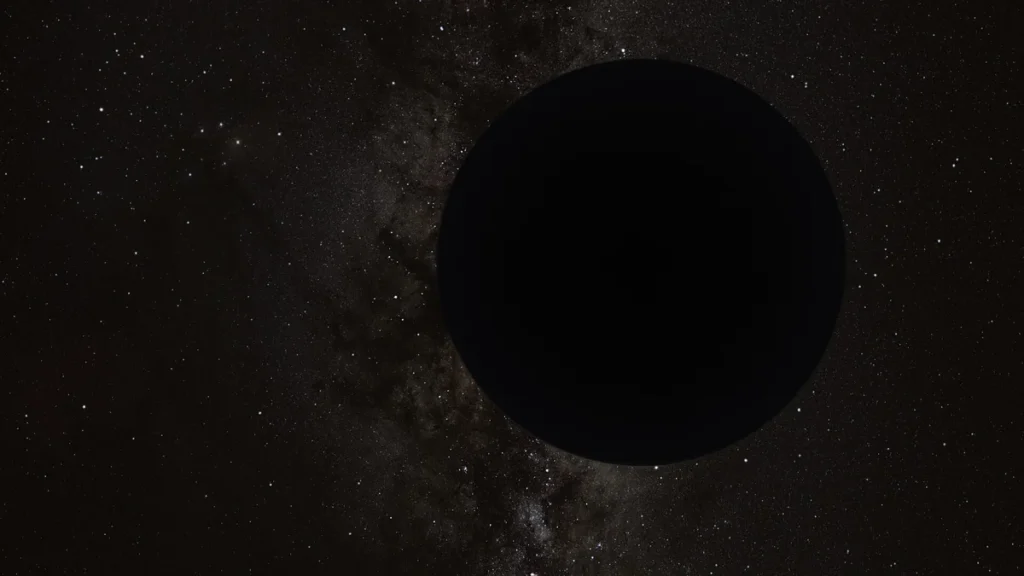
Scientists from the European Southern Observatory announced on Oct. 27, 2026, that they had found the first confirmed double debris disc around white dwarf J1328-1450, the dense remnant left when a star like the Sun dies, using the Very Large Telescope in Chile. A debris disc is a ring of dust and gas orbiting a star.
The peer-reviewed study appeared in Nature Astronomy on Oct. 26, 2026, in a paper titled “A double debris disc around a white dwarf sculpted by two planetary bodies.” The announcement came one day after publication, and researchers made the observations with ESO’s Very Large Telescope in Chile. EarthSky frames the find as a preview of the solar system’s future, while Eurasia Review describes two ring-like debris zones around a dead star not seen before.
X-Shooter, an instrument on the Very Large Telescope, detected four distinct emission peaks — spikes of light at particular wavelengths — in WD J1328-1450. Researchers say those peaks are a signature produced only by two concentric rings orbiting at different speeds and distances. Every known white dwarf debris disc showed a single flat rotating disc signature, and because X-Shooter captured ultraviolet-to-near-infrared wavelengths in one exposure, the peaks appeared simultaneously and could not be an observation-timing artifact.
The team believes two surviving planetesimals — small bodies left over from planet formation — maintain the rings: an inner body a few kilometers across and an outer body as large as Pluto or the Moon. The scientists inferred these unseen objects from the ring structure rather than observing the bodies directly. Tech Times describes the inner source as a small asteroid or moonlet and the outer source as a much larger body stripped of magnesium.
Nicola Gentile Fusillo, the lead author, works at the University of Trieste in Italy, and Eurasia Review also lists him at the INAF-Astronomical Observatory of Trieste. Tech Times calls him the research leader at the Università degli Studi di Trieste. Co-author Felipe Lagos-Vilches works at the University of Warwick and the Universidad Técnica Federico Santa María in Chile.
The inner ring holds abundant magnesium gas, while the outer ring contains almost none, a difference researchers say indicates separate origins or histories for the two source bodies. One alternative raised in the reporting is that the rings may come from different layers, such as crust and core, of a single disrupted planet.
Spectroscopic analysis detected calcium, oxygen, magnesium and iron in the debris. EarthSky lists those elements among the detections. Eurasia Review says the mixture resembles rocky material from our own Solar System, and bdnews24.com adds that the destroyed planets consisted of material like that in our Solar System.
Nicola Gentile Fusillo said “this is the first example of a complex system with a double debris disk and potentially two surviving planetesimals.” Co-author Felipe Lagos-Vilches said “The structure we see in this system is particularly intriguing because the two gaseous rings are remarkably stable and remain separated by a gap.”

Join the discussion