Key facts
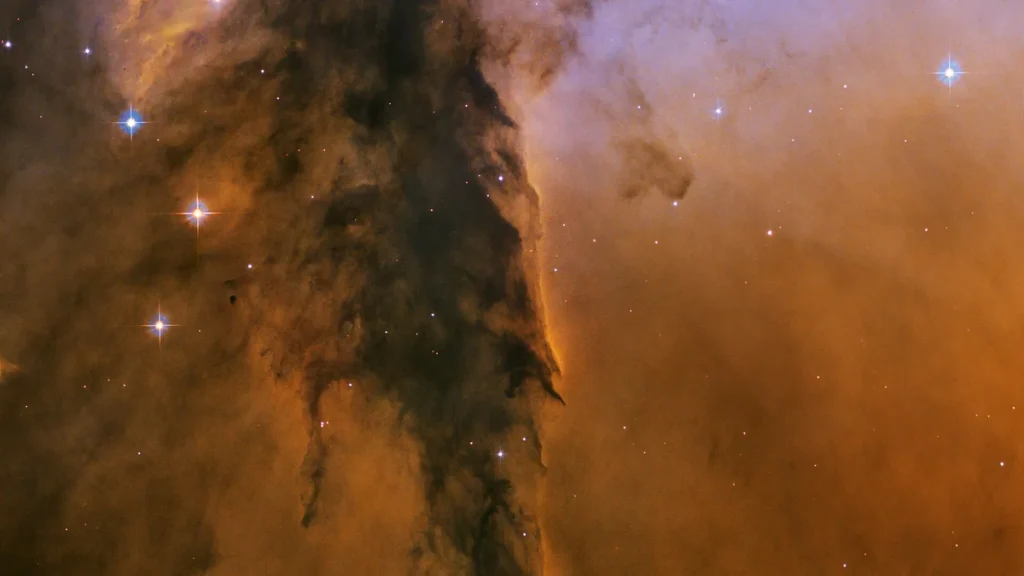
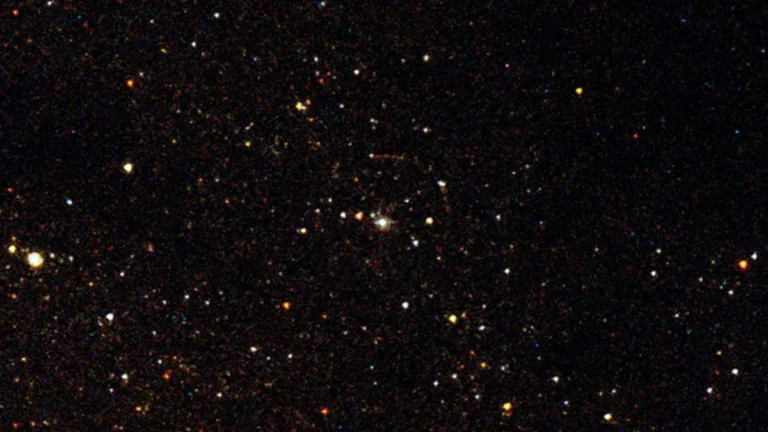
- NASA's Astronomy Picture of the Day for Nov. 23, 2026 features Dark Nebula Lynds 1251 (LDN 1251), also known as the Rotten Fish Nebula.
- The nebula forms stars and is threaded by opaque dust that appears brown.
- In the direction of LDN 1251, regions without stars become noticeable after a few minutes of staring, and a strange dark structure appears after 20 hours.
- NASA's APOD project releases daily pictures of space and includes explanatory text intended to clarify complicated astronomical topics.
Dark Nebula Lynds 1251, also known as the Rotten Fish Nebula, appeared in NASA’s Astronomy Picture of the Day on Nov. 23, 2026.
The project releases daily space pictures and pairs each photograph with explanatory text meant to clarify complicated astronomical topics. Cecilia Chirenti, Robert Nemiroff, Jerry Bonnell, and Keighley Rockcliffe compile and edit the images through NASA/GSFC, NASA Science Activation, and Michigan Technological University.
According to NASA, LDN 1251 is a star-forming region threaded by opaque brown dust. The region contains young stars and dust, and processing the image can make it brighter and more colorful.
According to the APOD text, energetic shock waves, fast stellar winds, and tightly focused jets appear in the region. The APOD explanation says long observation reveals these energetic features.
Staring toward LDN 1251 makes starless regions noticeable after a few minutes, and a strange dark structure shows up after 20 hours. More time spent observing sharpens the dark area, and later processing can brighten it and bring out color. The APOD entry says the following image will show galaxies ringing.
On Nov. 19, 2026, APOD featured the Horsehead Nebula. The object is a dark column of dust and gas roughly five light-years high, and it lies about 1,500 light-years from Earth. It obscures light from behind and blocks red background light from a bright ionized zone that shines because of radiation from Sigma Orionis.
Marca English says the red glow comes from Sigma Orionis, while Mediaindonesia calls the red light ionized hydrogen gas lit by that star. Observers collected Horsehead Nebula image data over nearly six hours at the Utah Desert Remote Observatories, controlling the equipment from more than 2,000 km away.
Mark E. Killion, the remote astrophotographer, operated the equipment from his home in Illinois. The Flame Nebula glows orange with dark filaments on one side, and the reflection nebula NGC 2023 is forming stars.
Marca English places the Flame Nebula to the left of the Horsehead Nebula and Alnitak, part of Orion’s Belt, to the left of center. Alnitak is a triple star system and the easternmost star in Orion’s Belt. Mediaindonesia describes it as the brightest star at left-center of the Nov. 19 image.

Join the discussion