Key facts
- University of Sydney PhD student Dr. Hillary Davis of the School of Physics and Sydney Institute for Astronomy led research published in Nature Astronomy in 2026.
- The research found a massive rotating structure near the Milky Way's center generates powerful shock waves that squeeze gas and trigger star birth where such intense forces normally prevent it.
- As the Galactic bar rotates, its gravity drives nearby gas into powerful shock fronts that compress the gas much as a shock wave compresses air.
- Dr. Davis said masers once linked to the Norma arm line up closely with the shock front that the simulations predicted.
Dr. Hillary Davis of the University of Sydney’s School of Physics and Sydney Institute for Astronomy led research published in Nature Astronomy in 2026 and announced in late November 2026 that found the Milky Way’s rotating central bar drives gas into shock waves that compress the gas and trigger star birth near the galaxy’s center, where such forces usually suppress star formation.
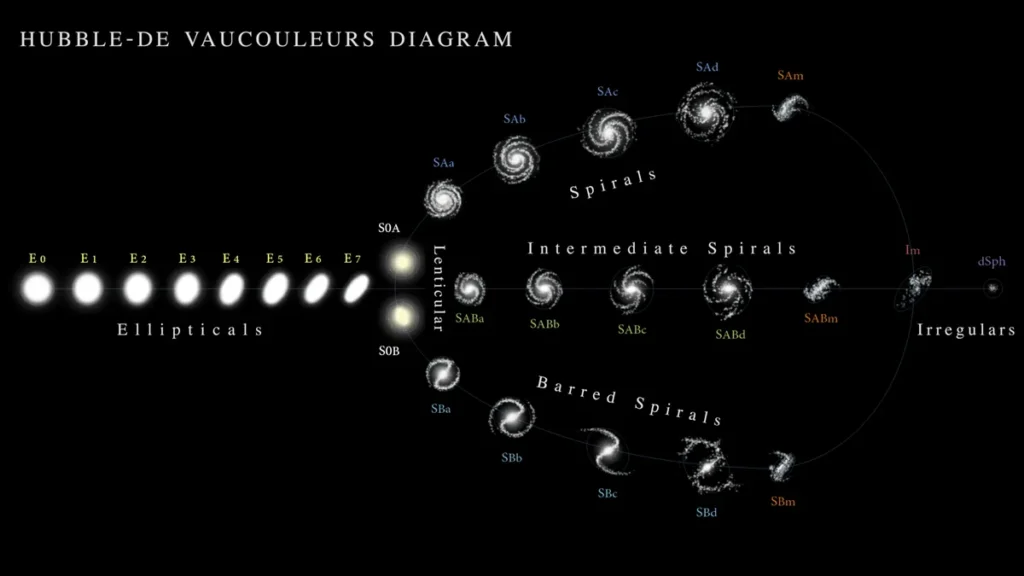
The Milky Way is a barred spiral galaxy whose center holds an elongated concentration of stars called the Galactic bar. As the bar rotates, its gravity drives nearby gas into powerful shock fronts that compress the gas much as a shock wave compresses air. In most other barred galaxies, these intense conditions generally stop new stars from forming even where gas is plentiful, because they make it hard for gas to collapse into stars.
Davis said star formation along a bar’s shock front is rare for most bars in nearby galaxies, although the Milky Way is not the only example. She said the Milky Way is part of a comparatively small set of galaxies where considerable star formation takes place on the shock fronts of the central bar. In most comparable galaxies, stars form very frequently along spiral arms. Davis called it remarkable to observe star formation in another Milky Way region because shocks there are normally powerful enough to suppress star birth much of the time.
“We believe that the Milky Way’s bar has star formation occurring along its shock front,” Davis said. Davis said the masers once linked to the Norma spiral arm line up closely with the shock front that her simulations predicted. That alignment leads her to suggest that at least part of the so-called Norma arm may not be a spiral arm but a region of star formation along the leading edge of the Galactic bar.
“We found that masers previously associated with the Norma arm closely align with the shock front predicted by our simulations,” Davis said. Masers are naturally occurring sources of concentrated microwave radiation tied to massive star formation, working like lasers at microwave wavelengths. The team set galaxy simulations spanning billions of years side by side with maser observations.
This possibility means some star formation once assigned to the Norma spiral arm may instead take place along the central bar, altering the way astronomers view the layout of stars and gas in that area. The Norma spiral arm is named for the constellation Norma as seen from Earth. Davis said the finding brings up questions concerning the Galaxy’s spiral structure and the Milky Way’s bar region, an area that requires more investigation.
The team’s analysis indicates the bar runs about 4.3 kiloparsecs, or roughly 14,000 light-years, from the galactic center along its long axis, backing the idea of a relatively long, slowly rotating bar. A kiloparsec is a unit of astronomical distance. Davis said the results add new limits on the central bar’s size, angle, and rotation speed, qualities including its length, orientation, and rotation speed that researchers have argued about for decades. The bar cannot be easily observed because of the researchers’ position in the Galaxy and dust obscuring the view, so the bar’s properties have been highly debated.
Davis said that matching broad computer simulations of galaxies spanning billions of years to a limited set of observations clarifies the bar and star formation in the Milky Way. She said the work offers fresh insight into structures close to the galactic center and the way gas travels around them.
She has just completed her PhD at the University of Sydney’s School of Physics and Sydney Institute for Astronomy. The paper, “The nature of the Norma arm as a bar-driven star-forming shock front,” appeared in Nature Astronomy in 2026. Its authors are Hillary Davis, Joss Bland-Hawthorn, Thor Tepper-García, Oscar Agertz, and Elizabeth J. Iles. The authors reported no competing interests.
The Australian Research Council, the Knut and Alice Wallenberg Foundation, the Swedish Research Council, the Swedish National Space Agency, the LMK Foundation, and eSSENCE in Sweden provided the research funding. National Computing Infrastructure Australia, an NCRIS capability backed by the Australian Government, together with LUNARC, the Centre for Scientific and Technical Computing at Lund University in Sweden, supplied the computing resources and data storage.
The discovery arrives as NASA prepares a powerful new tool for mapping the galaxy. On Dec. 15, 2025, NASA’s Nancy Grace Roman Space Telescope team released plans for a Galactic Plane Survey intended to reveal tens of billions of stars and explore Milky Way structures that have not been charted before. Julie McEnery, Roman’s senior project scientist at NASA’s Goddard Space Flight Center in Greenbelt, Maryland, said the survey will transform understanding of the Milky Way.
Roman will observe in infrared light to pierce the dust that hides many parts of the galaxy from visible-light view. Roman is scheduled to launch no later than May 2027, with the team proceeding toward a launch as early as autumn 2026. The Galactic Plane Survey will cover nearly 700 square degrees along the Milky Way and map up to 20 billion stars during 29 days spread over the mission’s first two years.
That area is as large as about 3,500 full moons and traces the glowing band of the Milky Way, our edge-on view of the disk-shaped structure containing most of the galaxy’s stars, gas, and dust. Repeated high-resolution observations will let Roman spot minute changes in the positions of stars across 29 days in the opening two years of the mission.
Roman will examine nearly 2,000 young, loosely bound open clusters to learn how the galaxy’s spiral arms set off star formation. Open clusters are groups of young, loosely bound stars. The telescope will also chart dozens of ancient globular clusters near the center. Dozens of ancient, tightly packed globular clusters close to the galactic center could assist astronomers in rebuilding the early history of the Milky Way.
By comparing Roman’s snapshots of clusters scattered across the galaxy, scientists can examine nature versus nurture on a cosmic scale, since cluster stars typically share the same age, origin, and chemical composition. That lets astronomers isolate environmental effects with precision. Roman will peer through stellar nurseries to view millions of stellar embryos, newborn stars still hidden by dust, along with young stars that flare without warning and stars that could have planetary systems forming around them.
Astronomers will use the data to investigate star formation rates over a broad span of masses and to assemble videos that display how stars evolve with time. Star formation is a tug-of-war among gravity, radiation, magnetism, and turbulence. Roman will help study how these forces determine whether gas clouds collapse into full-fledged stars, brown dwarfs heavier than planets but too small to ignite like stars, or new worlds.
Robert Benjamin, a visiting professor at the University of Wisconsin-Whitewater and co-chair of the committee that chose the Galactic Plane Survey design, said a clear view of the galaxy’s central bar will help answer how it formed. The Galactic Plane Survey is Roman’s first selected general astrophysics survey, in addition to the telescope’s three core surveys and Coronagraph technology demonstration. Roman’s five-year primary mission reserves at least 25 percent for astronomers worldwide to propose surveys outside the core programs.
ESA’s retired Gaia spacecraft charted roughly 2 billion stars in the Milky Way using visible light, yet dust still conceals many regions of the galaxy. Rachel Street, a senior scientist at Las Cumbres Observatory in Santa Barbara, California and co-chair of the committee that chose the Galactic Plane Survey design, said the survey will enable researchers to peer through the galaxy’s densest region and examine it properly for the first time.
A separate Roman survey, the Galactic Bulge Time-Domain Survey, will conduct deep microlensing observations over a smaller area in the heart of the Milky Way. Microlensing happens when light from a background star bends around the gravitational well of an intervening object, briefly brightening the star, enabling astronomers to determine the mass and size of foreground objects that are otherwise invisible. While the Bulge survey looks deep over a small area, the Plane Survey will conduct repeated observations over a shorter interval across the whole center for the first complete view of this complex environment.
Videos from Roman showing stars in the central bar region will allow study of ultratight binary objects nearing the ends of their lives through interactions with close companions. Benjamin said compact binaries serve as precursors to gravitational-wave sources, and researchers seek more information about the routes that lead to neutron-star and black-hole mergers.
Roman’s repeated observations will monitor stars that flicker, pinpoint faint dust-obscured stars that produce bright outbursts missed by ground-based surveys, and take high-resolution snapshots of the aftermath. Certain stars pulse in a steady rhythm, and the rate of their pulsing ties directly to their true brightness, allowing Roman to detect blinking stars at greater distances than ever and follow them over time to refine cosmic distance markers. Robert Benjamin said combining Roman’s Galactic Plane Survey with additional Milky Way observations will produce the finest portrait of the galaxy yet obtained.

Join the discussion