Key facts
- NASA states that during Artemis III the SLS core stage's four RS-25 engines will send the Orion spacecraft to low Earth orbit so it can perform critical rendezvous and docking trials involving lunar lander systems.
- The Artemis III crew photo was taken at the Neil A. Armstrong Operations and Checkout Building at NASA's Kennedy Space Center in Florida, where the Orion spacecraft currently resides.
- NASA states that Artemis IV might see astronauts reach the lunar surface for the first time since 1972 if Artemis III goes to plan and a lunar landing vehicle passes docking tests with Orion.
- On November 18, 2026, engineers ran developmental RS-25 engine No. 10001 for three minutes and 20 seconds, or 200 seconds, at the Fred Haise Test Stand of Stennis Space Center near Bay St. Louis, Mississippi.
Andre Douglas, an Artemis III mission specialist, stood inside an RS-25 engine test article at the Vehicle Assembly Building at Kennedy Space Center in Florida on November 17, 2026. The visit occurred as part of Space Launch System preparations ahead of the Artemis III Moon mission.
NASA says that during Artemis III the SLS core stage’s four RS-25 engines will send the Orion spacecraft to low Earth orbit so it can perform critical rendezvous and docking trials involving lunar lander systems. The agency frames Artemis III as a precursor mission that builds capability for Artemis IV, which involves returning astronauts to the lunar surface. NASA says the capabilities tested during Artemis III are needed before astronauts return to the lunar surface on Artemis IV.
The Artemis III crew includes NASA astronaut Randy Bresnick serving as mission commander, NASA astronaut Frank Rubio as mission specialist, European Space Agency astronaut Luca Parmitano serving as mission pilot, and NASA astronaut Andre Douglas as mission specialist. The four astronauts were photographed holding up three fingers alongside the Orion spacecraft during a pause in training at the Neil A. Armstrong Operations and Checkout Building at Kennedy Space Center. This building is where the Orion spacecraft the crew will fly to space currently resides.
The Artemis III crew plans to launch to low-Earth orbit to practice rendezvous and docking with Blue Origin’s Blue Moon and SpaceX’s Starship lunar landing vehicles, respectively. The crew must undergo months of critical training to be physically ready and prepared to handle any situation during the mission. NASA states that Artemis III is not landing astronauts on the moon but is a critical step toward that goal.
NASA states that Artemis IV might see astronauts reach the lunar surface for the first time since 1972 if Artemis III goes to plan and a lunar landing vehicle passes docking tests with Orion. Artemis IV is scheduled for 2028 and aims to land astronauts on the lunar surface, launching from Kennedy Space Center in Florida aboard the massive Space Launch System rocket to carry astronauts aboard Orion.
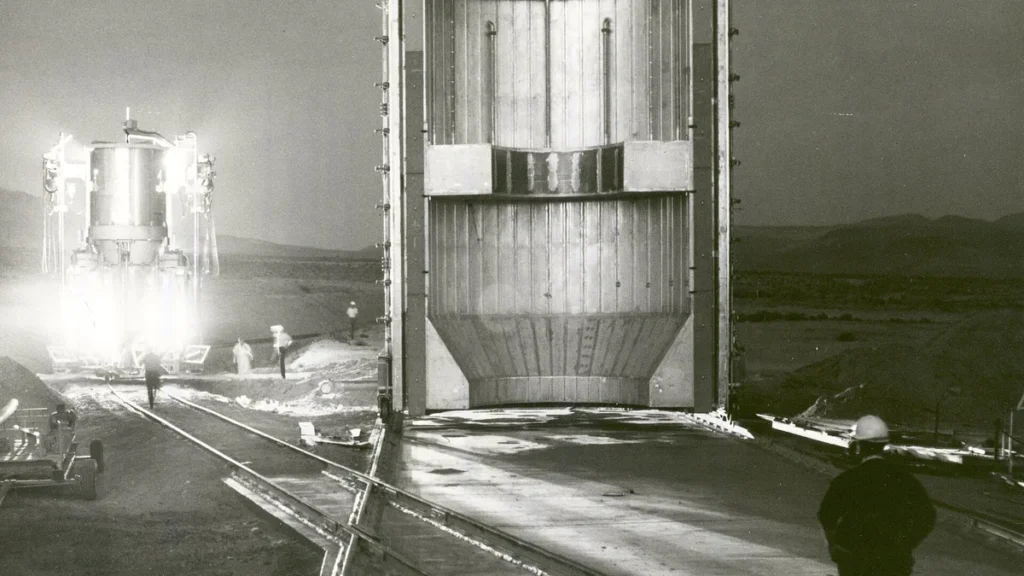
On November 18, 2026, engineers ran developmental RS-25 engine No. 10001 for three minutes and 20 seconds, or 200 seconds, at the Fred Haise Test Stand of Stennis Space Center near Bay St. Louis, Mississippi. The developmental engine is not intended for spaceflight, but the test will provide NASA and contractor L3Harris Technologies with data to improve RS-25 engine power, efficiency, and reliability for upcoming Artemis missions. Specialists from NASA, L3Harris Technologies, and Nova Space Solutions carry out RS-25 engine tests at Stennis Space Center to verify performance under extreme launch conditions.
Each SLS rocket uses four RS-25 engines, which together generate as much as 2 million pounds of thrust to help propel the spacecraft away from the launchpad and into space. NASA requires RS-25 engines to be tested at Stennis Space Center before flight clearance to confirm reliable performance under extreme launch conditions. The November 18, 2026 RS-25 engine test supports preparations for the 2028 Artemis IV Moon landing and NASA’s ambition of sending astronauts to Mars.
NASA aims to explore the Moon’s South Pole, establish a sustained human presence there, and develop experience and technologies for the first crewed trip to Mars. Hydrogen leaks during pre-launch testing for Artemis I and II contributed to launch delays of several weeks for both missions. NASA is installing a new two-seal design on the SLS moon rocket fueling interface to stop hydrogen leaks that delayed Artemis I and II.
NASA cut short the Artemis II wet dress rehearsal in February after finding a liquid hydrogen leak at the tail service mast umbilical interface that had seen high concentrations of liquid hydrogen in the countdown. The agency reported the leak in a blog post after the first wet dress rehearsal was cut short. NASA launched Artemis II after a second wet dress rehearsal on April 1.
The quick-disconnect mechanisms—fuel and power couplings that separate before launch—sit in the electric and propellant lines of the tail service mast umbilical connecting the SLS mobile launch platform base to the rocket’s core stage, and they retract quickly before liftoff. These fittings were identified as the source of hydrogen leaks during pre-launch testing for Artemis I and II. Terry Prickett, NASA’s chief engineer for the SLS core stage, said testing of the new interface has begun and additional testing at Stennis Space Center in Mississippi is expected soon with no precise date set.
Terry Prickett, NASA’s chief engineer for the SLS core stage, said, “The new design is a pipe within a pipe, and we’ve got two of those seals in there.” The Artemis III core stage and solid rocket boosters will receive the new interface for checkout at Launch Complex 39B in Florida in the first half of 2027 after testing at Stennis. NASA is targeting a mid-2027 launch for Artemis III.
Prickett described the previous quick disconnect fitting as a single-seal design that required the interface to be centered perfectly with a spring-loaded bellows pressing to form the seal, so misalignment could cause problems. He described the new design as a pipe within a pipe containing two seals of different diameters in a step-seal configuration with built-in redundancy. Prickett said the new interface can be easily removed from the existing structure as two new hardware pieces that bolt in as replacements for the old ones, and the old design can be restored.
SLS program manager John Honeycutt said at a March 30 press conference that leakiness might have resulted from Teflon creep, suggesting a seal may have become misshapen or faulty after 10 months in the interface. NASA replaced the seal following the first Artemis II wet dress rehearsal, and after the second rehearsal a different NASA official said the replacement sharply cut the leakiness.



Join the discussion