Key facts
- In the Copenhagen simulations, only about 30% of vaporized easily vaporized elements remained in a planet's gas blanket within a year, and less than 3% after five years.
- A leading idea says Earth's water came from water-rich material delivered from far away, such as icy pebbles formed in colder parts of the early solar system.
- Scientists say questions remain about how water reached Earth from such distant regions and whether those delivery processes can fully account for the planet's chemical composition.
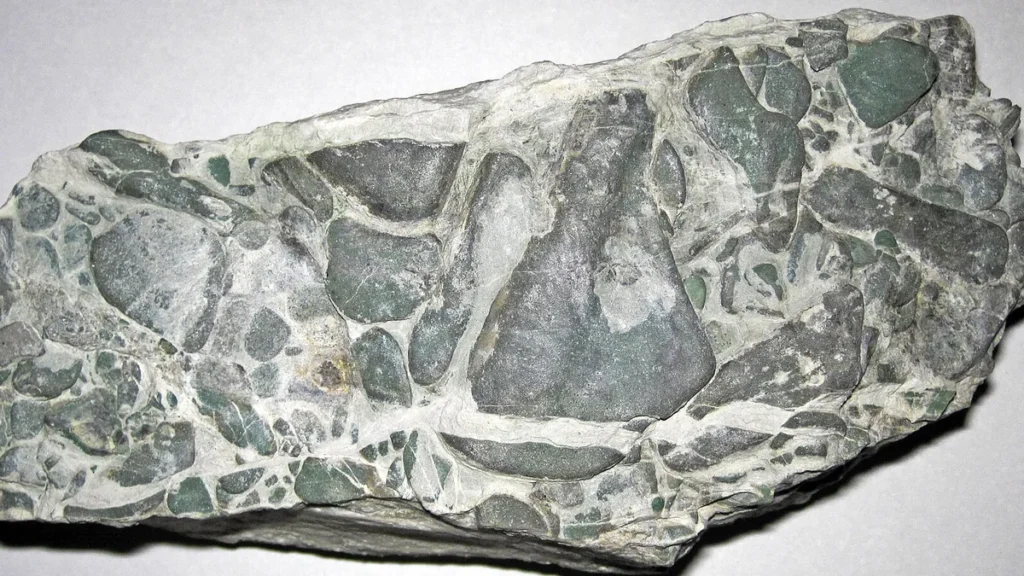
- Pebble accretion describes how small rocky particles built up into a larger planetary body as Earth formed.
On Oct. 27, 2026, researchers at The University of New Mexico reported that Earth produced much of its water during formation as rocky pebbles reacted with the hydrogen-rich atmosphere around the young planet. Graduate student Susmita Garai led the study with Zachary Sharp, professor and director of Earth and Planetary Sciences, and Peter Olson. The peer-reviewed paper, Experimental simulation of water formation on Earth from dry pebble rain, appeared in Nature Geoscience in 2026 with DOI 10.1038/s41561-026-02118-7.
The team heated silicate rock samples in streams of hydrogen and, for comparison, helium at temperatures between 1,200°C and 1,400°C. Experiments ran for 15 minutes to three hours. In the hydrogen runs, nearly 80% of the iron oxide converted to metallic iron and released water vapor, while the same reaction did not occur in the helium experiments.
Zachary Sharp said extrapolation of the work suggests hundreds of oceans’ worth of water were likely produced through this reaction during early Earth’s development. He and his team had suspected they would produce iron metal and water but did not know how fast or how much, and were surprised by the scale of the result.
water is produced in just minutes in the high-temperature environment of the early Earth's atmosphere.
Zachary Sharp, Phys.org
Pebble accretion describes how small rocky particles built up into a larger planetary body as Earth formed. The concept is new, existing for only about the last decade, according to Sharp. As Earth formed, a sufficiently massive planet could develop a hot, high-pressure hydrogen-rich atmosphere, and falling silicate pebbles could react iron oxide with hydrogen to form metallic iron and water vapor.
Researchers said water could form on Earth-sized exoplanets if those planets formed under similar conditions. Sharp said he expects water and possibly life on other Earth-sized worlds around distant stars, and he described pebble accretion as addressing many problems with today’s planet-formation model. The researchers said determining how much of Earth’s water originated through this mechanism will require further research.
On Oct. 18, 2026, research from the University of Copenhagen found that most of Earth’s mass appears to have come from two growing planetary bodies formed primarily by collecting small pebbles, while Mars appears to have formed mostly from large space rocks. Haiyang Wang and Anders Johansen of the Globe Institute co-led the work, with researchers from ETH Zurich and the University of Arizona’s Lunar and Planetary Laboratory as co-authors. The full Copenhagen study appeared in the journal Nature Astronomy.
The Copenhagen team’s best-fitting models indicate that two pebble-grown bodies supplied at least 75% of Earth’s mass, with Vesta-like rocks contributing up to 25%. The researchers compared their planet-growth models to measurements of 13 elements in Earth’s mantle. When Earth formed entirely from large rocks, the models matched the planet’s chemistry far less well than when the models included pebbles.
For Mars, the models indicate about 73% of its mass comes from Vesta-like rocks and about 27% from pebbles, with big rocks supplying more than about 65% in each version. The researchers modeled large-space-rock building blocks on asteroid Vesta, whose meteorites indicate it lost substantial amounts of vaporizable elements below about 1,700°F (930°C). The rocky mantles of Earth and Mars contain smaller amounts of easily vaporized elements such as sodium, potassium, and zinc than the solar gas and dust cloud.
In the Copenhagen simulations, only about 30% of vaporized easily vaporized elements remained in a planet’s gas blanket (the envelope of gas around a growing planet) within a year, and less than 3% after five years. Pebbles falling through the gas blanket heat up and vaporize these elements, and nearly all the vapor escapes within a few years in the model.
Researchers estimate the model’s pebble-grown impactor at 8% to 43% of Earth’s mass, a range overlapping mass estimates for Theia, the body thought to have struck the young Earth and formed the Moon. If researchers allow the original rock chemistry to vary freely, models suggest Earth’s large-rock share could reach roughly 40%, though that version depends on an element-loss pattern absent from known meteorite parent bodies. The Copenhagen researchers assumed the giant impact left easily vaporized elements intact, while acknowledging that how much such collisions remove remains poorly understood.
In every model variation, including rocks more depleted than Vesta, rocky material contributed over roughly 65% of Mars’s mass and pebbles remained above roughly 10%. The authors propose that gravity from bigger nearby young planets may have disturbed Mars’s orbit and reduced its pebble gathering. Haiyang Wang said the percentages might vary somewhat, but the analyses consistently point to Earth and Mars forming in two different ways.
Earth and Mars appear to have formed in different ways.
Anders Johansen, AOL.com
Anders Johansen said understanding volatile loss during planet formation would help scientists predict how much water and other life-supporting material a world ultimately keeps.
Scientists who study isotopes disagree about whether Earth incorporated material from the outer solar system, a debate the Copenhagen study addresses with a different line of evidence. Observations of some stars suggest they have recently swallowed rocky debris containing little of the easily vaporized elements, indicating that rocky material beyond our solar system also loses these substances.
A leading idea says Earth’s water came from water-rich material delivered from far away, such as icy pebbles formed in colder parts of the early solar system. Scientists say questions remain about how water reached Earth from such distant regions and whether those delivery processes can fully account for the planet’s chemical composition.
Enstatite chondrites contain sufficient hydrogen to have delivered at least three times the mass of water in Earth’s oceans. Asteroid Ryugu samples returned by Hayabusa2 match Earth’s ocean water, and Ryugu’s CI chondrite composition could have delivered 30% of the total mass of water in Earth’s oceans.
In the early inner Solar System, temperatures were high enough that liquid water would vaporize and escape into space. The planet originated roughly 4.54 billion years ago following the collapse of a gas-and-dust cloud that formed the Sun, with leftover material building the rest of the Solar System. A Mars-sized body named Theia is thought to have struck Earth roughly 4.51 billion years ago, melting mantle material and forming the Moon from debris, with at least one study proposing that Theia delivered water. The theorized Late Heavy Bombardment occurred around 4.0 to 3.8 billion years ago when shifting outer-planet orbits sent icy space rocks into the inner Solar System, many of which struck Earth.
Another theory proposes that Earth made its own water. Modeling suggests molecular hydrogen shrouding baby exoplanets could interact with magma oceans to form copious amounts of water.
Giotto’s 1986 flyby of Halley’s Comet and Rosetta’s 2014-to-2016 study of Churyumov-Gerasimenko found comet water with chemical signatures unlike Earth’s water. In September 2023, NASA’s OSIRIS-REx mission brought asteroid Bennu samples back to Earth, and early analysis detected water and organics.

Join the discussion