
Key facts
- President Trump nominated Joshua Shoemaker to be NASA's Chief Financial Officer, Robert Steinau to be Inspector General, and Danielle Thumann Severs to be an FCC commissioner.
- Three commissioners are needed for the FCC to conduct Commission business.
- Luján cited FOIA documents showing Thumann Severs worked on media-related issues including Skydance commitments for FCC approval of its merger with Paramount.
- Luján told reporters before the markup he expects Carr and potentially Thumann Severs would be called to testify under Democratic control next year, and he said everything should be on the table regarding subpoenas.
The Senate Commerce Committee advanced two NASA nominations and one FCC nomination on Nov. 18, 2026, despite a Democratic boycott, with all 15 Republicans present voting 15-0 for each nomination while the committee’s 13 Democrats were absent. Chairman Cruz announced the nominations were ordered reported, meaning approved, and the party-line vote sends the nominees to the full Senate for confirmation, but the procedural fight over whether the committee could act without minority members is likely to continue on the Senate floor.
The three nominations at stake represent different offices with different responsibilities. President Trump nominated Joshua Shoemaker to be NASA’s Chief Financial Officer, a position that has been vacant since the start of the Trump administration in January 2025; the CFO role is one of four NASA positions requiring Senate confirmation, alongside the administrator and deputy administrator, and sits at the center of the agency’s financial governance. Shoemaker, an accountant with more than 20 years in the private sector and Mississippi state government, served as Controller of the Republican National Committee from March 2025 to March 2026 and has been a senior adviser in NASA’s Mission Support Directorate since August. At the Nov. 10 hearing, Shoemaker said he would focus on financial accountability, improved visibility into the financial performance of NASA programs, transparency with Congress, and modernization of NASA financial systems, and he deferred questions on specific programs and the proposed U.S. Space Academy, saying the president will make decisions on locating it.
The second NASA nomination is Robert Steinau for Inspector General, a role with a different focus and a much longer tenure in the agency. Steinau has been in the NASA IG office since May 2009 and served as acting Inspector General from December 2024 to Sept. 18, 2026, stepping down when nominated for the permanent position; he is currently Assistant IG for Investigations and previously worked for the Department of Energy’s Office of Inspector General and the U.S. Secret Service. NASA has lacked a Senate-confirmed inspector general since the departure of Paul Martin in late 2023. Steinau told the committee that as inspector general he would focus on three critical challenges: returning humans to the moon, transitioning from the International Space Station to commercial stations, and cybersecurity.
The third nomination, Danielle Thumann Severs, would fill a Republican vacancy on the five-member FCC and has drawn the most intense opposition. Thumann Severs is currently Senior Counsel to FCC Chairman Brendan Carr, where she has worked on matters before the Wireline Bureau, the Public Safety and Homeland Security Bureau, and the Consumer and Governmental Affairs Bureau. The FCC assigns the radio frequencies needed by all satellite operators to communicate with their spacecraft and sets rules on orbital debris, and the agency created its own Space Bureau in 2023 as satellite operations grew with the advent of megaconstellations. If confirmed, Thumann Severs would give the FCC three Republican members and one Democrat, Anna Gomez, and the FCC has five commissioners with three needed for the commission to conduct business.
The Democratic boycott was an attempt to deny a quorum under committee rules that historically required minority-party attendance for official action. Committee Democrats urged Chairman Ted Cruz to delay the vote on Thumann Severs, but Republicans went ahead on Nov. 18, and Cruz and others sharply criticized Democrats for not attending. Ranking Member Maria Cantwell said Democrats object to nominees being rushed through in a lame duck session and that Gomez should be renominated, and she stated that all Democratic members object to stacking independent commissions with Republicans and rushing nominees through the committee process with no Democratic pairs. The Shoemaker and Steinau nominations were not controversial, but Democrats opposed Thumann Severs because she is not paired with a Democratic nominee as is long-standing practice.
The procedural fight centers on what rules govern the committee, and lawmakers contest the answers. The lack of any minority-party members would have meant lawmakers could not take votes, and the committee had been operating under 118th Congress rules because it did not adopt rules at the beginning of the 119th Congress. Cantwell’s spokesperson said committee rules in effect since 2005 require one minority member as part of a quorum for any bill, resolution or nomination to advance, and said Cruz never adopted rules for this session, leaving the panel operating without rules during his chairmanship. A Cruz spokesperson countered that Senate rules allow the nomination to advance to a vote in the entire chamber.
Democratic concerns about the FCC nomination rest on a changed legal environment that has significant implications for independent agencies. The Supreme Court ruled on June 29, 2026, in Trump v. Slaughter that presidents may remove leaders of independent agencies without cause, ending the earlier assumption that presidents could remove such commissioners only for cause. Since its creation in 1934, the FCC was an independent agency not subject to White House direction, but the legal landscape has shifted. Democrats worry that once a third Republican joins the panel, President Trump will fire Anna Gomez, whose term expired in June but who continues in a holdover capacity allowed under the Communications Act, permitting service through the end of 2027.
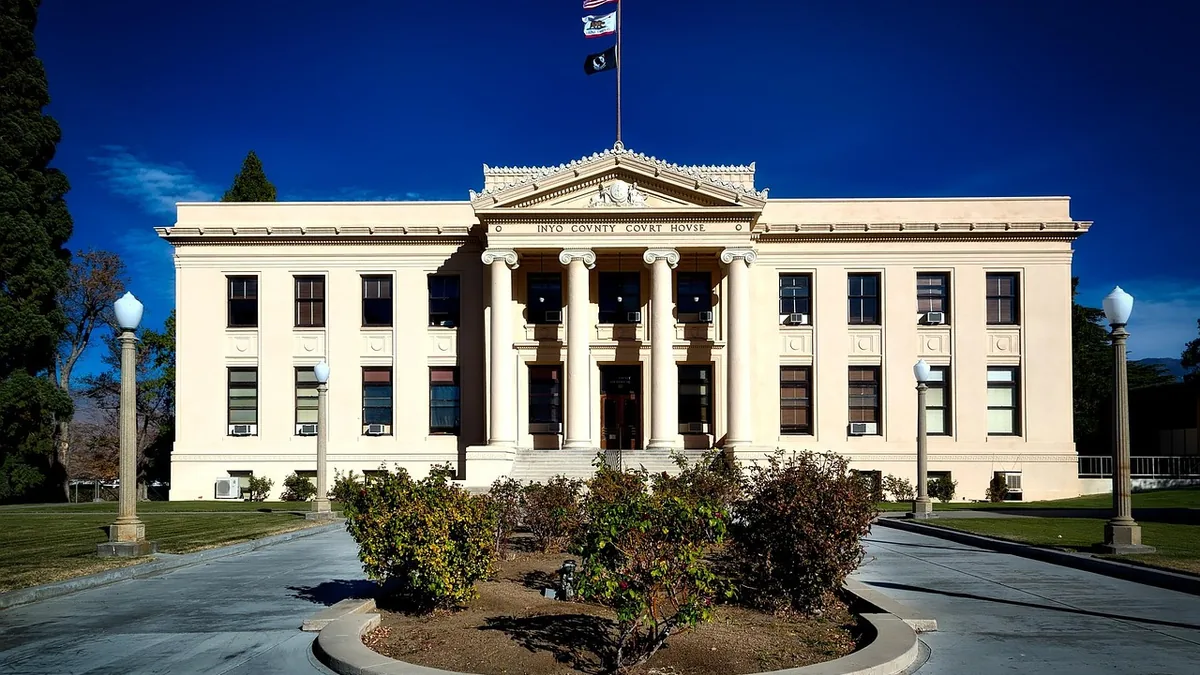
The practical stakes of the nomination fight for Democratic commission representation are direct. Right now there are two Republicans, Brendan Carr and Olivia Trusty, confirmed last year without a Democratic counterpart, and if Thumann Severs is confirmed, the three Republicans could then constitute a quorum on the commission, allowing President Trump to potentially fire Gomez and leave the FCC with no Democratic voice at all. Hickenlooper said the FCC was established as an independent bipartisan agency because having both parties at the table ensures major policy decisions serve the public interest and are not restrained by a partisan agenda, and that a bipartisan FCC is essential to avoid large-scale media consolidation and protect a free and diverse press, and that thanks to the Supreme Court ruling, if Thumann Severs is confirmed, Trump could fire Gomez and have an FCC with no Democratic voice at all. He noted that since the FCC requires three commissioners for a quorum, Gomez’s presence in the current two-to-one Republican majority is necessary for the FCC to conduct business, and he also said he does not think this strategy will age well in a new Congress or administration, and that the same playbook is being used across other independent agencies, and he cited Thumann Severs’ career as largely spent serving Brendan Carr, including near daily meetings with Chairman Carr.
The timing of the vote reflects the impending partisan shift in the Senate. Cruz insisted there is ample precedent for approving nominations in lame duck sessions, citing December 2024 when the committee advanced eight of President Biden’s nominees before lawmakers swore in the new Congress, and he contrasted the 2024 Democratic-led markup with the current Republican-led markup to defend proceeding without Democrats. Cruz said Democrats will control the Senate in January but today is Nov. 18 and the American people elected each senator to fulfill duties including advice and consent for full terms. Republicans are hoping to get Thumann Severs confirmed before Democrats take Senate control in January, when Cantwell expects to resume chairing the committee, having chaired it in the 117th and 118th Congresses.
The nomination fight also involves allegations that Thumann Severs provided false testimony to the committee, after she said at a hearing last week that she never worked with Carr on media-related topics, leading to accusations of false testimony. Sen. Ben Ray Luján wrote a letter to Cruz calling for removal of Thumann Severs’ nomination because she lied to the committee, citing FOIA documents showing she worked on media-related issues including Skydance commitments for FCC approval of its merger with Paramount. Democrats have criticized the FCC and Carr for allowing media consolidation including by Skydance, and there has been bipartisan criticism of Carr’s threats against broadcasters for speech he disagrees with. Hickenlooper cited Carr’s September 2025 threat of FCC regulatory action against ABC to take Jimmy Kimmel off the air, and he said Carr has continued to threaten broadcasters over what many consider First Amendment-protected speech and editorial news decisions, while Luján told reporters before the markup he expects Carr and potentially Thumann Severs would be called to testify under Democratic control next year and said everything should be on the table regarding subpoenas.
The NASA nominations come against a backdrop of significant workforce concerns that directly affect the agency’s exploration ambitions. NASA lost roughly 22 percent of its workforce in 2025 and 20 percent of employees at the Ph.D. level, and current and former employees raised alarms that these losses could threaten safety and mission assurance as the agency takes on efforts like the Moon Base. The committee recently celebrated the success of the Artemis II mission and what it means for continued American leadership in space exploration. In this context, the CFO and IG positions are particularly important: the CFO oversees financial accountability and the IG provides oversight of mission safety and cybersecurity, and Steinau specifically identified returning humans to the moon, transitioning from the ISS to commercial stations, and cybersecurity as his three critical challenges.
The procedural precedent for the current boycott also has historical context. The panel’s March markup on an aviation safety bill drew a Democratic boycott because the bill had been left off the agenda, and after deferring action the committee eventually agreed to hold the markup at a later date. In a letter Monday, Democrats quoted Cruz from a 2014 statement about Loretta Lynch’s nomination that controversial nominees should not be confirmed in the lame duck session by senators who just lost their seats, seeking to hold Cruz to his own prior standard on lame-duck confirmations. Cruz, however, framed the nomination on its merits, saying Thumann Severs is being nominated to fill a Republican vacancy and has the required credentials.
An anonymous Democratic committee staffer said the remaining recourse is to go to the floor and make an inquiry, then the chair would have to issue a formal ruling, and a challenge on the Senate floor could ultimately decide the fate of the nominations. The committee announced on Nov. 11, 2026 that it would meet on Nov. 18 to vote on the nominees, sending them if approved to the full Senate for a confirmation vote.




Join the discussion