Key facts
- Reliable power generation is necessary for orbital data centers to be viable.
- Kyumin Lee, Business Development Manager at Flexell Space, characterized the MoU as a significant step in Korea-Europe cooperation on space energy and infrastructure.
- Emeric Lhomme, Chief Executive Officer of ALATYR, said ALATYR's orbital infrastructure is built to support multiple generations of computing hardware.
- Growing demand for AI computing has led companies to explore orbital data centers, with Axiom Space among those advancing plans for space-based computing and data processing.
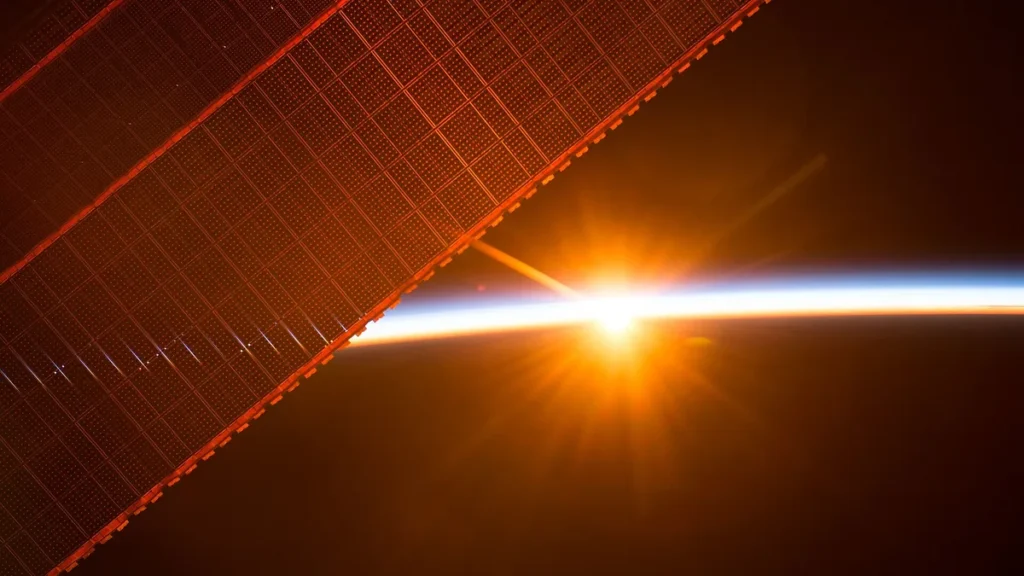
The Korean company Flexell Space and the French firm ALATYR signed a memorandum of understanding on Nov. 18, 2026, in Bremen, Germany, to explore solar power for space-based computing infrastructure.
Spun out of an internal venture at Hanwha Systems, the company builds solar cells and energy systems for spacecraft and other infrastructure. Its products rely on copper indium gallium selenide, known as CIGS, and perovskite technologies, with an emphasis on low-cost, large-area and ultralight designs for satellites and other space infrastructure.
The French firm ALATYR develops orbital data centers aimed at artificial intelligence computing and mission-critical tasks. Its CITADEL modular architecture and the BYLD robotic system from ALATYR are intended to assist with assembly, upkeep and upgrades while in orbit. The design lets computing hardware be replaced while the electricity, cooling and support systems remain in place.
Under the agreement, the firms will start by sharing details about their technologies and what they prioritize in development. The two sides will next conduct a phased assessment of solar cell and power system compatibility, and they will discuss development activities and validation methods in later technical consultations.
Kyumin Lee, business development manager at Flexell Space, called the deal an important advance for cooperation between Korea and Europe on space energy and infrastructure. He said combining advanced solar cell technology with ALATYR’s experience in orbital infrastructure seeks to create a lasting partnership and get ready for joint work to develop and validate power systems for orbital data centers in the future. Emeric Lhomme, ALATYR’s chief executive officer, said the firm’s orbital infrastructure is designed to support several generations of computing hardware.
Lhomme added that efficiency and long life matter for solar cells because the power infrastructure must keep steady output even as computing hardware gets replaced and upgraded. The two companies will study whether new lightweight solar technologies can handle the demands of that long service life. The companies also see the infrastructure as a long-lasting extension of cloud computing in orbit that can increase computing capacity and strengthen the resilience of essential digital services worldwide.
Orbital data centers need reliable power generation to be viable. Once they expand, solar power systems must address electrical performance, mass, how efficiently they launch and deploy, manufacturing costs and reliability over the long term. Flexell Space emphasizes lightweight, bendable designs and large-scale production to provide power systems for satellites and other space infrastructure.
RoboticsTomorrow, in a March 11, 2026, article, said rising demand for AI computing has pushed companies to look at orbital data centers, including Axiom Space, which is advancing plans for computing and data processing in space. The outlet added that orbital infrastructure needs an operation and maintenance layer in addition to rockets, power systems and data links.

The layer depends on trained technicians to spot faults, replace parts and keep sites running, RoboticsTomorrow said, and placing a human repair technician in orbit quickly adds risk and cost. It also said people who fly in space cost a lot and are hard to find, so sending someone for every part repair is difficult to justify economically.
Orbital data centers need more than processors and storage, RoboticsTomorrow wrote; they also require power systems, cooling equipment, cables, connectors, pumps, batteries and control electronics. It said keeping them running means repeatedly inspecting, diagnosing, repairing and replacing equipment. Radiation reaches electronics in space, and materials repeatedly expand and contract as they pass between light and dark.
Mechanical components age more quickly in orbit, RoboticsTomorrow said, and thermal management systems have to run without stopping in the harsh surroundings of space. Orbital operators commonly encounter connectors in degraded condition, compute modules that have failed, power-conditioning hardware that is eroding, cooling-loop components that are broken, and communications gear and mechanical systems that underperform. Routine maintenance problems from ground data centers become a serious strategic challenge in orbit.
Actual maintenance seldom follows a plan, RoboticsTomorrow said, because surprises like stuck latches, mispositioned cables, connectors that fail to engage and components whose warning signs do not match the documentation come up. Canadarm2 and Dextre have performed repair work on the International Space Station that once required astronaut spacewalks, reducing risk and the operational burden. Robot servicing systems function best when tasks are set in advance, interfaces are standardized and procedures are practiced.
Years ago, NASA’s Robonaut program tried to build a machine that could work in spaces made for humans, RoboticsTomorrow said, and Robonaut2 became the first humanoid machine in space. It also said humanoid robots are not meant to look like people; they are meant to work in settings built around human tools, reach and procedures.
If orbital data centers succeed, their insides will likely be removed and replaced with new computing gear over time, RoboticsTomorrow said. It also said custom robots make infrastructure conform to their specific abilities, but humanoids can adapt to human-designed infrastructure as it evolves. Autonomous systems detect problems, people make high-level choices and handle rare service missions, while humanoid robots handle much of the physical work in between and autonomous systems provide the monitoring underlying all maintenance fixes. For orbital data centers, the main challenge is upkeep, not launch, power or cooling, and the best worker will be a machine built to act like a person rather than a human.





Join the discussion