
Key facts
- NASA awarded Blue Origin a $94 million base contract, plus a $140 million option period, to deliver the Promise rover to the Moon's South Pole using its Mark 1 lander.
- NASA announced the awards at its Max Power event at NASA's Kennedy Space Center in Florida on November 7, 2026.
- NASA Administrator Jared Isaacman said the agency is building the Moon Base one mission at a time and that returning astronauts will find initial base elements already on the lunar surface.
- NASA awarded miniCAST contracts for a lunar power and communications tower to Honeybee Robotics for energy storage, Redwire to manage power generation, and Yank Technologies, Inc., to provide wireless power transfer.
NASA chose eight companies on Nov. 7, 2026, for a 10-year Commercial Lunar Payload Services 2 contract worth up to $10 billion, announcing the awards at its Max Power event at Kennedy Space Center in Florida.
The Commercial Lunar Payload Services 2 award is a multiple-award indefinite-delivery/indefinite-quantity contract with a combined $10 billion ceiling across all awardees, potentially rising to $15 billion if NASA exercises a five-year option over approximately 10 years. The IDIQ structure allows NASA to purchase services from multiple vendors without committing to a fixed amount of work upfront, and a five-year option could increase the total potential value beyond the initial 10-year baseline. NASA will issue task orders under the vehicle over roughly a decade to provide recurring commercial delivery capacity for lunar infrastructure, following the original Commercial Lunar Payload Services program. The awardees are Blue Origin, Firefly Aerospace, Intuitive Machines, ispace-U.S., Lockheed Martin’s Space segment, Northrop Grumman’s Space Systems segment, SpaceX, and Voyager Technologies.
On the same day, NASA awarded six task orders worth about $1.3 billion combined under the Venture-Class Acquisition of Dedicated and Rideshare contract to Arrow Science and Technology, Blue Origin, and Impulse Space. VADR is a launch services contract. The task orders will move Moon Base hardware, including orbital transfer vehicles, to lunar destinations, and the combined value covers all six awards.
Arrow Science and Technology said its award is worth $185 million and that it will use a SpaceX Falcon 9 and a Quantum Space orbital transfer vehicle for the mission. The company disclosed the value of its individual task order separately from the combined $1.3 billion group total.
Impulse Space said it received two task orders under the same VADR award batch. One uses Falcon 9 and Mira, and the second plans to use Terran R from Relativity Space with Impulse Space’s Helios kick stage and a lunar lander. One mission pairs Falcon 9 with Mira, while the second pairs Relativity’s Terran R with Impulse Space’s own Helios kick stage and lander.
The VADR missions will demonstrate moving cargo between Earth and lunar orbits, testing navigation with CAPSTONE 2, and scouting the Moon with MoonFall drones. NASA described the work as demonstrating capabilities needed for sustained lunar operations beyond cargo delivery.
NASA awarded Blue Origin a $94 million base contract, plus a $140 million option period, to deliver the Promise rover to the Moon’s South Pole using its Mark 1 lander. The contract includes a performance-based option. The Promise rover is part of NASA’s broader lunar science effort and is slated for delivery to the south pole region. NASA’s Jet Propulsion Laboratory is building the rover, which Blue Origin will deliver under the separate lander contract.
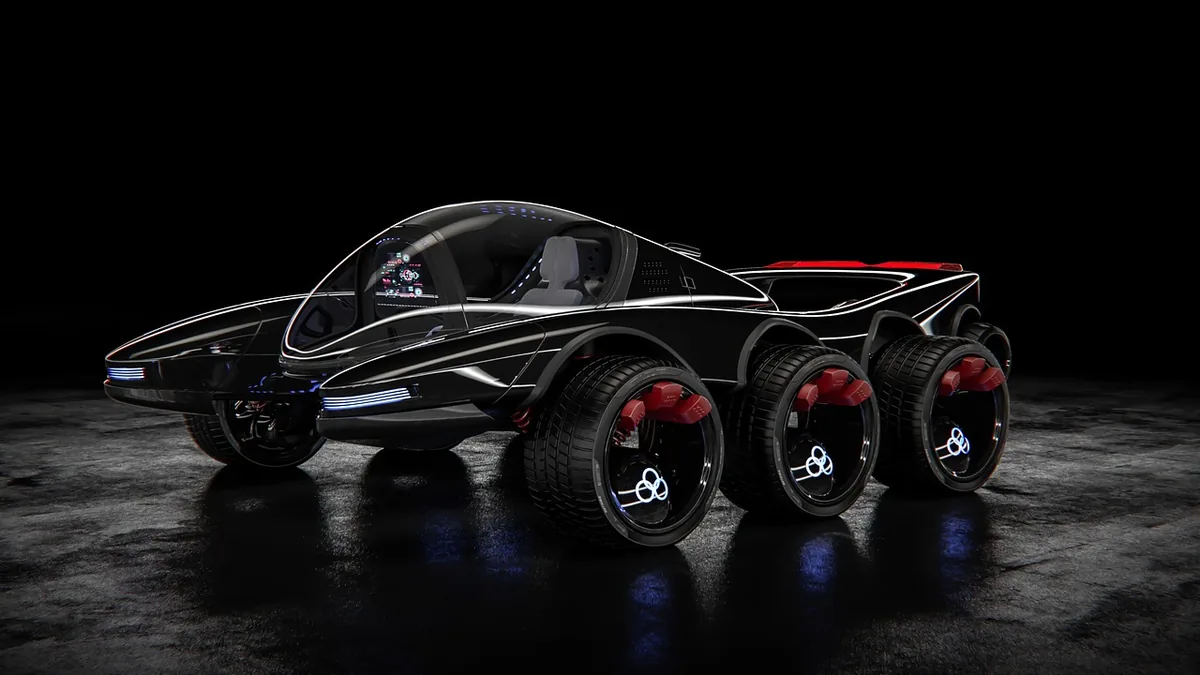
NASA plans to land the nuclear-powered PROMISE rover at the moon’s south pole starting in late 2028 as part of NASA’s broader infrastructure buildup before crewed Artemis landings. PROMISE stands for Polar Rover for Observation, Mapping, and In-Situ Exploration and will carry a drill and instruments to search for volatiles and water ice. The rover is nuclear-powered to support long-term surface operations.
Isaacman proposed in June 2026 to repurpose an engineering model of the Perseverance and Curiosity Mars rovers as a mission-ready lunar rover. Isaacman’s proposal suggested reusing an Earth-based twin of the Mars rovers as a mission-ready vehicle for the Moon. The idea was incorporated into NASA’s Promise rover plans.
Under an existing lunar logistics contract, SpaceX will launch communications satellites on a Starship rocket to cislunar space in 2028 for NASA’s Cislunar Communications Deployment Demonstration. The demonstration is separate from the CLPS 2 awards and relies on that existing contract to help create a lunar communications network. Separately, NASA awarded miniCAST contracts for a lunar power and communications tower to Honeybee Robotics for energy storage, Redwire to manage power generation, and Yank Technologies, Inc., to provide wireless power transfer. miniCAST is intended to provide both electrical power and communications support for Moon Base operations. The work is split among three companies covering energy storage, power generation, and wireless power transfer.
NASA said missions will launch on Blue Origin’s New Glenn, Relativity Space’s Terran R, and SpaceX’s Falcon 9 rockets. In-space transport will come from Blue Origin, Firefly Aerospace, Impulse Space, and Quantum Space, which are building orbital transfer or kick-stage hardware. NASA identified the launch vehicles and in-space transportation providers associated with the cargo missions.
NASA’s Phase One Moon Base strategy runs through 2029 and emphasizes robotic exploration, infrastructure demonstrations, and commercial deliveries. Phase Two runs from 2029 to 2032 with continued infrastructure construction, after which the base is expected to begin operations during Phase 3. NASA’s goal is an astronaut moon base by 2032.
The ceiling for the existing Commercial Lunar Payload Services contract rose from $2.6 billion to $4.2 billion to support Phase One Moon Base objectives. The earlier CLPS contract ceiling increase gives NASA more funding flexibility for initial Moon Base work under its Phase One plan. The adjustment reflects the agency’s move toward more frequent commercial deliveries.
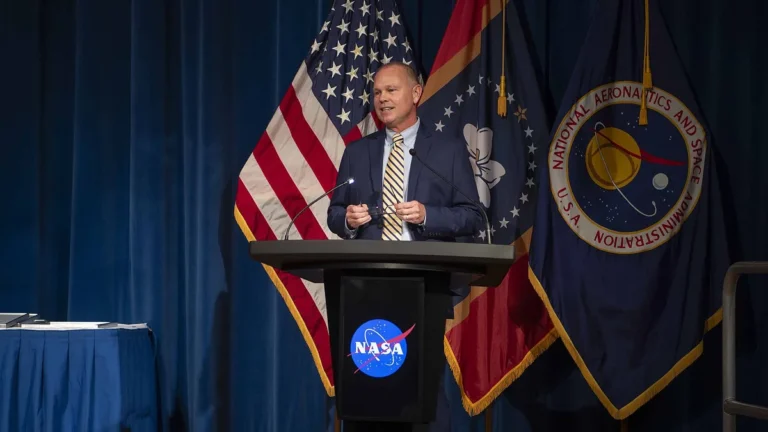
The agency is building the Moon Base one mission at a time, and returning astronauts will find initial base elements already on the lunar surface, NASA Administrator Jared Isaacman said. He compared the approach to past NASA methods based on flying frequently and applying lessons learned. “We are building the Moon Base mission by mission,” Isaacman said. He also said, “Under the current CLPS contract, it’s all all or nothing.”
Intuitive Machines said it has six previous NASA CLPS task order awards, including two issued in 2026. In March 2026, NASA awarded the company $180.4 million for the Nova-D lunar lander, and in June 2026 it awarded up to $148.3 million for a production line-qualified Nova-C lander. Its prior work includes missions already flown or won under the original CLPS program. The company says its existing investments align with the broader CLPS 2 scope.
Steve Altemus, chief executive of Intuitive Machines, said the company will participate in CLPS 2 and that the broader scope builds on its leadership in space infrastructure. Altemus tied the CLPS 2 selection to investments Intuitive Machines is already making in space infrastructure. He said the expanded scope helps NASA’s Moon Base initiative. “We’re excited to participate in this next evolution of CLPS,” Altemus said.
Intuitive Machines said CLPS 2 expands services to add capabilities such as orbital delivery, launch rideshares, surface mobility, precision landing, and operations through the lunar night. Intuitive Machines described CLPS 2 as an expansion of its existing role in NASA’s lunar architecture. The company said the broader scope also serves needs at Mars, asteroids, and beyond.



Join the discussion