Key facts
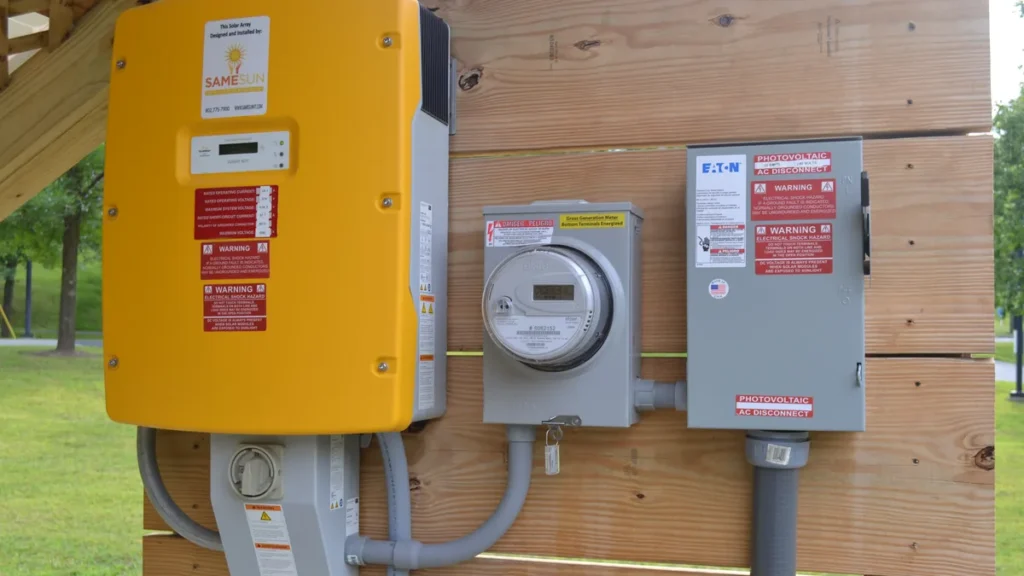
- The method uses solar array output already tracked by spacecraft, typically through Maximum Power Point Tracking (MPPT), an algorithm that points solar arrays at the Sun to maximize incoming solar radiation.
- Engineers usually intentionally avoid eclipses because they drain batteries and make spacecraft much colder as solar arrays stop generating electricity.
- When a spacecraft crosses into a shadow cone, solar radiation hitting its panels drops precipitously while electronics keep operating via on-board batteries installed for eclipses.
- In a simulation of a spacecraft missing a ground-station check-in with position uncertainty drifting by several kilometers, processing eclipse data without further information cut that uncertainty by more than 60%.
Researchers Ian Down of Advanced Space, James McElreath of Space Exploration Engineering, and Manoranjan Majji of Texas A&M published an arXiv pre-print—a research paper posted before peer review—on Nov. 15, 2026 that proposes no-cost lunar-orbit tracking using solar array power changes during eclipses, Universe Today reported.
NASA’s Deep Space Network has been the workhorse for tracking deep-space satellites for decades but the number of requests it receives overwhelms it, Universe Today reported. That overload makes it harder to track some missions launched recently. The research offers a no-cost solution as the network faces growing demand from deep-space missions.
The system requires no hardware, is zero-Size Weight and Power (zero-SWaP)—zero size, weight, and power—and does not entirely replace ground-based radio tracking but provides a safety net, Universe Today reported. As more spacecraft venture beyond low Earth orbit and overwhelm active tracking systems, the zero-cost safety net could prove valuable, according to Universe Today.
The method uses solar array output already tracked by spacecraft, typically through Maximum Power Point Tracking (MPPT), an algorithm that points solar arrays at the Sun to maximize incoming solar radiation, Universe Today reported. Every spacecraft experiences eclipses when a body it orbits is between it and the Sun. Engineers intentionally avoid eclipses because they drain batteries and make spacecraft much colder as solar arrays stop generating electricity. The precise timing of blackouts traveling across solar panels holds valuable navigation information.
Astronomers know the exact positions of the Sun, Earth, and Moon years in advance using advanced planetary maps and know the precise shape and locations of shadows those bodies cast into space, Universe Today reported. When a spacecraft crosses into a shadow cone, solar radiation hitting its panels drops precipitously while electronics keep operating via on-board batteries installed for eclipses. By recording the exact timestamp when voltage starts to drop and when it picks back up after leaving the shadow, a navigation algorithm can determine three-dimensional location without cameras, star trackers, or radio signals.

The Moon has no atmosphere, so its jagged shadow follows mountains and craters, features that can change eclipse timing by a few seconds, Universe Today reported. The researchers used a dataset of over 22,000 historical observations of lunar craters covered by Earth’s shadow, collected by astronomers between 1842 and 2011, Universe Today reported. The algorithm mapped parts of Earth’s shadow to specific ground features, giving a more granular idea of where a spacecraft passes over during its eclipse.
The story concerns a proposed navigation method for cislunar smallsats that uses existing solar-array telemetry during lunar eclipses as a zero-cost supplement to NASA’s Deep Space Network, Universe Today reported. As NASA’s Deep Space Network faces growing demand from deep-space missions, researchers offer a no-cost, zero-SWaP tracking safety net using eclipse power data from spacecraft already in lunar orbit.
The researchers tested the system using actual flight telemetry from CAPSTONE, a CubeSat—a small satellite—operated by Advanced Space where lead author Ian Down works, Universe Today reported. On Jan. 11, 2026, CAPSTONE passed into the Moon’s shadow, and its solar array voltage fell from 23V to near zero before rising back to 31V once sunlight returned, Universe Today reported. Using CAPSTONE eclipse data, researchers timed the spacecraft’s entry and exit to the Moon’s shadow to within 15 seconds of its actual path, Universe Today reported. In a simulation of a spacecraft missing a ground-station check-in with position uncertainty drifting by several kilometers, processing eclipse data without further information cut that uncertainty by more than 60%, Universe Today reported.
Using that data, the researchers timed the spacecraft's entry and exit to the Moon shadow to within 15 seconds of the CAPSTONE's actual path.
Universe Today, Universe Today
The research is available as an arXiv pre-print titled Eclipse Observables for Navigation in Cislunar Space, Universe Today reported.



Join the discussion