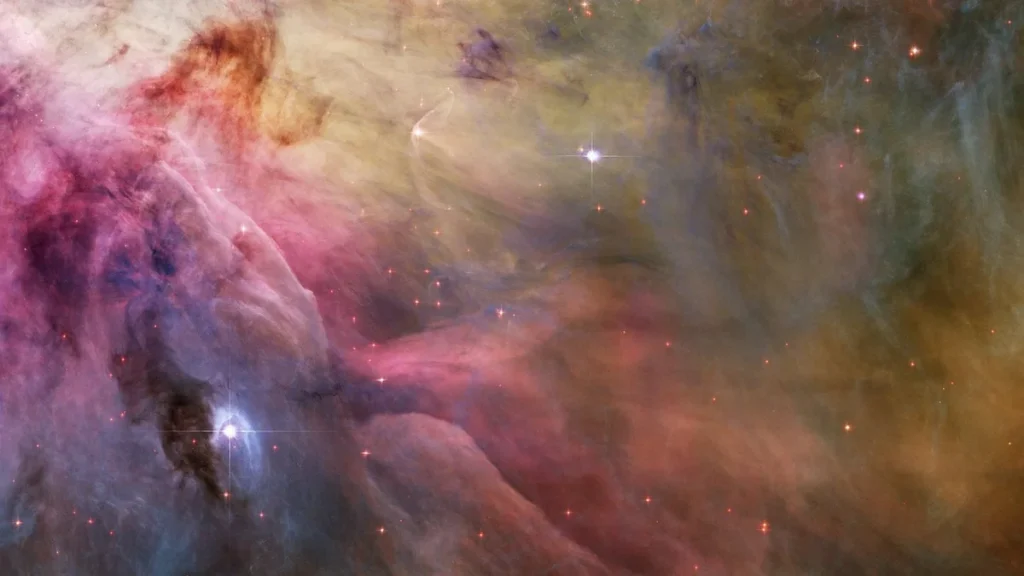
Uranus reached opposition on November 25, 2026, and Orion stood above the eastern horizon by about 9 P.M. local time on November 26, Astronomy Magazine’s senior editor Alison Klesman wrote in the outlet’s Thanksgiving-week sky column. The column leads with Uranus’s opposition as the week’s primary sky event.
For observers at 40° N 90° W, sunrise came at 6:58 A.M. local time on November 26 and sunset at 4:37 P.M. local time, according to the column’s local data. Moonrise followed at 6:35 P.M. local time, with moonset at 9:33 A.M. local time. At 10 P.M. local time, the Moon was waning gibbous at 91% illumination.
Orion’s three-star belt hangs vertically above the eastern horizon around 9 P.M. local time on November 26, according to the column. Alnitak, also designated Zeta Orionis, forms the lowest star in the belt. The Orion Nebula is 3.7° south-southwest of Alnitak and appears lower right in the sky.
Astronomy Magazine gives the Orion Nebula, or M42, the nickname Turkey Nebula because some viewers spot a turkey shape in deep astrophotos. The column connects the name to Thanksgiving dinner and calls the object a bright deep-sky treat for November 26.
Astronomy Magazine says the nebula’s glow might be visible without optical aid, though lunar brightness may hinder naked-eye viewing on Thanksgiving evening. Binoculars or any telescope will easily reveal it. The object glows at 4th magnitude and spans some 85′ by 60″ of sky.
The magazine calls the nebula a huge and bright star-forming region roughly 1,350 light-years from Earth. A small grouping of young stars called the Trapezium Cluster lies in the nebula’s brightest portion.
The column’s author, Alison Klesman, is a senior editor at Astronomy magazine. Her doctorate is in astronomy, and her research covers minor planets as well as supermassive black holes.


Join the discussion