Key facts
- NASA and the U.S. Space Force agreed to release decades of fireball data collected by government sensors for science and planetary defense use.
- The released data consists of light curves showing how bolide brightness changes as objects travel through Earth's atmosphere.
- U.S. government sensors detect atmospheric impact events and report bolide data to NASA's JPL Center for Near Earth Object Studies fireballs database.
- NASA planetary defense officer Lindley Johnson said the release highlights an important collaboration area with the U.S. Space Force.
NASA and the U.S. Space Force agreed to release decades of fireball data collected by U.S. government sensors for science and planetary defense use.
The agreement came from collaboration between NASA’s planetary defense office and the military space service to improve near-Earth object work. It authorized public release of decades of government sensor data on fireball events for scientific and planetary defense use. The data comes from U.S. government sensors detecting atmospheric impact events. The released material consists of light curves showing how a bolide’s brightness changes as the object travels through Earth’s atmosphere.
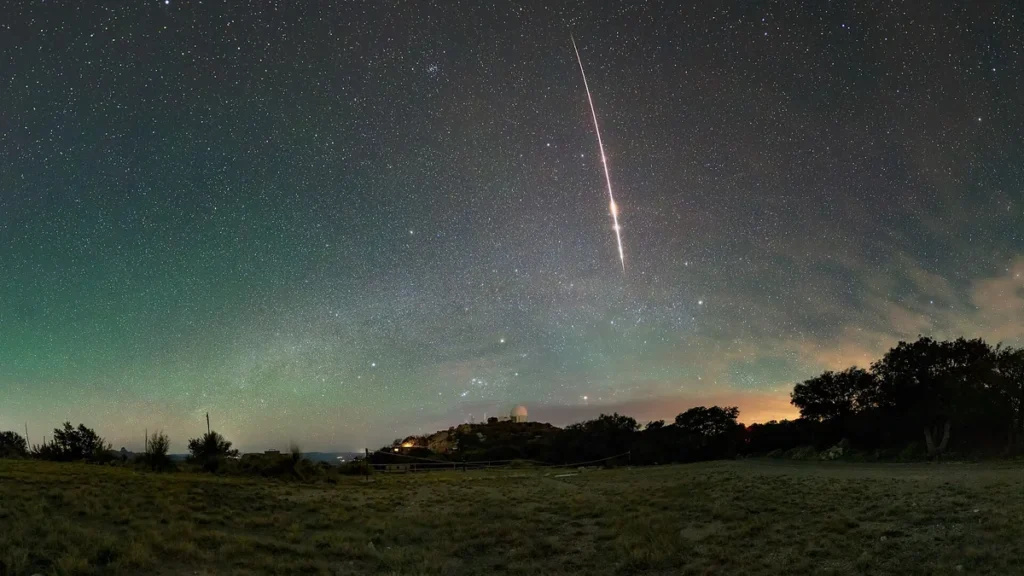
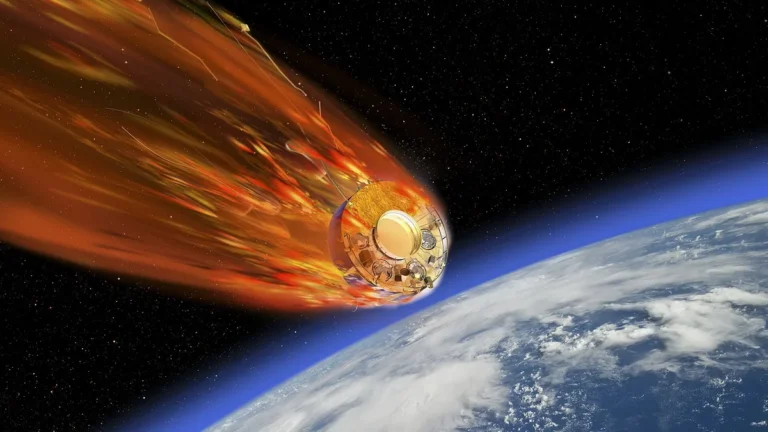
Bolides are bright meteors visible in daylight, and they happen dozens of times per year when asteroids too small to reach the ground explode in the atmosphere.
U.S. government sensors detect these atmospheric impact events and report bolide data to NASA’s JPL Center for Near Earth Object Studies fireballs database. Experts now have access to more detailed light curve information beyond what was previously available. The CNEOS fireballs database holds records reaching back to 1988 covering nearly one thousand bolide events. Scientists have long sought this data set because breakup altitudes reveal an object’s makeup.
Light curve data can reveal an object’s strength and composition from those breakup altitudes while improving estimates of radiated energy and the direction the object was traveling before entry. The released light curve data could improve the planetary defense community’s ability to model how larger asteroids might affect Earth if they ever threaten it.
NASA planetary defense officer Lindley Johnson said the release highlights an important collaboration area with the U.S. Space Force. Johnson connected the archive to a White House-approved preparedness strategy and action plan. “The release of these new bolide data demonstrates another key area of collaboration between NASA and the U.S. Space Force,” Johnson said.
NASA created the Planetary Defense Coordination Office in 2016 to manage efforts finding, tracking, characterizing, and cataloguing near-Earth objects. The office oversees the Near-Earth Object Observations Program and missions such as NEO Surveyor while managing ongoing planetary defense efforts.
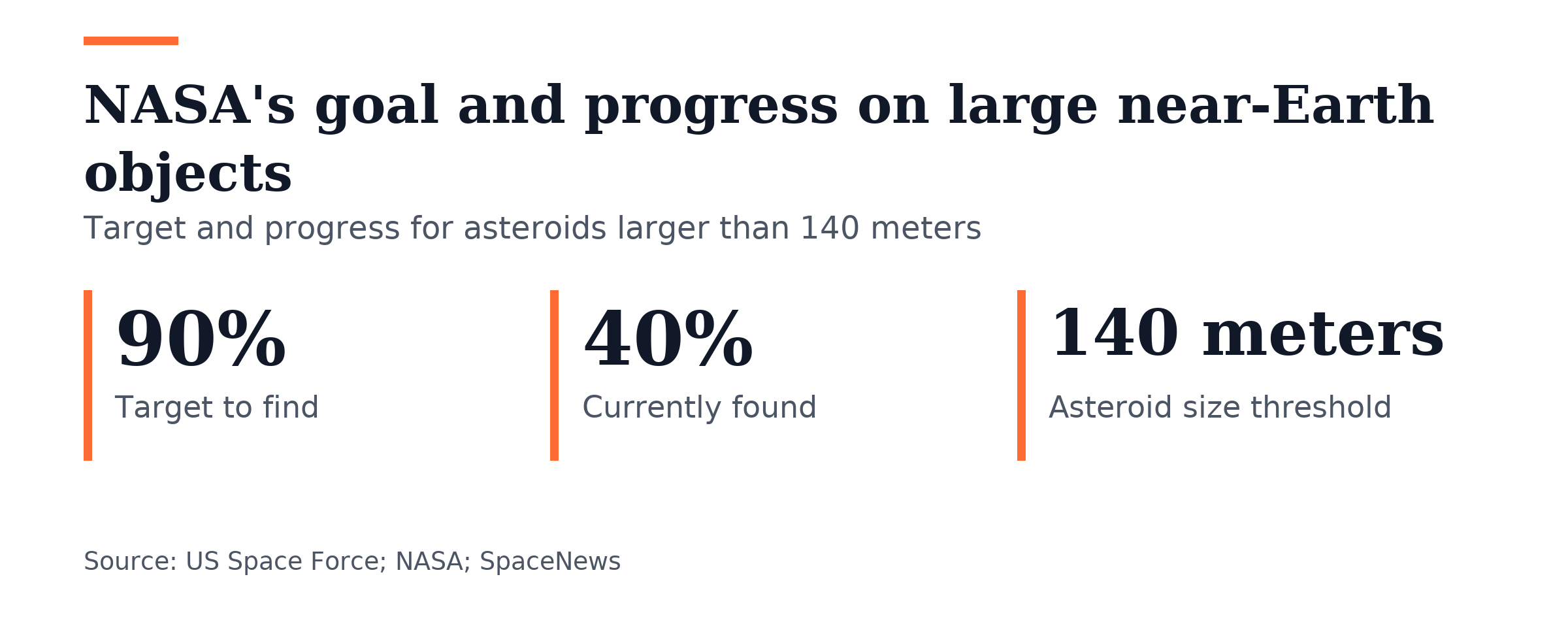
NASA must find 90% of near-Earth objects larger than 140 meters and has located about 40% of such asteroids. The goal applies to asteroids larger than 140 meters, or 459 feet, and the agency continues working toward it.
The roughly two-meter asteroid 2022 EB5 was detected in space during its approach to Earth before striking the atmosphere southwest of Jan Mayen, a Norwegian island nearly 300 miles off Greenland’s east coast and northeast of Iceland. The object measured approximately two meters, or 6.6 feet, and posed no hazard. It gave the community a real-world test of tracking and notification models.
U.S. government sensors detected 2022 EB5’s impact and U.S. Space Force units reported it, confirming CNEOS predictions before NASA archived the event at JPL CNEOS. The military units confirmed CNEOS’s predicted time and location, and NASA added the event to its archive at JPL CNEOS. CNEOS kept updating NASA’s PDCO with impact location predictions for 2022 EB5 as observations came in before the impact.
The 2022 EB5 event gave the planetary defense community a real-world scenario to test near-Earth object tracking and supported confidence that impact prediction models can provide timely warning of larger threats.
A meteor on Jan. 8, 2014, traveled at high atmospheric speed, suggesting an interstellar origin, but less than five seconds of data prevented a firm conclusion. U.S. Space Command analyzed the event under its purview and confirmed the high-velocity impact, though the brief data window left the origin uncertain.
Lorien Wheeler leads Impact Risk Assessment for NASA’s Asteroid Threat Assessment Project at the Ames Research Center supercomputing division, and she said limited direct observational data from actual impact events remains a major challenge in evaluating asteroid damage. Her research supports the broader efforts of the Planetary Defense Coordination Office. Wheeler is based at NASA Ames. She said an asteroid’s size, impact zone, and composition determine whether it strikes or airbursts, how much energy releases, and what damage results.
Wheeler said asteroids range from weak rubble piles to strong iron monoliths, creating uncertainty in potential mass and energy. Structural and density uncertainties combined with size create a range in potential mass and energy outcomes.
Asteroid impact hazards can include destructive shock waves, intense heat, impact craters, flying debris, and potentially tsunamis. Some asteroids break apart high over Earth, creating airbursts, while others survive the trip through the atmosphere and hit the ground, as shown by ancient impact craters.
Wheeler said predicting an asteroid’s breakup during entry, its airburst or impact altitude, and the energy released into blast waves, heat, cratering, ejecta, or tsunami waves is difficult.
Scientists cannot predict every result of an asteroid impact with certainty, but improved simulations strengthen threat assessment and defense planning. Wheeler said these uncertainties matter for evaluating asteroid threats and creating defense plans, including mitigation missions and emergency response planning. Improved simulations and risk-assessment models are strengthening the ability to evaluate threats and inform defense strategies despite the remaining uncertainties.
Wheeler said the information astronomers can obtain about an asteroid before Earth arrival depends heavily on which telescopes or missions observe it.
NASA’s Ames Research Center uses the Probabilistic Asteroid Impact Risk model to assess damage range and likelihood from asteroid impacts, supporting the Planetary Defense Coordination Office. Probabilistic risk models evaluate millions of hypothetical impact scenarios, letting scientists estimate the range and likelihood of different outcomes. The models simulate atmospheric entry, fragmentation, and impact damage across many scenarios. The approach helps decision-makers get ready for likely scenarios while not ignoring rare but catastrophic possibilities.
The current exercise for the 2027 Planetary Defense Conference centers on a hypothetical impact threat from a roughly Tunguska-sized object. “The current exercise that is underway for the 2027 Planetary Defense Conference is based around a hypothetical impact threat from a roughly Tunguska-sized object,” Wheeler said. Even with existing Tunguska airburst data, too many variables remain to fully account for all potential problems from a similar event occurring today.
NASA’s Center for Near-Earth Object Studies regularly joins planetary defense exercises testing assessment methods, with scenarios in development for the 2027 Planetary Defense Conference.
NASA monitors asteroid 2024 YR4, which had a small chance of Earth impact in 2032. The agency presents 2024 YR4 as featured content on its planetary defense page. Upcoming planetary defense flight missions include NASA’s NEO Surveyor mission. NASA lists NEO Surveyor among upcoming planetary defense flight missions.

Join the discussion