
Key facts
- Bloomberg reported on Oct. 30, 2026 that Alphabet's Google is in talks with the U.S. Defense Department to protect data behind Golden Dome, citing anonymous people familiar with the matter.
- Gen. Michael Guetlein runs the Golden Dome programme, and in March said the Pentagon had added $10bn to its cost, taking the estimate to $185bn.
- Guetlein said the $185bn objective architecture extends to 2035.
- Guetlein said the $185bn figure is $10bn above the amount President Donald Trump had cited earlier, putting the earlier number at $175bn.
Bloomberg reported on Oct. 30, 2026 that Alphabet’s Google is in talks with the U.S. Defense Department to protect data behind President Donald Trump’s $185bn Golden Dome programme, citing people familiar with the matter who asked not to be named because the talks are not public.
The discussions center on a new industry group the Pentagon is standing up to protect data for Golden Dome’s military software, and they cover Google’s data storage, networking and cybersecurity work. The talks are at an early stage and plans could change, and the group is separate from the one building Golden Dome’s command-and-control software. A Pentagon official told Bloomberg the office may explore early concepts, and the office has made no final decision on the group or on which companies would join.
Golden Dome is President Donald Trump’s plan to shield the U.S. from foreign attack with layers of defenses running from the ground to space, and it is his marquee defense initiative linked to new command-and-control software. Its command-and-control layer controls and connects weapons systems, radars and other siloed systems across the U.S. military.
The Pentagon is running two Golden Dome initiatives—space-based missile interceptors and a command-and-control consortium—drawing on many companies from startups to established primes rather than a single large contractor. In August, IANS reported that the United States had opened a digital portal for Golden Dome missile defense development.
Gen. Michael Guetlein, who runs the program, said in March 2026 that the Pentagon had added $10bn to the cost, taking the estimate to $185bn for what he called the “objective architecture,” which extends to 2035. Courtney Albon reported the figures for Air & Space Forces Magazine.
The new number is $10bn above the $175bn President Donald Trump had cited earlier, and the added money would fund airborne moving target indication (tracking moving objects from the air), space data networking and hypersonic missile tracking. Some observers consider the $185bn estimate no more credible than earlier ones, according to Federal News Network’s March 2026 coverage, and Shattered describes the figure as the Pentagon’s stated cost rather than an audited total.
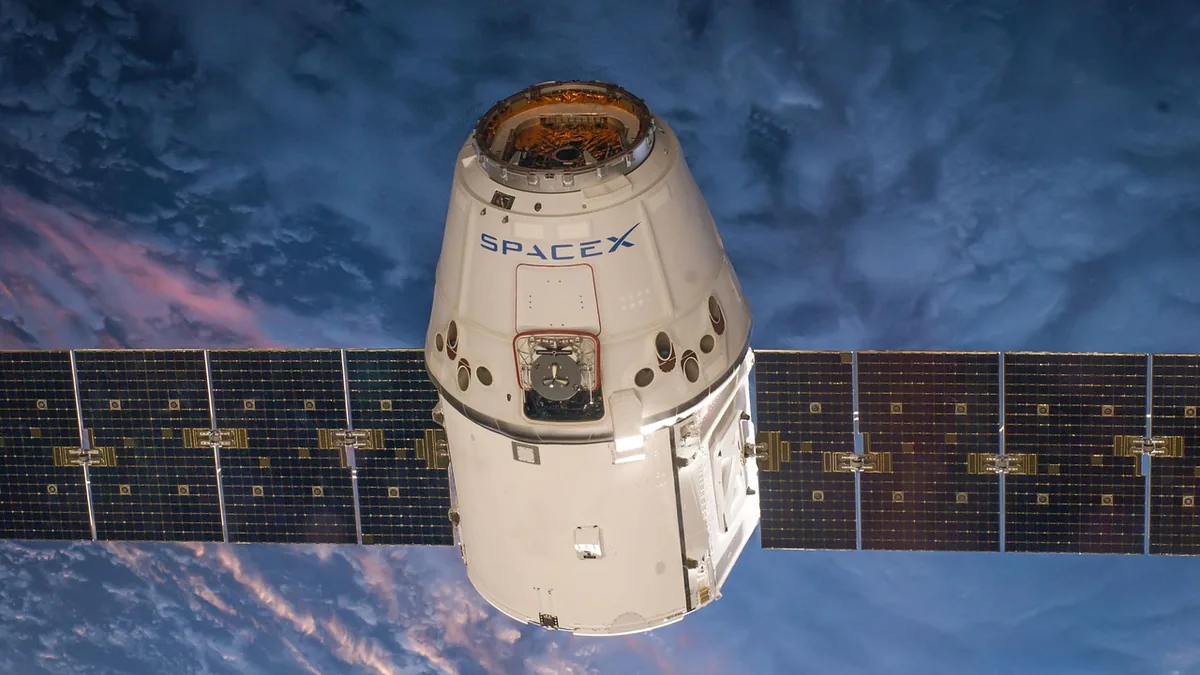
A separate group including Anduril, Palantir and SpaceX is building Golden Dome’s command-and-control software itself, and Bloomberg reporting carried by AI Weekly places Palantir, Anduril, SpaceX, Scale AI, Swoop Technologies and Aalyria Technologies inside the consortium. SpaceX also won a $2.29bn Space Force contract in May for the Golden Dome backbone. Aalyria Technologies Inc., a networking company spun out from Google, is involved in the consortium discussions, although reports do not detail its role and Aalyria is a separate company from Google.
Google’s record on defense work is mixed. In 2018, thousands of Google employees protested against Project Maven, a Pentagon artificial intelligence contract, and Google did not renew it. The protest cited concerns that commercial technology would support warfare, and that history colors how employees, customers and investors might read any formal announcement.
In April, the company signed a classified AI deal with the Pentagon, and Google DeepMind’s UK staff then voted to unionize, with 98% in favor. The classified deal followed earlier defense work by Google, and the union vote came after Google signed the deal. Internal opposition to defense contracts has recurred at the company.
A role in Golden Dome would be Google’s first publicly known work on the programme. Bloomberg reporting describes the talks as another sign that Google is continuing to lean into national security and defence work.
The new industry group’s task is to keep data flowing into Golden Dome’s command-and-control software even under attack, including attempts to cut off landlines, cell towers and other communications links. The software fuses sensor observations into decisions, so breaking or poisoning a data link can leave hardware acting on bad information or none at all, and attackers can corrupt feeds instead of defeating radars directly. A Pentagon official told Bloomberg that the office may explore early concepts, and no final decision has been made on which companies would join.
Google and Aalyria declined to comment to Bloomberg, and neither company has publicly confirmed or denied the talks. No contract, award or price for Google’s role has been reported, and being in talks is not the same as having joined. TNW has not independently verified Bloomberg’s report, which was written by Sana Pashankar and Kiel Porter and relied on anonymous sources familiar with the matter.


Join the discussion