Key facts
- The Taurid meteor shower consists of two streams—the South Taurids and North Taurids—each with distinct peak dates in November 2026.
- The Taurid meteor shower typically produces 5 to 10 meteors per hour, with occasional brighter fireballs every seven years.
- The Taurid meteor shower is visible from late September through early December, coinciding with the visibility of the Taurus constellation.
- The best time to observe the Taurid meteor shower is after midnight, when the Taurus constellation is high in the sky.
The Taurid meteor shower peaks on Nov. 6 and Nov. 13, 2026, giving observers two chances to see the annual display. The shower consists of two streams, the South Taurids and North Taurids, each with a distinct peak date in November 2026. The South Taurids peak on Nov. 6, while the North Taurids peak on Nov. 13. Both streams remain active from late September through early December, with overlapping visibility between Nov. 5 and Nov. 12.
The best time to observe the Taurid meteor shower is after midnight, when the Taurus constellation is high in the sky. Observers should wait until after midnight for optimal viewing conditions. At that hour, the constellation’s elevation improves visibility. Higher placement in the sky means fewer obstructions for viewers.
Optimal viewing locations for the Taurid meteor shower are dark areas away from city lights and light pollution. Light pollution reduces visibility, so observers should seek out rural or remote areas for the best experience. A dark sky allows fainter meteors to stand out. City lights wash out faint streaks.
Observers should allow their eyes 30 minutes to adjust to the dark before attempting to view the Taurid meteor shower. This enhances visibility and allows observers to detect fainter meteors.
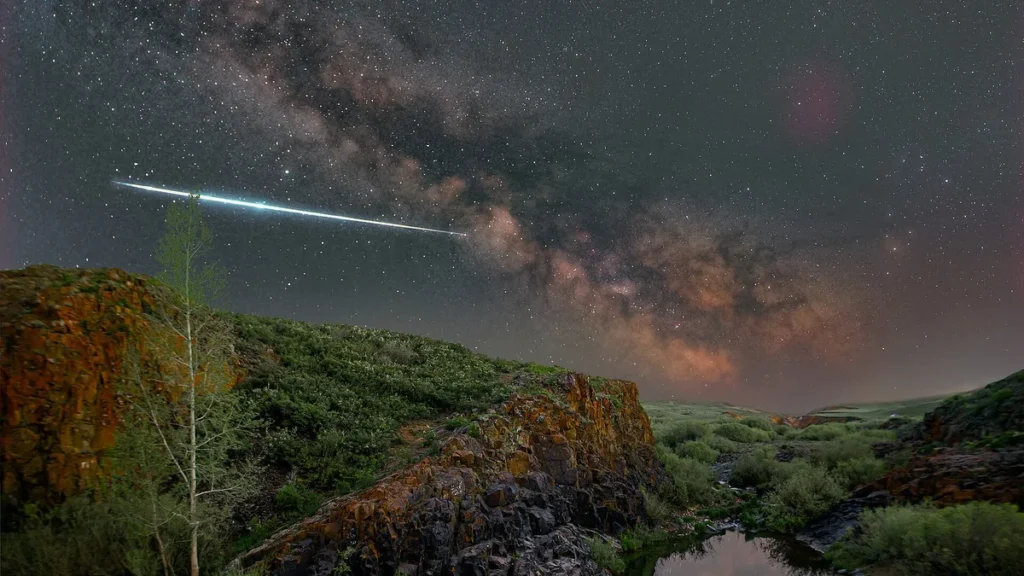
The Taurid meteor shower typically produces five to 10 meteors per hour, making it a modest but reliable display rather than a constant stream of streaks. The shower does not feature high meteor activity. Observers can expect a modest but rewarding experience, especially during peak periods. Patience is key because the rates are low but reliable.
Occasional brighter fireballs appear every seven years. Experts suggest 2026 could be an exceptional year for Taurid fireballs, KSBY News reports.
The Taurid meteor shower originates from dust particles released by Comet Encke. These particles enter Earth’s atmosphere at 65,000 mph and burn up, creating the visible meteors. As the dust collides with Earth’s atmosphere, it produces visible meteors, creating the annual Taurid display.
The Taurid meteor shower coincides with the visibility of the Taurus constellation. Its visibility aligns with Taurus’s position in the sky, making the shower observable during its active months. Observers can use Taurus as a reference point when looking up. The shower remains visible throughout that span.
The peak overlap period for the South and North Taurids occurs between Nov. 5 and Nov. 12. During this period, observers have the best chance of seeing both streams simultaneously. Seeing both streams at once enhances meteor visibility.
The Taurid meteor shower produces meteors that are often slower-moving but occasionally brighter than average. Slower movement gives viewers more time to spot each streak.
The shower is reliable, even if meteor rates are modest, making it a worthwhile event for amateur astronomers. Observing meteor showers requires patience and optimal conditions, such as dark skies and minimal light pollution. Viewers should plan to spend time watching rather than expecting a constant stream of meteors. A modest rate still offers a rewarding experience.
The Taurid meteor shower offers a reliable and accessible astronomical event for observers in late October and November. It provides an opportunity to witness celestial activity without requiring specialized equipment or travel. The shower is an annual event originating from debris left by Comet Encke.
- Watch after midnight, when Taurus is high in the sky.
- Choose a dark area away from city lights and light pollution.
- Allow 30 minutes for your eyes to adjust to the dark.
- Expect five to 10 meteors per hour, with occasional fireballs.



Join the discussion