Key facts
- The European Space Agency published its call for the BEST!2 Flight Demonstrations initiative on Oct. 27, 2026, according to a notice covered on Nov. 2, 2026.
- The European Space Agency awarded contracts in late 2024 to ArianeGroup and Isar Aerospace for the first round of the Boosters for European Space Transportation initiative.
- Both the BEST!2 and BEST! Reloaded activities fall under the European Space Agency's Future Launchers Preparatory Programme.
- The European Space Agency issued a Request for Information to Challengers in June 2024 as part of the European Launcher Challenge timeline.
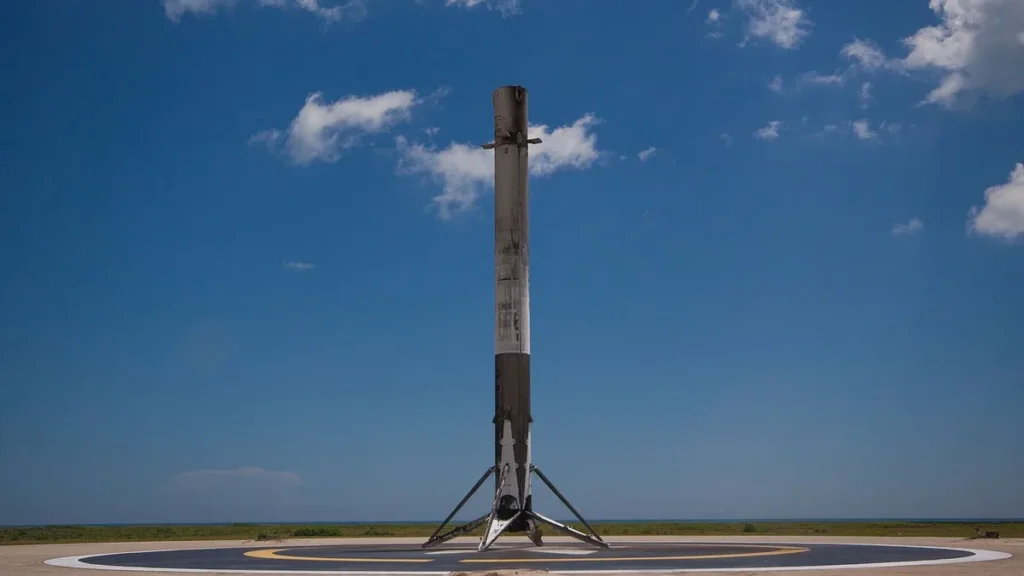
The European Space Agency announced on Nov. 2, 2026, that it will support industry-led flight demonstrations of reusable rocket first stages and boosters under a new phase of its Boosters for European Space Transportation initiative.
The agency published the call for the BEST!2 Flight Demonstrations initiative on Oct. 27, 2026, and lists the activity as Intended on its tendering platform. BEST!2 Flight Demonstrations and BEST! Reloaded both sit inside the agency’s Future Launchers Preparatory Programme.
In late 2024, the agency handed initial Boosters for European Space Transportation contracts to ArianeGroup and Isar Aerospace. During that opening round, ArianeGroup put forward a plan to turn MaiaSpace’s small-launcher first stage into reusable liquid boosters for a later Ariane 6 version. Isar Aerospace outlined a reusable first-stage demonstrator for its Spectrum rocket during that initial phase.
European Spaceflight reported on Nov. 2, 2026, that it remains unclear whether the call will extend support to ArianeGroup or Isar Aerospace, or whether it will welcome other proposals. The agency also released a BEST! Reloaded procurement notice at the same time as the BEST!2 Flight Demonstrations notice.
Ariane and Vega have provided Europe with autonomous space access for over four decades, according to agency information updated on March 12, 2026. The agency says the space ecosystem needs more choice, diversity, and competition to lower access costs as it grows, and Ariane and Vega will keep flying and evolving. ESA has supported commercial launch development since 2019 through its Boost! program.
The European Space Agency runs the European Launcher Challenge and aims to expand Europe’s launch service supply to make access to space more robust. ESA sent a Request for Information to potential Challengers in June 2024, opened proposal submissions in March 2025, and picked Challengers during summer 2025. Member governments locked in funding at the November 2025 ESA Council of Ministers meeting, and framework contracts should be signed during 2026.
Member States signed up at the November 2025 CM25 council meeting, backing the five chosen companies with investment. ESA earmarked more than 900 million euros for the European Launcher Challenge, according to information updated on March 12, 2026. Five companies made it past the first tender round: Isar Aerospace, Maiaspace, Orbital Express Launch, PLD Space, and Rocket Factory Augsburg. Orbital Express Launch said in February 2026 that it was entering administration and dropped out, leaving four active bidders.
Challengers must reach orbit successfully by 2027 at the latest to keep their places, and the agency will help pay for every operational launch through 2030 at the latest. That launch support aims to help companies ramp up quickly, gain manufacturing experience, and improve operator performance over time. They must also show a capacity upgrade in orbit by 2028, and private investors must cover at least 40% of the cost. The initiative invites providers whose rockets are assembled in ESA or EU member states and launch from European soil.
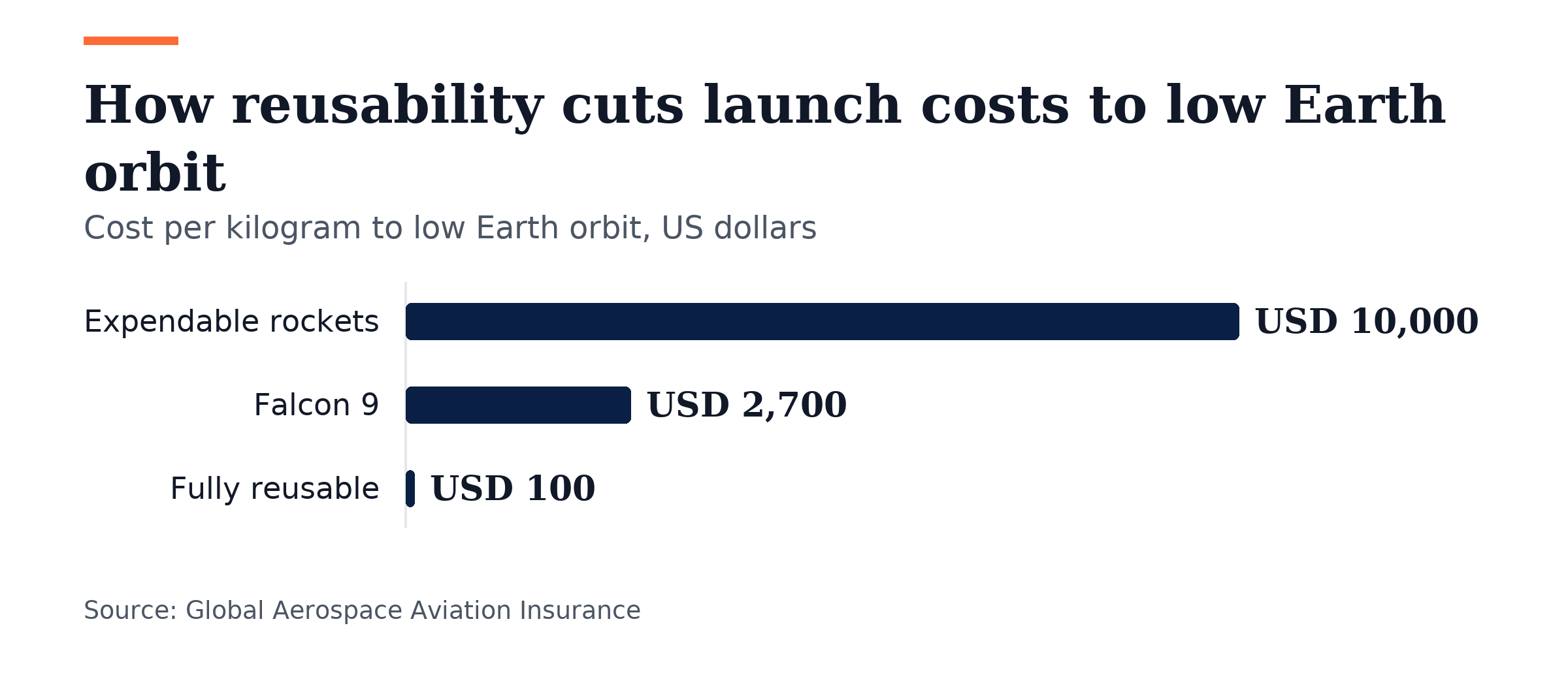
SpaceX provides the clearest benchmark for what reusability can achieve. The company pushed Falcon 9 prices down to as little as USD 62 million per launch, or USD 2,700 to 3,000 per kilogram to reach low Earth orbit, according to a report published on November 21, 2024. Older expendable designs often cost more than USD 10,000 per kilogram to reach low Earth orbit, and fully reusable vehicles might eventually cut the price to below USD 100 per kilogram, according to an analysis from November 2024.
On October 13, 2024, SpaceX flew Starship and its Super Heavy Booster back to Earth successfully. Blue Origin planned to launch New Glenn for the first time before 2025, as reported on November 21, 2024. In 2025, SpaceX flew 165 missions, up from 134 in 2024, and reflown boosters on roughly 95% of Falcon 9 missions, reusing first stages on 157 of those 165 flights. This high reusability rate reduced the need to manufacture new first stages for every launch, an operational feat no European startup has demonstrated.
About 74 percent of Falcon 9 flights in 2025 served SpaceX’s Starlink network, and 122 of the 165 flights were dedicated Starlink missions. That internal demand provides guaranteed launch volume, an advantage European rocket companies lack without equivalent internal constellations. Meanwhile, the satellite population grew from under 3,000 in 2019 to more than 10,000 by 2024, mostly because of mega-constellations. Reusable systems offer profound cost reductions that make space more accessible for commercial and scientific ventures.
Trackers currently follow more than 34,000 debris objects larger than 10 centimeters, plus many smaller pieces that are difficult to watch, according to reporting on November 21, 2024. More satellites and more reusable launches add to the debris problem. Fully reusable rockets launch, land, refurbish, and fly again many times.
European efforts are advancing unevenly. Isar reached orbit on Spectrum’s second flight, September 5, 2026, 17 months after the first attempt failed. Started in Munich in 2018, Isar built Spectrum as a two-stage rocket able to lift up to 1,000 kilograms to low Earth orbit. Isar has signed deals with Planet, Astroscale, and SEOPS for five dedicated missions from 2028 to 2030.
PLD Space flew its suborbital MIURA 1 test rocket in October 2023 as part of its orbital program. MIURA 1 did not put satellites in orbit, but it gave PLD useful flight experience for MIURA 5. By October 2026, the company had built three MIURA 5 vehicles, enlarged its Elche site to 17,000 square meters, and opened 10 testing benches in Teruel. About 60 containers of PLD Space equipment reached the Guiana Space Centre in French Guiana for launch infrastructure work.
PLD Space grew its Series C to 288 million euros in September 2026, after announcing 180 million euros in March 2026. Cumulative funding for PLD Space reached approximately 488 million euros, supported by investors including Mitsubishi Electric and a European Investment Bank venture-debt facility. MIURA 5 is designed to carry roughly 540 kilograms to a sun-synchronous orbit in its first setup, according to the European Space Agency.
MaiaSpace started in 2022 inside ArianeGroup as a commercial launch venture focused on reusability. Japanese operator iQPS chose MaiaSpace in September 2026 for launches starting in 2029. MaiaSpace finished a cryogenic upper-stage test campaign in September 2026 covering structures, avionics, and ground operations, though its orbital and first-stage recovery capabilities remain unproven.
Rocket Factory Augsburg is constructing RFA One, a three-stage rocket meant to lift up to 500 kilograms to a sun-synchronous orbit 500 kilometers high, operating from SaxaVord Spaceport. The company lost a first stage in an August 2024 static-fire test at SaxaVord, which also damaged launch infrastructure. In August 2026, ESA signed a 186.9 million euro European Launcher Challenge deal with Rocket Factory Augsburg. RFA focuses on inexpensive industrial methods and simplified production rather than designing an immediate large reusable system.
ESA put 543.6 million euros toward Isar Aerospace, Rocket Factory Augsburg, and PLD Space in August 2026. Isar’s new factory can build as many as 40 rockets a year, while PLD Space has discussed 30 launches annually. Those goals point to about 70 missions a year in Europe, a market that has nothing like Starlink’s launch needs. Isar received the largest share, but the even distribution showed that European institutions are hedging their bets across suppliers.
Meanwhile, Ariane 6 went into service in 2024, and the Ariane 64 version flew for the first time in February 2026, carrying 32 Amazon Leo satellites. Ariane 64 can lift roughly 21.6 tonnes to low Earth orbit, while Ariane 62 manages about 10.3 tonnes. Those bigger configurations handle markets smaller companies cannot reach, including major telecom and large satellite constellations.
ESA is cooperating with Rocket Factory Augsburg, The Exploration Company, ArianeGroup, and Isar Aerospace on reusable rocket technology. Since 2019, ESA’s Boost! program has backed new commercial launch systems, and the European Launcher Challenge builds on that by helping new launch services grow. These collaborative efforts form part of Europe’s broader push into reusable launch system development.



Join the discussion