Key facts
- Elon Musk stated that SpaceX will attempt to catch the Ship upper stage on Flight 15 with the launch tower and also recover the Super Heavy booster the same way.
- SpaceX has not officially confirmed what it will carry on Flight 15, though the mission could carry another batch of Starlink V3 satellites.
- NASA recently revised the Starship milestone schedule required before a crew-rated lunar lander version qualifies, citing a significant demonstration mission slated for next summer on Artemis III.
- NASA's next Artemis mission will send astronauts to Earth orbit on Orion, where the spacecraft will dock with both lunar landers over roughly two weeks, including SpaceX's Starship and Blue Origin's Blue Moon.
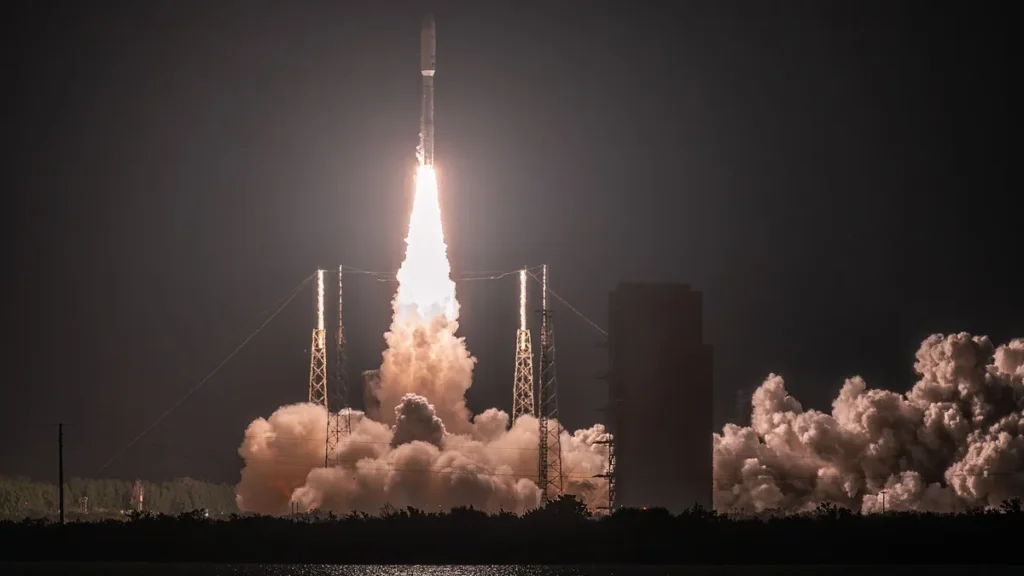
SpaceX static-fired Super Heavy booster B22 on Sunday, October 25, 2026, firing all 33 Raptor 3 engines for about 15 seconds at Starbase in South Texas. In a post on X, the company described it as a full-duration test of all 33 engines for the booster readying for Flight 15.
Booster 22 must be mated to the Ship 42 upper stage before launch, and that upper stage still needs a static engine fire and final systems checks. B22’s engine test begins a series of tests leading to Flight 15, which could lift off in mid-to-late November based on recent Starship campaigns.
The test campaign follows Flight 14, which reached orbit for the first time on September 28, 2026, and deployed 26 Starlink V3 satellites, the first working payloads the spacecraft has put in orbit and SpaceX‘s first revenue flight. On that day, the booster fired all 33 Raptor 3 engines at liftoff from Starbase, Texas, at 7:48 a.m. CT.
During the Flight 14 ascent, an upper-stage Raptor engine shut down early, which led SpaceX to cut short the planned 10-hour mission. For the boostback burn, only 31 of 33 engines came online, positioning the booster and burning remaining liquid oxygen after the stages separated. During the high-thrust part of the landing burn, 11 of 13 planned engines came online again; five stayed operational as planned before the count was intentionally cut to three before splashdown in the Gulf, and the booster’s flight termination system was demonstrated afterward.
The upper stage ran hot on the way to space with all six of its Raptor engines, though one engine shut down early before reaching its suborbital position, so ground controllers had the working five Raptors burn longer than planned. After releasing cargo, Starship coasted in orbit and came back sooner than planned because of the engine issue, relighting a single Raptor for the deorbit burn and starting three engines near a landing area in the northern Pacific to slow down before flipping and contacting the water.
Musk said SpaceX will try to catch the Ship upper stage on Flight 15 using the launch tower, and to recover the Super Heavy booster the same way. The launch tower has brought Super Heavy back on Flights 5, 7 and 8, but the ship returns from orbit at much higher speed and teams have never caught it.
In September, crews lifted Ship 42 into a simulated catch position using the Pad 2 chopsticks, the tower’s catch arms, cycling the arms and connecting the ship’s quick disconnect arm as the vehicle hung from the tower. Ship 42 is the vehicle assigned to Flight 15.
Gwynne Shotwell described engagement with the FAA as significant and constructive, and SpaceX anticipates that the Flight 15 license will cover return to the launch site plus tower catch for both stages. For Flight 14, the FAA issued the license on September 26, 2026, covering a 75-minute window that opens at 8:15 a.m. ET from Starbase, Texas.
Musk said the first tower catch attempt is more likely than not to succeed, and that SpaceX will keep regular Starship flight attempts going through the end of this year if Flight 15 falls short. Musk said the tower catch closes Starship’s reuse loop: “If we succeed, it will be the first time that an orbital launch vehicle has been fully recovered,” he said.
At Giga Texas, Musk said Flight 15 would probably lift off shortly before Thanksgiving and that Flight 16 could refly both stages.
SpaceX has not said officially what it will carry on Flight 15, though the mission might carry another batch of Starlink V3 satellites. On the August earnings call, Musk said a Starlink V3 satellite is roughly 10 times more capable than a V2. The V3 satellites are bigger, generate twice the power of earlier versions, and send data faster to users.
SpaceX operates about 11,000 active satellites, compared with roughly 650 for rival Eutelsat OneWeb. Connectivity revenue reached $4.3 billion in Q2, up 66% from a year earlier, while segment operating income jumped 79% to $1.7 billion. Starlink is part of SpaceX’s Connectivity segment, the largest and only profitable segment as of Q2.
SpaceX needs Starship to scale Starlink, making the vehicle central to its growth plan. Before the end of 2026, SpaceX aims to hit more Starship milestones, including the vehicle’s first Florida launch and possibly flying an upgraded V3 Super Heavy booster again for the first time.
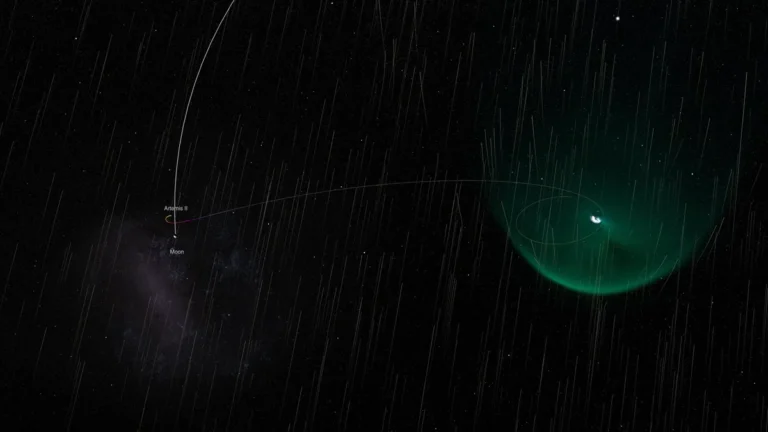
NASA recently revised the Starship milestone schedule that a crew-rated lunar lander version must meet, pointing to a significant demonstration mission planned for next summer on Artemis III. Artemis IV is targeted for 2028, and ahead of it SpaceX is preparing an uncrewed lunar landing demonstration before NASA brings astronauts back to the moon. The next Artemis mission will send astronauts to Earth orbit aboard Orion, docking with both lunar landers over roughly two weeks, including SpaceX’s Starship and Blue Origin’s Blue Moon.
Work is under way on an orbital propellant transfer, the first of its kind, expected soon, with Starship expected to take part in Artemis III next year. Going forward, SpaceX expects every Starship to reach orbit and to carry cargo for SpaceX and soon for paying customers.



Join the discussion