
Key facts
- As of September 30, 2026, planning indicated Flight 15 would occur no earlier than October 19, 2026.
- Booster 22 and Ship 42 were weeks from flight readiness, with Ship 42 finishing engine install and Booster 22 undergoing test campaign.
- Higher production is seen as necessary for SpaceX to escape the multi-month launch gaps that have limited the Starship program so far.
- The FAA review is in its early stage, assessing whether Starbase can rise from ~2 launches/month to the higher rates SpaceX envisions for operational Starship.
SpaceX prepares for Flight 15’s first attempt to catch both Super Heavy booster and Ship while planning Flight 16 as the debut Starship launch from Kennedy Space Center’s Launch Complex 39A.
On September 12, 2026, SpaceX transported Ship 42 to Pad 2, lifted it into the launch tower’s chopstick arms, and conducted chopstick pin validation, lateral‐translation exercises, and a rehearsal of reconnecting the Ship Quick Disconnect arm. Ship 42 returned to production on September 13 to resume engine installation.

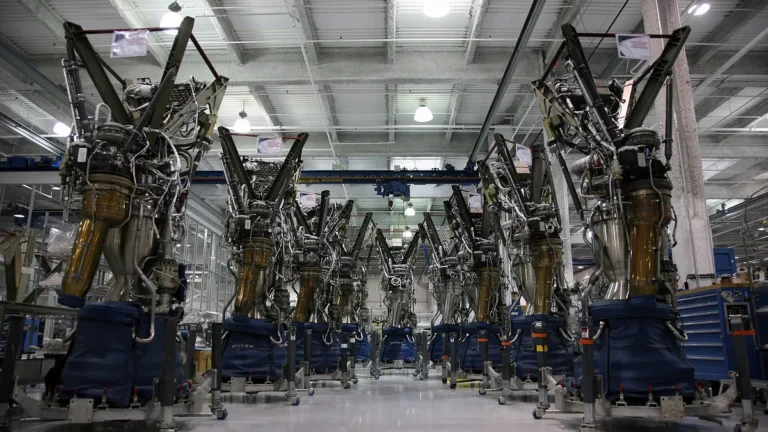
Booster 22, designated for Flight 15, is thought to have all its Raptor engines in place and waits for transfer to Pad 2 ahead of a pre‐launch static fire, with road closure notices likely to be the first sign of the move.
Booster 23 finished a 12‐hour cryogenic proof test at Massey’s on October 16 2026, went back to Mega Bay 1 for engine work, while Ship 43 stayed in Mega Bay 2 and Flight 16 remains targeted for December 2026 as part of the plan to open Launch Complex 39A for the first Starship launch from the East Coast. Booster 23 and Ship 43 are slated for Flight 16, with Booster 23 having completed the 12‐hour cryoproof test and Ship 43 housed in Mega Bay 2.
On September 28 2026, Starship Flight 14 achieved orbit after releasing 26 Starlink V3 satellites, and Elon Musk called the mission a success. “First orbital flight of Starship successful!”
Elon Musk said the Raptor Vacuum shutdown seen on Flight 14 was a software fault limited to one engine’s computer, labeling it a minor glitch. The September 12–13 tests with Ship 42 validated chopstick arm geometry and lateral translation, and rehearsed reconnecting the Ship Quick Disconnect arm, materially reducing the risk profile for Flight 15’s first ship‐catch attempt.
A successful dual catch of both the Super Heavy booster and the Ship on Flight 15 would prove the reuse economics that NASA’s Artemis Human Landing System architecture depends on. SpaceX is operating with parallel preparation infrastructure, moving two stacks through test campaigns simultaneously and validating catch hardware against production vehicles before flight.
To reach Launch Complex 39A, both vehicles would be shipped individually from Starbase to Kennedy Space Center aboard the transport barge “You’ll Thank Me Later,” traveling up the Banana River into the KSC turn basin. Once offloaded at the Roberts Road facility, the vehicles would undergo checks in the new Gigabay before moving to 39A for propellant‐loading tests and integrated vehicle testing.
The FAA has started a programmatic environmental impact statement that could eventually permit as many as 456 Starship launches and 912 vehicle landings each year from Starbase, well above the current limit of 25 launches and 50 landings annually. Under the existing FAA authorization for Starbase, most launches occur in daylight, with only three launches recently permitted at night.
Phase 1 of the proposed environmental review would remove these time‐of‐day restrictions, allowing launches at any hour and any day of the week, while Phase 2 would increase the ceiling to as many as 456 launches per year with no weekend launches. From Starbase, launch azimuths would span 40 to 115 degrees, and after flight a vehicle might touch down at the launch site, perform a soft splashdown in the Gulf of Mexico or open ocean, or be expended, with each landing location requiring case‐by‐case approval.
Elon Musk said the V3 satellites are 10 times more capable than V2 models, enabling 12 million extra subscribers without more launches. Catching a Starship stage before the end of 2026 would prove the reuse economics and keep the goal of flying 1,000 V3 satellites on schedule for the second quarter of 2027.
Despite the schedule shifts, the hardware for Flight 14 had been ready for weeks. The postponement of Flight 14 created an opportunity for SpaceX to practice the Ship 42 SQD arm and chopstick procedures while the launch pad sat idle.
Higher production is seen as necessary for SpaceX to escape the multi‐month launch gaps that have limited the Starship program so far. As of September 30 2026, planning indicated Flight 15 would occur no earlier than October 19 2026, and the FAA environmental review is in its early stage, assessing whether Starbase can rise from about two launches per month to the higher rates SpaceX envisions for operational Starship.

Join the discussion