
This is a new development in a story we reported earlier: NASA expects Swift Observatory to re-enter atmosphere Nov. 4. Earlier in this story: NASA expects Swift spacecraft to reenter Earth’s atmosphere November 4; NASA's Swift Observatory set for uncontrolled reentry.
Key facts
- NASA projects the 3,200-pound Neil Gehrels Swift Observatory will re-enter Earth's atmosphere near 3:30 a.m. Eastern Time on November 4, 2026.
- NASA says most of the Swift Observatory will burn up during re-entry, but some internal workings could survive the fall.
- NASA's re-entry estimate carries an uncertainty of plus or minus 11 hours, so the observatory could come down as early as the evening of November 3, 2026, and the agency shared the estimates on November 2, 2026.
- The Aerospace Corporation, a private nonprofit that tracks thousands of objects in orbit, estimates re-entry at 5:12 a.m. Eastern Time on November 4, 2026, give or take eight hours.
NASA says the 3,200-pound Neil Gehrels Swift Observatory could re-enter Earth’s atmosphere as early as the evening of Nov. 3, 2026, and the agency’s central estimate puts the descent at 3:30 a.m. Eastern Time on Nov. 4.
The agency released its estimates on Nov. 2, 2026, and described the observatory as rapidly falling out of orbit, saying it may be no more by Nov. 4, 2026. The forecast carries an uncertainty of plus or minus 11 hours. The Aerospace Corporation, a private nonprofit that tracks thousands of orbiting objects, offers a separate forecast of 5:12 a.m. Eastern Time on Nov. 4, with a margin of eight hours. The agency says it will keep refreshing the predictions as the window draws closer.
The U.S. Space Force independently estimates re-entry around Nov. 4, 2026. NASA says the bulk of the observatory will burn up during re-entry, but some internal components could survive the descent, and any surviving pieces will likely land in the ocean. Darren McKnight, a senior technical fellow at LeoLabs, says some internal components could survive re-entry, and any leftovers will likely fall into the ocean.
Pieces that survive are expected to land between 20.6 degrees south latitude and 20.6 degrees north latitude. The band includes parts of Mexico, the Caribbean, Central and South America, the Arabian Peninsula, India, Africa and Oceania, along with a lot of ocean. The Associated Press also places parts of Africa, Australia, India, Southeast Asia, and Central and South America within Swift’s re-entry zone.
NASA puts the likelihood of debris landing over a populated area at about 1 in 2,100. By comparison, the National Weather Service says a person’s lifetime odds of being struck by lightning stand at 1 in 15,300.
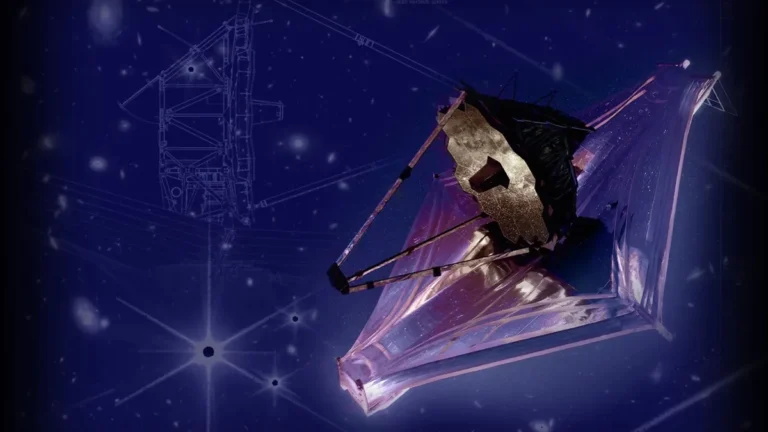
The Neil Gehrels Swift Observatory lifted off in November 2004 for a mission originally planned to last two years. The 3,200-pound observatory stared at the cosmos for more than two decades. Its operational life stretched to more than 10 times the planned primary mission duration, and by the end of its career, the mission had contributed to roughly 7,000 scientific papers. NASA says the total will rise as NASA processes final observations.
During its 22-year career, Swift recorded more than 2,000 gamma-ray bursts and 1,400 supernova explosions. Scientists built a 160-megapixel map of ultraviolet light in nearby galaxies in 2013 using Swift data. It also recorded the most powerful gamma-ray burst ever observed: an event 2.4 billion light-years away that released 18 teraelectronvolts of energy and shook Earth’s outer atmosphere. Following the failed rescue attempt, Swift’s team resumed observations and went on to study hundreds more targets, including remnants of stellar explosions and supermassive black holes.
In late 2024, unusually strong solar activity increased atmospheric drag on the aging observatory, causing it to drop from orbit faster than predicted. The failed August 2026 mission hammered the final nail in the observatory’s coffin. Engineers ended Swift’s science operations on Oct. 20, 2026, after the spacecraft fell too low in orbit to continue steady observations, and the observatory entered safe mode to prepare for the end of its mission.
NASA hired Arizona-based Katalyst Space Technologies to build a spacecraft equipped with robotic arms to lift Swift into higher orbit, and that craft launched on July 3, 2026. NASA turned to the company after Swift began falling from orbit faster than predicted because of strong solar activity, and the effort was billed as a first-of-its-kind rescue mission. The rescue effort failed after the craft encountered problems with its orientation control system, among other issues.
A couple of weeks before Swift entered safe mode, NASA released a four-photo set of some of the observatory’s last images, with the Chandra X-ray Observatory contributing to the final photos. The agency explained that Swift can quickly capture rapidly changing events in ultraviolet, X-ray and gamma-ray light, while Chandra gathers more detailed data with sharp X-ray vision, and together they provided a more complete picture of cosmic events and objects.
“At least in low-Earth orbit, what goes up must come down,” said John Nousek, the Pennsylvania State University astronomer who led the observatory’s control team. Experts say watching Swift’s descent could yield new insights about re-entering spacecraft and help designers build safer satellites in the future. Jonathan McDowell, an astrophysicist recently retired from the Center for Astrophysics, Harvard & Smithsonian, has also warned that material melted during re-entry could affect upper-atmosphere chemistry, the climate and the ozone layer. Swift served as a first-responder telescope, issuing alerts about interesting cosmic phenomena that instruments such as the Hubble Space Telescope and James Webb Space Telescope followed up on for more detailed investigations, according to the Associated Press.




Join the discussion