
Key facts
- Kara's group studies black hole properties, growth, and environmental effects, with particular interest in supermassive black holes at the centers of massive galaxies.
- Supermassive black holes act as engines of galaxy formation and influence the formation and evolution of their host galaxies.
- Kara earned a Gates Cambridge Scholarship for a one-year master's in physics at Cambridge's Institute of Astronomy and stayed for a PhD on black hole X-ray reverberation.
- Fabian determined the echoes came from corona-generated X-rays bouncing off the black hole's swirling accretion disk of gas and dust.
Erin Kara, an associate professor of physics at MIT who joined MIT’s Department of Physics in July 2019 and leads a black hole research group at the MIT Kavli Institute for Astrophysics and Space Research, uses X-ray reverberation mapping to chart gas falling onto black holes and to measure the effects of strongly curved spacetime near the event horizon.
X-ray reverberation mapping measures time delays between correlated emission at different wavelengths to infer physical size scales in regions too small for direct imaging. X-ray reverberation probes the innermost accretion flow, while ultraviolet, optical and infrared reverberation traces disk and broad-line region reprocessing. The accretion disk is the swirling disk of gas and dust around a black hole. Kara’s group uses X-ray reverberation mapping to map scales close to the event horizon far beyond telescope resolution, and erinkara.space describes the technique as a breakthrough enabled by her work over the past decade.
Andy Fabian and his team found the first evidence of X-ray echoes around a black hole in 2009, spotting curious time delays in archival X-ray data. The discovery came from reviewing archival data and helped resolve a debate about the source of radiation around black holes. Fabian determined the echoes came from X-rays generated by the corona—a halo of hot plasma above the disk—bouncing off the black hole’s swirling accretion disk of gas and dust. At the time, only one black hole had shown the echoes, leaving an archive of unanalyzed reverberation signals.
Kara earned a Gates Cambridge Scholarship for a one-year master’s in physics at Cambridge’s Institute of Astronomy and stayed for a PhD on black hole X-ray reverberation. Both MIT News and the Kavli Institute page describe her doctoral work as emerging from a topic that was just starting to grow roots. Andy Fabian OBE FRS, a Royal Society Research Professor and X-ray research group leader at Cambridge’s Institute of Astronomy, advised her thesis. “So I had my whole PhD to kind of play with this archive, and it felt very discovery-driven.”
Kara says.
After her PhD, Kara did postdoctoral research at the University of Maryland and NASA’s Goddard Space Flight Center. NASA named her a Hubble Postdoctoral Fellow in 2015 at those institutions, and she became the Neil Gehrels Prize Postdoctoral Fellow at the University of Maryland in 2018. She had planned to work on Hitomi, a Japanese satellite designed to detect far-off X-rays and map large-scale cosmic structure. This postdoctoral period included work on the Hitomi mission and later pivoted to NICER after Hitomi failed.
Hitomi failed after 40 days in space when controllers lost contact and the satellite spun apart in orbit. Before breaking apart, Hitomi returned one clean spectrum that Kara said was unlike any she had ever seen. “It got one really good observation, which was unlike any spectrum we had ever seen before,” Kara says. The observation validated a NASA-developed microcalorimeter detector now central to the X-ray Imaging and Spectroscopy Mission, and the technology survived the mission failure to inform the design of its successor.
After Hitomi, Kara joined a NASA Goddard group preparing the Neutron Star Interior Composition Explorer, or NICER, for launch. NICER, developed and built by MIT researchers, launched in 2017 and operates on the International Space Station measuring X-ray timing. Kara analyzed NICER data for tidal disruption events, where a black hole tears apart a nearby star. Tidal disruption events and NICER data became a main research focus for Kara.
XRISM launched in 2023 and has been taking data, with Kara leading a science group analyzing X-ray signals from supermassive black hole coronas. Kara and her students analyze XRISM, NICER, and other mission data to understand black hole growth, evolution, and galactic effects. Supermassive black holes act as engines of galaxy formation and influence the formation and evolution of their host galaxies. Universe Today states the team focuses on supermassive black holes that play an important role in galaxy formation and evolution.
Kara’s group studies black hole properties, growth, and environmental effects, with particular interest in supermassive black holes at the centers of massive galaxies. Kara says black holes switch on and off faster than previously thought, with matter drawn in more quickly, possibly from stars trapped in the accretion disk. She attributes the rapid changes to improved continuous monitoring of systems. Kara also says black holes are extreme and foundational to existence, with galactic star and gas distribution shaped partly by the central supermassive black hole.
Kara’s group studies tidal disruption events, quasi-periodic eruptions, and galactic black hole outbursts as extreme X-ray sources. Kara uses data from telescopes in space and on the ground to study black holes. The sources describe her observational work as relying on data across many facilities rather than a single instrument.
Dormant black holes can suddenly activate when a star on a close approach is tidally disrupted. Active galactic nuclei—bright galactic centers powered by accreting supermassive black holes—accrete material on timescales orders of magnitude faster than theoretical predictions. These rapid accretion rates challenge theoretical models of black hole growth.
Quasi-periodic X-ray flaring around supermassive black holes may result from a stellar object hitting the accretion disk and could yield joint light-gravitational wave discoveries with LISA. New time domain facilities are changing theories of how supermassive black holes grow through accretion and mergers. erinkara.space calls this a renaissance in black hole accretion physics.

Collin Lewin’s September 2025 MIT thesis, advised by Kara, applied Gaussian Process regression to active galactic nucleus reverberation in X-ray and ultraviolet-optical-infrared (UVOIR) bands. Lewin used NuSTAR observations of galaxy Ark 564 to produce the first simultaneous lag and flux spectra from NuSTAR and XMM-Newton. The thesis develops frequency-domain timing techniques for studying active galactic nucleus reverberation across regimes.
Swift and ground-based campaigns found unexpectedly large lag amplitudes, termed the accretion disk size problem, and weak X-ray-to-UV/optical correlations. In Mrk 335 and Mrk 817, standard disk lags occur at high frequencies while longer-than-expected lags dominate low frequencies, indicating larger-radius reprocessing. These discrepancies challenge standard accretion disk theory.
Mrk 817 yielded the first simultaneous X-ray and UVOIR lag measurements, mapping the full disk with longer delays during stronger X-ray obscuration. UV/optical lag excess comes entirely from obscured active galactic nuclei, while unobscured sources match thin-disk theory on average. X-ray column density accounts for over 80 percent of the variance in lag excess across Swift campaigns. The thesis suggests a disk wind may modulate lags by adding reprocessing or blocking ionizing flux.
Lewin created the STELA Toolkit, a Python package for frequency-domain data products using Gaussian Processes. The toolkit benchmarks GP performance against transformers for scalable ML-enabled timing analysis.
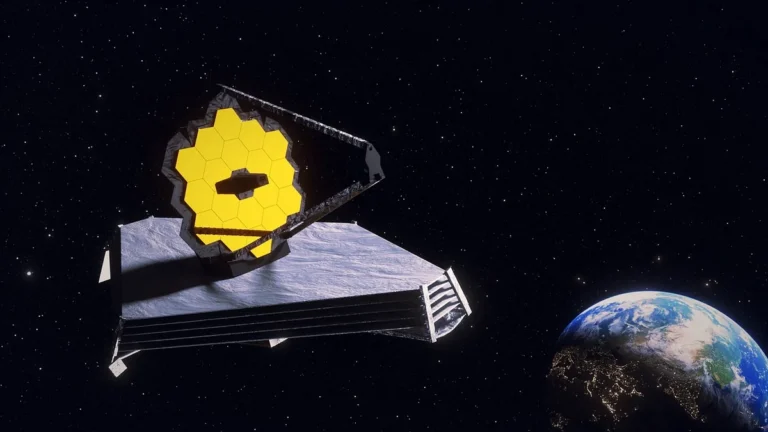
Kara plans to use ULTRASAT data from a UV all-sky surveyor and LISA data from a gravitational wave observatory, and she participates in both future missions. ULTRASAT launches in 2027 to continuously scan the entire sky for hot ultraviolet sources. LISA launches in 2035 as the first low-frequency gravitational wave observatory.
Kara was born and raised in Bethlehem, Pennsylvania, as the youngest of four children to a nurse and a doctor. She began on a premed track at Barnard College of Columbia University before switching to physics after an introductory class. Kara graduated from Barnard College in 2011 with a B.A. in physics and a minor in art history.
NASA launched the Fermi Gamma-Ray Space Telescope into low-Earth orbit in June 2008 to survey the sky for gamma rays. The launch provided the data Kara analyzed as a summer intern under astronomer Reshmi Mukherjee. She characterized two unidentified gamma-ray signals and confirmed both were quasars. The confirmation meant the sources were likely distant active supermassive black holes, which were rare in observations at the time.
In 2022, Kara worked with MIT educators and music anthropologists to turn black hole X-ray echoes into audible sound. Kara, a singer and violinist, wanted to know how a black hole’s cosmic energy might sound. The American Astronomical Society gave Kara the 2022 Newton Lacy Pierce Prize for five years of outstanding observational research.
Kara called MIT a hub for X-ray astronomy, citing its history with Bruno Rossi, Hale Bradt, George Clark, and Claude Canizares. She said the hub atmosphere was the draw for accepting the faculty position. She earned tenure at MIT. MIT News describes Kara as an associate professor working at the forefront of black hole physics, while the MIT Kavli Institute page identifies her as an observational astrophysicist focused on black hole growth and environmental effects.
Kara says humans can learn about events billions of light-years away and that many supermassive black hole puzzles remain open. She expresses excitement about open puzzles in supermassive black hole research. She notes the sun is one of the stars whose galactic distribution intertwines with the central black hole.


Join the discussion