Key facts
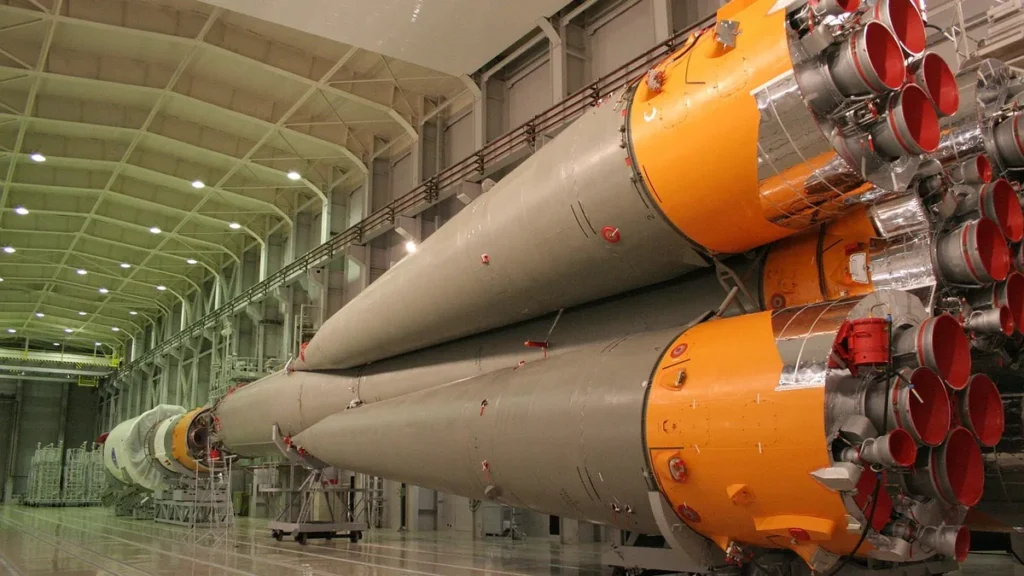
- AST SpaceMobile announced on November 6, 2026 that it will build a reusable 20-ton rocket named Blacklift to deploy its BlueBird direct-to-device satellite constellation in low Earth orbit.
- The engine package consists of 27 Miranda engines and nine vacuum-variant Vira engines for AST's first three rockets.
- The final share count under the engine license agreement will be determined by a forward volume-weighted average price calculation.
- SpaceX's Starlink, a top AST competitor, already has in-house launch access through Falcon 9 and Starship rockets.
AST SpaceMobile announced Nov. 6, 2026 that it will build a reusable 20-ton rocket named Blacklift to deploy its BlueBird direct-to-device satellite constellation in low Earth orbit.
The announcement comes amid a growing launch crunch and marks a shift from buying rides from existing providers to building its own launch vehicle, AST said. Firefly Aerospace will sell AST 36 rocket engines for the first three Blacklift rockets under a $1.3 billion contract.
The engine package includes 27 Miranda engines and nine vacuum-variant Vira engines for the first three rockets. AST will pay approximately $800 million upfront for a perpetual engine license, made up of $400 million in cash and 10 million to 14 million shares of Class A common stock.
A separate supply and services agreement requires $250 million for engines supporting the first three launches and $250 million over three years for engineering support services. A forward volume-weighted average price calculation will set the final share count.
Blacklift will carry as many as five BlueBird satellites on each launch, and AST expects operations to begin in late 2028. AST plans a first flight in late 2028. Ars Technica described that timeline as wildly, fantastically, and stupidly optimistic. Until Blacklift flies, AST will rely on external launch providers.
Until then, AST will keep buying launches from outside providers under contracts covering more than 100 BlueBird satellites for deployment from 2027 through 2028. The company currently has only 13 satellites in orbit, though it aims to operate 45 by the end of 2026. That gap delays its ability to offer a continuous satellite-to-phone service for carriers including AT&T and Verizon and to compete with the upcoming Starlink Mobile.
AST said Blacklift will provide regular unconstrained access to orbit as commercial launch access becomes more constrained with the expected end of SpaceX’s commercial Falcon 9 and rideshare flights. Chief Executive Abel Avellan called the rocket the springboard to expand the company’s total addressable market. Starlink, a top AST competitor, already has in-house launch access through Falcon 9 and Starship.
Shares of AST traded as high as $133 per share in May 2026 but had fallen to $30 by November 2026 as SpaceX plans to compete as a U.S. carrier with Starlink Mobile. Some investors criticized the rocket announcement because rocket development is hard and expensive, and all major launch providers have faced delays and setbacks.
At least one AST investor on Reddit called the rocket plan utterly preposterous and said all faith had eroded in the company over the past 24 hours. Avellan tweeted “We are done waiting,” alluding to other launch providers.
The company said in July 2026 that it could pursue partnerships or acquisitions aimed at vertical integration and reducing reliance on outside launch providers. That hint followed a May 2026 ground-test explosion of Blue Origin’s New Glenn rocket that forced Blue Origin to pause launches.
Cowboy Space announced in October 2026 that it is building a large rocket named Big Iron to launch orbital data centers, claiming a first flight in 2028. Ars Technica cites this as another example of ambitious medium-lift launch claims as investors recognize a worsening launch crisis.
Firefly’s Miranda engine has completed more than 175 hot-fire tests totaling over 4,200 seconds, or approximately 20 full first-stage flights. It also completed a flight-like test at 110% performance of its 230,000-pound-force thrust rating. Firefly calls it one of a few proven U.S. liquid engines of this scale.
Alpha, a small-lift rocket operated by Firefly Aerospace, has reached orbit repeatedly for U.S. government and defense customers, and Firefly Aerospace is the first and only private company to land and operate a spacecraft on the Moon. Firefly’s medium-lift Eclipse rocket will launch in 2027 and can carry as much as 18 tons to low Earth orbit, powered by seven Miranda engines and one Vira. Jason Kim, CEO of Firefly Aerospace, said “This is a bold transformational deal for Firefly, for AST SpaceMobile, and for the space industry.”
Blacklift will complete AST’s end-to-end vertical integration starting in late 2028, ensuring regular unconstrained access to orbit with what the company calls the most favorable owners’ economics in the industry. AST says Blacklift supports straightforward, repeat missions to low Earth orbit, relying on proven fuels, materials and engine architecture.
AST will produce the Miranda and Vira engine technology at a new engine manufacturing facility in the United States under the perpetual license. The agreement also covers engineering support for three years.
BlueBird spacecraft are approximately 2,400 square feet (223 square meters), the largest phased arrays ever deployed in low Earth orbit, and AST assembles, integrates, and tests them at its Midland, Texas facilities. Production runs through BlueBird 51.
AST operates over 500,000 square feet of manufacturing and operations facilities worldwide, supported by a 2,250-plus workforce and a technology platform backed by over 3,900 patents and patent-pending claims. The company is building a global cellular broadband network in space to operate directly with standard, unmodified mobile devices, targeting 4G and 5G service to nearly 6 billion mobile subscribers globally.
The Miranda engine will let AST leapfrog the traditional five-to-ten-year engine development cycle, AST President Scott Wisniewski said. He said in-house engine capability will let AST better serve commercial and government customers in markets including U.S. government radar, secure communications, IoT, federal emergency, AI edge compute and funded networks.
On Thursday, November 12 in New York City, AST will host a Blacklift unveiling event, webcast via its investor relations website. The company will likely share more about its rocket plans in a Nov. 12 earnings call.


Join the discussion