Key facts
- The company also introduced Big Iron Express, a commercial launch program through which outside customers can fly payloads requiring up to a megawatt of power in orbit.
- Cowboy's plan to scale the Stampede constellation of up to 20,000 satellites remains pending FCC approval.
- The stainless steel vehicle includes a reusable booster, according to the company's release.
- Yaffe said Cowboy wants to put a lot of available power in orbit to power chips and AI data centers, and that building its own vehicle is the most efficient and effective way to do that.
Cowboy Space revealed Big Iron on Oct. 27, 2026, unveiling a launch vehicle with an upper stage intended to remain in orbit as a data center in the megawatt class.
The vehicle stands 86 meters tall, is built of stainless steel, and is sized to the limit of road transport, a choice the company says speeds production and lowers capital costs, and is designed to carry more than 15,000 kilograms to sun-synchronous orbit. Nine Clydesdale engines will drive the first stage, burning liquid oxygen and methane, each delivering 300,000 lbs of thrust.
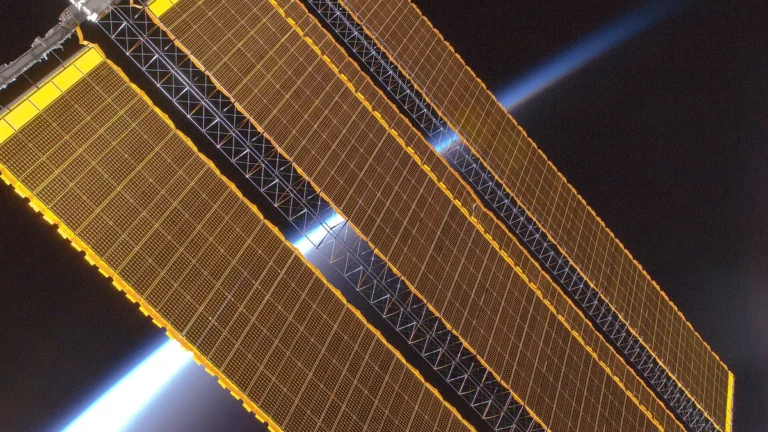
Rather than being discarded, the upper stage joins Cowboy’s constellation, and once deployed in dawn-dusk orbit, an orbit hovering near the day-night boundary, each satellite measures 132 meters by 73 meters and carries five racks of NVIDIA Vera Rubin graphics processing units. Many rocket parts take on a second job in orbit: the skin becomes the data center’s radiator, ammonia propellant works as coolant, and nitrogen pressurizing the second stage deploys the solar wings.
Cowboy says many rocket features have a second role based on whether the vehicle is ascending or in orbit. The company also introduced Big Iron Express, a commercial launch program through which outside customers can fly payloads requiring up to a megawatt of power in orbit. Cowboy will design the same upper stage to carry other companies’ payloads, configured to suit each mission, flexibility Cowboy describes as part of Big Iron Express opening flights to the rest of the industry. Cowboy is targeting Big Iron’s first flight in 2028.
Cowboy has filed an application with the FCC for a 20,000-satellite constellation called Stampede, and the plan to scale the Stampede constellation of up to 20,000 satellites remains pending FCC approval. After the first flight, the company plans to scale Stampede and intends to do so rapidly thereafter.
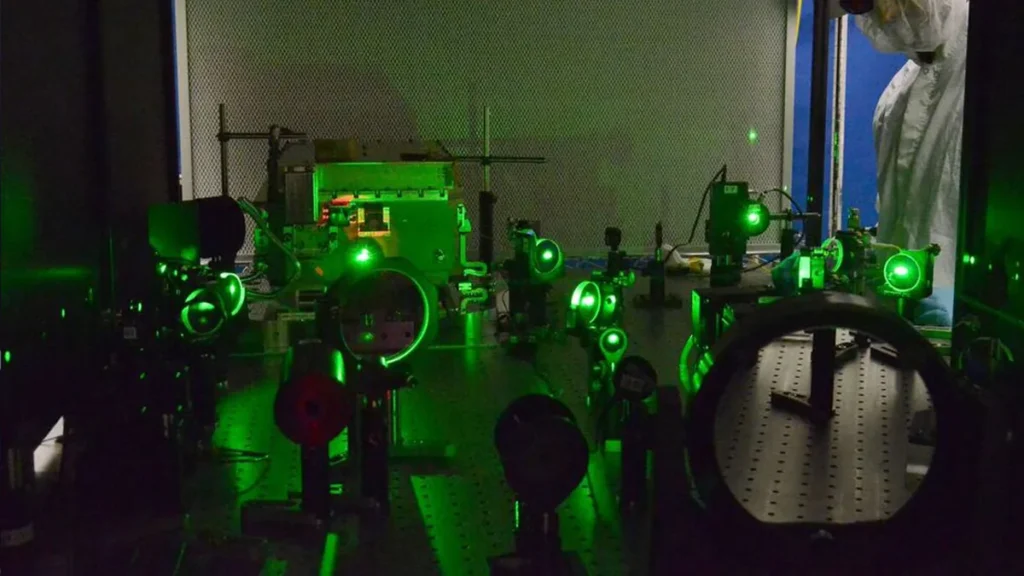
Cowboy’s first satellite, Reason-1, launched on Oct. 1 aboard SpaceX‘s Transporter-18 to demonstrate laser power beaming from orbit to Earth, and Yaffe said the first beaming attempt will likely happen in the next few weeks with zero red flags so far.
Reason-2 will launch in 2027 and carry GPUs to orbit for work from commercial and government customers, including work for NOAA to handle weather data while in space. The planned 2027 satellite is an in-orbit computing platform that processes information locally and downlinks finished results rather than raw data.
Cowboy Space Corporation, founded by Robinhood co-founder Baiju Bhatt and formerly known as Aetherflux, is headquartered in San Carlos, California, with operations in Seattle, Washington. The company is backed by Index Ventures, Breakthrough Energy Ventures, Construct Capital, Interlagos, and IVP. It is creating orbital infrastructure for AI that covers launch vehicles and orbital computing.
Bhatt said the company began by trying to build data centers in space but found too few rockets to reach orbit, so it decided to build its own launch vehicle.
Yaffe said Cowboy wants to put a lot of available power in orbit to power chips and AI data centers, and that building its own vehicle is the most efficient and effective way to do that. “Yaffe said building its own vehicle is the most efficient way to achieve that.” – Joseph Yaffe
Yaffe said launch capacity is at a premium right now, if available at all, and that government customers want to see a completed rocket. He said many alternatives, including Big Iron, have yet to fly, a point he raised while discussing launch capacity and government customer expectations. He said the company just still has a lot of executing to do.
Yaffe said a small satellite carrying GPUs would need separate radiators, so operators end up paying for identical metal twice when launching it. He used the comparison to justify integrating radiator function into the rocket skin instead of adding separate hardware that would have to be launched separately.
Cowboy designed Big Iron for existing infrastructure so the team could move fast and keep costs down, a strategy the company describes as relying on proven architectures to accelerate development and control expenses.
Cowboy says Big Iron was built around one mission: placing data centers in orbit, which it argues makes the vehicle simpler and more efficient to produce and operate than a general-purpose launch system. Cowboy says every Big Iron launch adds compute capacity at a cost competitive price because the upper stage joins the constellation rather than being discarded, a model that keeps prices competitive by expanding Cowboy’s compute fleet with each launch.
Cowboy selected methane to support reuse and chose a gas generator engine cycle, which the company calls a proven architecture meant to shorten the path to first flight; these choices further optimize cost and production speed alongside the vehicle’s single-purpose design. The stainless steel vehicle includes a reusable booster, according to the company’s release.
Bhatt said the vehicle’s design would let Cowboy charge prices comparable to ground-based data centers, with work in orbit costing less than AI work on the ground. He said letting other companies use Big Iron would make flights safer and more efficient while adding another path to orbit for the country. Companies interested in Big Iron Express launch services can learn more at www.cowboyspace.com.



Join the discussion