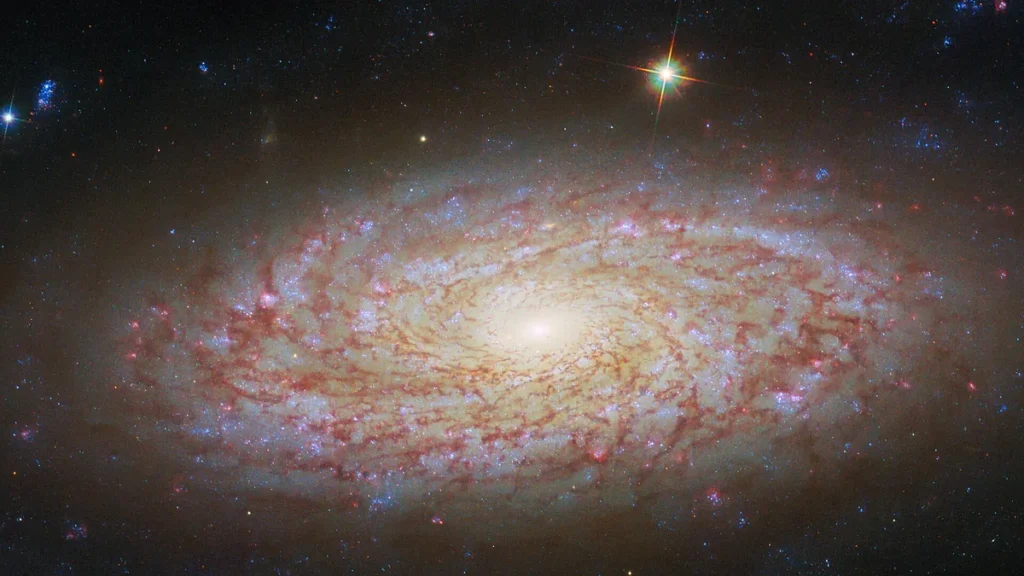
A research team led by Jonathan Freundlich at the University of Strasbourg Astronomical Observatory reported in 2026 that galaxies in a group seven billion light-years away keep on average only 20 percent to 40 percent of the molecular gas found in similar isolated systems. The results appeared in Astronomy & Astrophysics, and Phys.org published its account on Nov. 10, 2026. Phys.org presents the finding as evidence that a galaxy’s surroundings drive the loss of its gas.
COSMOS-Gr30 contains at least 44 galaxies gathered in an exceptionally dense spot where cosmic web filaments come together, about seven billion light-years from Earth. The team’s test case for environmental quenching is COSMOS-Gr30 at z ∼ 0.7, a time between the universe’s star-formation high 10 billion years ago and the present. Phys.org calls this era a pivotal moment linking the past star-formation high to now.
Freundlich’s team measured carbon monoxide coming from galaxies in the group with the NOEMA (Northern Extended Millimeter Array) interferometer in the French Hautes-Alpes and the IRAM 30m telescope near Granada, Spain. Older MUSE observations with ESO’s Very Large Telescope found substantial ionized gas among the galaxies in the group. Those earlier ionized-gas measurements support the new molecular-gas map because the project looks at gas inside galaxies and gas between them. The article situates these observations at a key point between the earlier star-formation maximum and now.
Star formation across the universe hit a high 10 billion years ago and then dropped sharply, the article’s background says. Phys.org ties that drop to gas ejection or heating from stellar winds and black holes, the loss of fresh gas, internal structural changes, and disruptions from the surroundings. Molecular gas is the essential fuel for star formation, so losing it is key to understanding why galaxies stop forming stars. This background appears in the article’s section on why environmental effects matter because most galaxies live in groups.
Since most galaxies live in groups, surroundings help determine what those galaxies look like. The article uses that fact to present tidal forces and hot intergalactic gas as the main environmental mechanisms. Tidal forces reshape galaxies strongly and disturb their gas during close encounters. Hot gas in the space between galaxies can pull material away from galaxies and block new gas from arriving, and the article names tidal effects and hot intergalactic gas as the two chief environmental processes in groups.
Direct measurements of molecular gas inside galaxy groups are uncommon, even though this gas provides the fuel for making stars. By charting gas within galaxies and gas around them, the project observes environmental quenching as it happens. The results show that groups at intermediate times in cosmic history actively remove cold molecular gas from the galaxies they contain, and crowded group settings can strip away the cold molecular gas galaxies require to form stars. Phys.org describes this as a direct view of how groups empty their galaxies at middle points in cosmic history, and the article says extending the finding requires wider observing campaigns across more groups, calling that the study‘s main path forward.
The study appeared in Astronomy & Astrophysics in 2026 as a paper by J. Freundlich et al. examining molecular gas in an over-dense group at z ∼ 0.7 as an environmental-quenching test case. Phys.org says Astronomy & Astrophysics is the journal that published the team’s work.



Join the discussion