Key facts
- New VLA and ALMA radio observations show that Betelgeuse's outer atmosphere has rebounded after the historic Great Dimming of 2019 and 2020.
- At 22 and 44 gigahertz, the brightness temperature has returned to typical levels, peaking at about 3,500 kelvin near a radius of roughly 2.7 stellar radii, matching the photospheric temperature.
- The data confirm a temperature minimum between the visible surface and the chromosphere, dropping to about 2,220 kelvin at roughly 1.2 stellar radii, more than 1,000 degrees cooler than the photosphere.
- Betelgeuse's radio-emitting atmosphere becomes more elongated when the companion is near its greatest apparent separation and rounder when the companion passes in front of or behind the star.
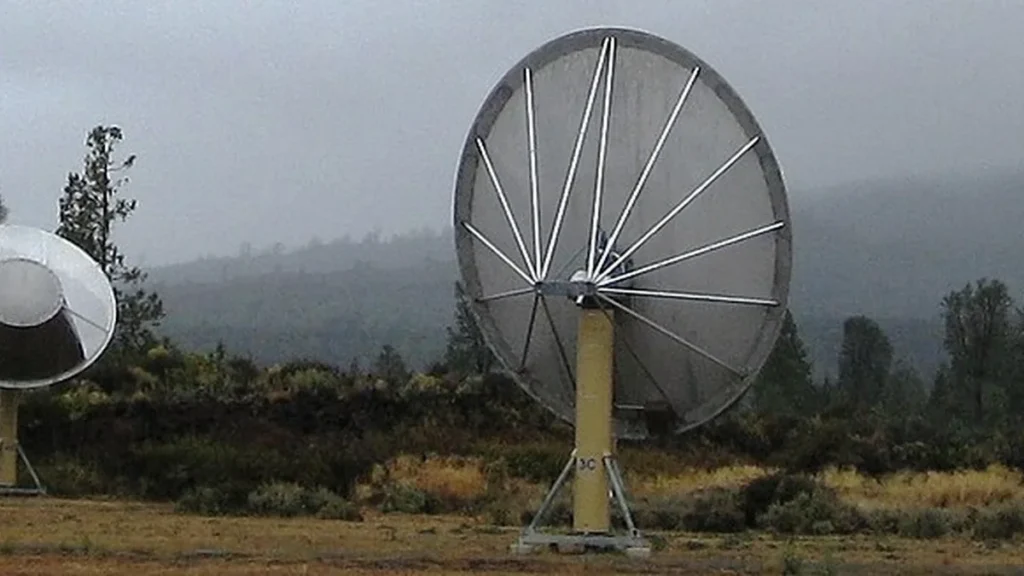
Lynn D. Matthews of MIT Haystack Observatory led colleagues from the Center for Astrophysics, Harvard & Smithsonian, the University of Manchester, and the European Southern Observatory in observing Betelgeuse with the VLA and ALMA radio arrays between 2021 and 2026, finding that the star’s outer atmosphere rebounded after the Great Dimming of 2019 and 2020.
Radio measurements at 22 and 44 gigahertz show the brightness temperature back at typical levels, with a peak near 3,500 kelvin at roughly 2.7 stellar radii—the same as the photosphere. That peak sits farther out than the roughly 2.5 stellar radii found in studies before 2016. Matthews’ team says the larger radius fits a change in the atmosphere’s density structure, though the radio data cannot prove the Great Dimming caused the shift. The observations covered seven frequencies from 22 gigahertz to 485 gigahertz, spanning wavelengths from 1.36 centimeters to 0.62 millimeters, and the global radio spectral index held steady at 1.35 within a margin of 0.03 across more than two decades of observing frequency.
The coolest point in the atmosphere sits between the visible surface and the chromosphere, at about 2,220 kelvin and roughly 1.2 stellar radii out—more than 1,000 degrees below the photosphere. That layer matches the MOLsphere, a molecular-gas shell inferred from infrared observations and rarely probed directly at radio wavelengths. At every observed frequency, the radio brightness temperature fell below ultraviolet-inferred temperatures at comparable radii, indicating cooler plasma mixed with warmer chromospheric gas. Because higher radio frequencies probe deeper layers, the ALMA data let the team map temperature from the outer atmosphere inward.
Betelgeuse underwent its most dramatic dimming in more than a century of records in 2019 and 2020, dubbed the Great Dimming and attributed to a surface mass ejection. The star ejected about a billion tons of material, partially blocking the view from Earth, and became around 2.5 times fainter in 2020. VLA data from August 2019 showed the atmosphere at its coolest in three decades at 44 gigahertz. A 2019 study led by Matthews proposed that a convection-triggered shock wave disturbed the outer layers ahead of the dust-forming outburst; later research attributed the dimming to ordinary mass ejection and dust formation rather than an imminent explosion.
Astronomers dubbed the close companion Siwarha, meaning her bracelet in Arabic, complementing Betelgeuse’s name, commonly translated as the hand of al-Jawza. Astronomers think Siwarha orbits deep within Betelgeuse’s extended atmosphere at roughly 2.3 stellar radii, or about twice the star’s radius. Astronomers proposed the companion in 2024 to explain Betelgeuse’s roughly 2,100-day brightness cycle, and direct imaging and spectroscopy later supported it. An earlier Center for Astrophysics study detected a trailing wake of disturbed gas around Betelgeuse using Hubble and ground-based observatories, but the radio team did not detect Siwarha directly; researchers estimate it to be tens to hundreds of times too faint to see.
Betelgeuse’s radio-emitting atmosphere becomes more elongated when the companion is near its greatest apparent separation and rounder when the companion passes in front of or behind the star. The disk looks nearly round, with ellipticity of 10% or less in all bands. The variation correlates with the companion’s orbital phase near 2.3 stellar radii, leading the astronomers to suggest Siwarha may be shaping the atmosphere close to where the stellar wind launches.
A separate University of Manchester team led by Bill Dent observed Betelgeuse’s inner atmosphere with ALMA for the first time since the 2020 dimming; ALMA last targeted the star in 2015. Dent’s team imaged ionized and molecular gas at 7 milliarcsecond resolution—sharp enough to distinguish 13 meters, or 43 feet, on the Moon’s surface—using ALMA’s longest baselines. ALMA’s 0.6-1.4 millimeter wavelengths originate just above the visible surface and trace the innermost reach of the extended atmosphere. The images reveal peaks and troughs indicating immense convective cells, with some hot spots around 800 degrees hotter than their surroundings.
The irregular pattern suggests far fewer but much larger cells than on the Sun, and the brightest hot spot also appeared in the 2015 data, suggesting the cells are persistent. The hot spots show a preferential alignment along one direction tied to the companion’s orbit. Dent says that if Siwarha’s orbit lines up with Betelgeuse’s equatorial plane, the brightest and most persistent hot spots may sit near the poles, where convection could be more active and stable. He says red supergiants will inevitably explode as supernovae while polluting interstellar space with strong stellar winds, and his team hopes further observations will confirm the link between the alignment and the companion’s orbit.
At about 724 light-years away, Betelgeuse is an 8-million-year-old red supergiant with a radius around 1,400 times the Sun’s and luminosity exceeding 100,000 Suns. The star is the second brightest in Orion and is also known as HD 39801, Alpha Orionis, or Alpha Ori. One report states Betelgeuse is roughly 548 light-years from Earth, a figure that conflicts with the 724 light-year estimate; both appear in their respective sources.
The Astronomical Journal published the findings as article AJ 172, 184, with DOI 10.3847/1538-3881/ae953d, in a paper titled New Spatially Resolved Observations of Betelgeuse from the VLA and ALMA: Evidence for Atmospheric Perturbations from a Close Companion. The National Radio Astronomy Observatory announced the results in a press release.
The team produced the most detailed radio maps yet of Betelgeuse. Matthews said the combination of VLA and ALMA data gave the team a convincing result, and that the fact these facilities can resolve the disks of nearby stars is impressive. Matthews’ team says they still need observations covering more of Siwarha’s orbit, including frequencies not yet well sampled, to confirm and sharpen the results.
The rebound implies the atmosphere recovered from the cooling that preceded the Great Dimming, though Matthews’ team says the radio data cannot prove the Great Dimming caused the shift. Dent’s team studied Betelgeuse’s inner atmosphere with ALMA for the first time since the 2020 dimming, separate from the Matthews VLA/ALMA paper.



Join the discussion