Key facts
- Four volunteers completed 365 days of isolation in NASA's simulated Mars habitat on October 19, 2026.
- The crew consists of mission commander Ross Elder, medical officer Ellen Ellis, science officer Matthew Montgomery, and flight engineer James Spicer.
- The crew entered the habitat on October 19, 2025, for a planned 378‑day mission.
- The crew is scheduled to exit the habitat on October 31, 2026, to conclude the mission.
Four volunteers completed 365 days of isolation in NASA’s simulated Mars habitat on October 19, 2026, marking the first year of the CHAPEA Mission 2 analog, a 378‑day simulation designed to mimic living and working on Mars, as announced by NASA.
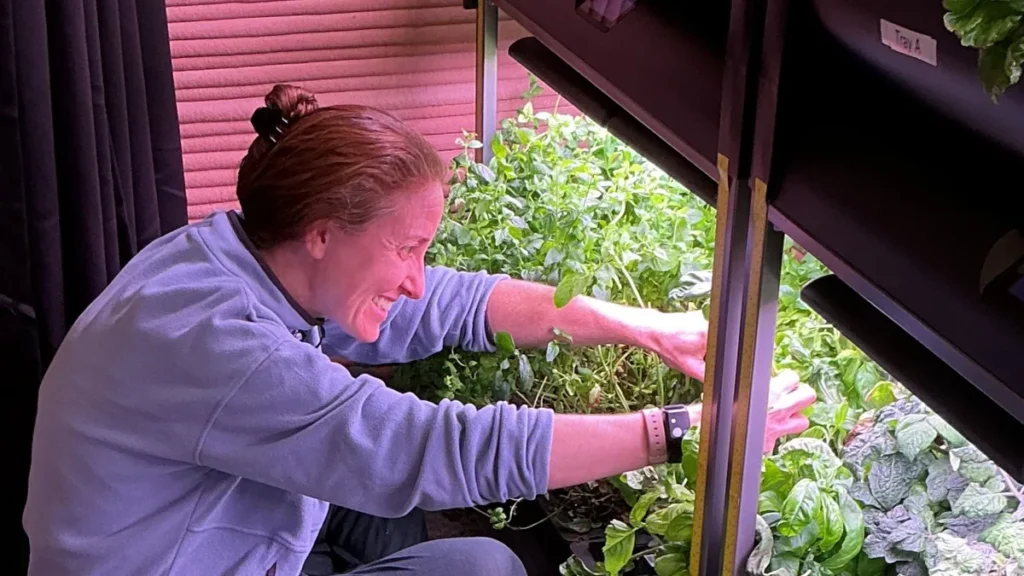
The crew consists of mission commander Ross Elder, medical officer Ellen Ellis, science officer Matthew Montgomery, and flight engineer James Spicer, roles NASA identified when announcing the one‑year milestone. They reside in a 1,700‑square‑foot, 3D‑printed habitat at NASA’s Johnson Space Center in Houston, which NASA constructed to simulate a Mars surface living environment for the CHAPEA Mission 2 analog. The four crew members have spent the past year living and working in isolation in a confined habitat at NASA’s Johnson Space Center in Houston, where they remain isolated in a habitat that simulates Mars conditions and carry out tasks like growing crops and managing limited resources.
During the past year, the crew lived in a confined, Mars‑simulating habitat at Johnson Space Center, where they grew crops, managed limited supplies, dealt with communication delays and performed suited EVAs on a simulated Martian surface. The volunteers entered the habitat on October 19, 2025, for a planned 378‑day mission after NASA scheduled the CHAPEA Mission 2 to last 378 days to simulate a long‑duration stay on Mars. They are scheduled to exit on October 31, 2026, to conclude the simulation after completing the one‑year mark and finishing the remaining days of the 378‑day simulation.

After leaving the habitat, the crew will undergo two weeks of post‑mission evaluations and debriefs with NASA scientists, which aim to analyze health and performance data to inform future Mars missions. NASA intends to use the collected data to balance priorities and develop methods to counter spaceflight risks on future long‑duration Mars missions, intending to improve crew health, productivity, and connectivity during deep‑space travel. Researchers will examine whether limited food and exercise systems affect the ability to perform Martian surface spacewalks and whether constrained resources impair physical performance required for EVAs on Mars.
The data could also help foster autonomy and build decision‑making support systems for crews facing communication delays of up to 45 minutes each way, as simulated Mars‑to‑Earth lag is incorporated into the analog to study its impact on crew operations. Grace Douglas expressed pride in the crew’s dedication and accomplishments throughout the past year on this fast‑paced, demanding mission — Grace Douglas S1 The principal investigator highlighted the team’s accomplishment during the one‑year milestone announcement. NASA science teams have been preparing to process the health and performance data gathered from the CHAPEA Mission 2 crew, getting ready to analyze the data before the crew’s one‑year anniversary, which will inform future Mars mission planning.

Michael Stenger, who leads NASA’s Human Research Program, said the mission has helped begin teaching what is needed for year‑long Mars stays, including medical and psychological support despite communication delays, and has offered early insight into requirements for long‑duration flights to Mars. He added that combining this Mars‑realistic analog with physiological, psychological, and performance measures in a rigorously controlled environment will enable translating knowledge to Moon Base and beyond, and that integrating the analog with detailed health measurements in a controlled setting will allow the lessons to be applied to future lunar bases and deeper space missions. Grace Douglas, CHAPEA principal investigator, said the entire CHAPEA team is excited to congratulate the crew in person after their year‑long isolation, noting that the team looks forward to meeting the crew face‑to‑face after the year‑long isolation.
The crew will have a chance to reconnect with their families, having only communicated with them via email during the mission because of a Mars‑like communication delay, and after leaving the habitat they will finally meet their families in person, having previously only been able to exchange emails that simulated the delay of signals between Earth and Mars. Post‑mission debriefs and evaluations will help scientists learn how crews adapt to long‑duration mission routines, giving NASA insight into what future explorers need to stay healthy, productive, and connected far from Earth, as the planned debriefs aim to reveal how crew members adjust to everyday life on extended missions, providing NASA with guidance on maintaining health, productivity, and connection for deep-space travelers.




Join the discussion