Key facts
- A faint companion star orbiting a white dwarf, or a pair of white dwarfs, may have caused the blast instead of a bright star.
- The slow fade contradicted the Phillips relation, a principle more than 30 years old holding that fainter supernovae generally disappear more quickly.
- In a typical nuclear-fusion supernova, radioactive nickel decays and heats the gas cloud, keeping it bright for roughly one to one and a half months.
- White dwarf supernovae serve as standard candles since they are thought to explode at nearly the same brightness, but the discovery implies only the brightest cases have been observed.
An international astronomy team reported the finding in Nature Astronomy in 2026, identifying SN 2024vjm as an unusually faint supernova in the galaxy NGC 6744, roughly 30 million light-years from Earth, that remained visible for nearly a year after its detection in autumn 2024. One source calls it the faintest supernova ever observed, while another describes it as one of the faintest ever observed.
BlackGEM, an array of three optical telescopes at ESO’s La Silla Observatory in northern Chile, detected the new point of light in that nearby galaxy. The facility is operated by Radboud University, the Netherlands Research School for Astronomy and KU Leuven. It scans broad sky regions for transient events, and its optical telescopes aim to catch faint flashes, particularly light from black-hole and neutron-star collisions. BlackGEM recorded the fresh spot shortly before midnight GMT in autumn 2024, and Professor Paul Groot of Radboud University identified the unusual source the following morning and alerted the international team.
The international team was led by Professor Avishay Gal-Yam of Israel’s Weizmann Institute of Science, with a doctoral student leading the study and Professor Groot identifying the light source. Researchers tracked SN 2024vjm for nearly a year, repeatedly measuring its spectrum and brightness long after the initial alert.
Because these blasts hit maximum brightness in days or weeks, scientists moved fast to gather data before the fade. The detection began in autumn 2024 when BlackGEM recorded a new spot of light, and follow-up observations continued long after the initial alert. Researchers needed rapid observations to capture the spectrum and brightness while the explosion was still near maximum brightness. The quick response allowed the team to track the evolving gas cloud as it expanded, and the international collaboration brought in theoretical support to interpret the faint signal.
A spectrum obtained with the New Technology Telescope at ESO’s La Silla Observatory confirmed that SN 2024vjm was a supernova and revealed the gas cloud’s expansion speed. The observation came from ESO’s La Silla Observatory in northern Chile, the same site as BlackGEM. This spectrum provided the basis for classifying the event and for measuring how fast the gas cloud was moving.
Spectral analysis showed the material matched Type Ia supernovae, events caused by destroying a white dwarf—the burned-out core of a sun-like star. This linked the faint explosion to the same nuclear-fusion mechanism as much more powerful events, raising questions about how white dwarfs can explode at lower masses. Further analysis confirmed the explosion was powered by nuclear fusion.
A faint companion star orbiting a white dwarf, or a pair of white dwarfs, may have caused the blast instead of a bright star. The Euclid space telescope imaged the galaxy NGC 6744 11 months before the SN 2024vjm explosion, giving the team pre-explosion images to study. No star was visible at the supernova’s location in those earlier Euclid images, so astronomers concluded any companion must also have been faint. By working out the maximum brightness a star could have had while still missing from the Euclid images, astronomers concluded a bright star was not part of the explosion.
Researchers merged data from hundreds of BlackGEM images to pinpoint where the progenitor star should appear in the earlier Euclid observations. The peak light was under 1% of a normal supernova’s output, so the explosion shone 100 to 300 times fainter than usual. Its gas cloud expanded at around 3,000 kilometers per second, far slower than the more than 10,000 kilometers per second typical of supernova explosions. The slow expansion helped keep the cloud dense enough to trap radiation and prolong the visible glow.
The gas cloud took more than 70 days to become sufficiently diffuse for radiation to escape. The radioactive material moved relatively slowly, helping to keep high-energy radiation trapped inside the expanding gas cloud.
In a typical nuclear-fusion supernova, radioactive nickel decays and heats the gas cloud, keeping it bright for roughly one to one and a half months. The slow fade contradicted the Phillips relation, a principle more than 30 years old holding that fainter supernovae generally disappear more quickly. Because SN 2024vjm was so faint, researchers expected it to fade rapidly, yet it continued to shine for an unexpectedly long period.
White dwarf supernovae serve as standard candles since they are thought to explode at nearly the same brightness, but the discovery implies only the brightest cases have been observed. Paul Groot said bright standard candles probably have the same mass, about 1.4 times that of the sun. For distance-scale studies, the event suggests white dwarf standard candles may represent only the brightest examples, with implications for measuring the expansion of the universe.
For progenitor studies, the slow fade shows weak explosions can remain visible far longer than the typical one to one and a half months.
The discovery has implications for binary star evolution, specifically whether much lighter white dwarfs can explode and what triggers such explosions. Researchers used computational methods including the Katz integral, developed at the Weizmann Institute in the 2010s by Professor Boaz Katz, and consulted him directly while analyzing the measurements. The collaboration between observational astronomers and theoretical physicists helped explain how the weak explosion dispersed gas inefficiently and prolonged radiation trapping.
It turns out that exploding white dwarfs can be much fainter than previously thought.
Paul Groot, Phys.org
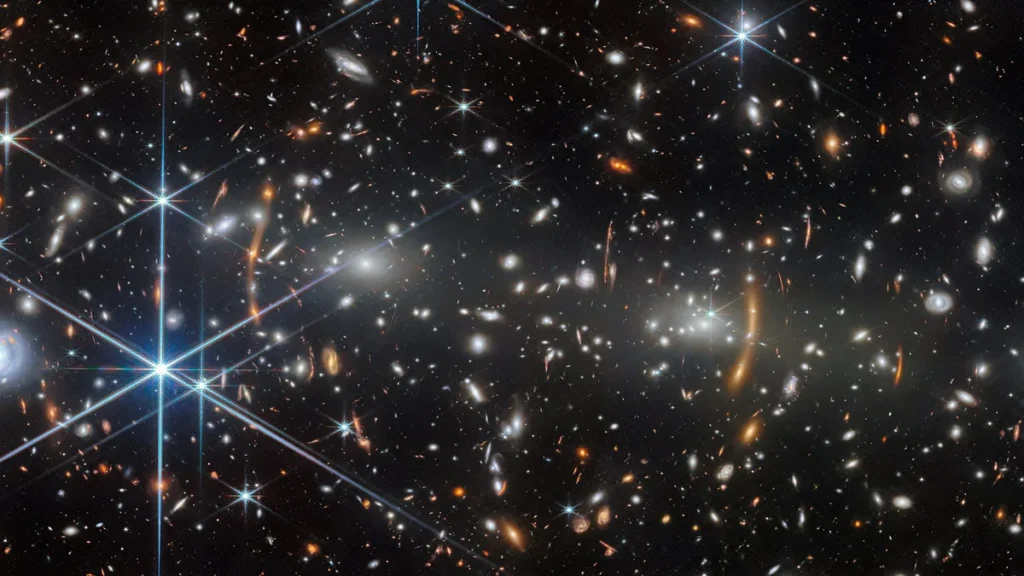
BlackGEM scans broad sky regions for transient events, while Hubble and James Webb study small fields in detail. The array’s optical telescopes aim to catch faint flashes, particularly light from black-hole and neutron-star collisions. Using wide-field sky surveys together with space-telescope observations lets researchers study events that could otherwise be missed. BlackGEM’s design complements narrow-field observatories by covering wide areas.
The discovery centers on the faint end of thermonuclear stellar explosions, challenging the assumption that such events must be bright. Its slow fade, lasting more than 70 days before radiation escaped, matters for progenitor studies because it shows weak explosions can remain visible far longer than the typical one to one and a half months. For distance-scale studies, the event suggests white dwarf standard candles may represent only the brightest examples, with implications for measuring the expansion of the universe. Avishay Gal-Yam said supernova research shows physicists how a star ends, how galaxies evolve, how the universe expands and where chemical elements come from.
The known ties between supernova brightness and how quickly it fades might not fit every blast, particularly among the very faintest cases. Groot’s team keeps looking for comparable faint supernovae with BlackGEM, while researchers hope future instruments will reveal how often events like SN 2024vjm occur. With more sensitive surveys expected, scientists want to know whether other unusually dim stellar explosions have escaped conventional expectations. The work demonstrates how wide-field surveys and space-telescope observations together can reveal events that might otherwise escape notice.
The study ‘A faint progenitor system for the faint Iax supernova 2024vjm’ was published in Nature Astronomy in 2026 and posted on the arXiv preprint server. The research was led by a doctoral student and involved Professor Avishay Gal-Yam and Professor Paul Groot.




Join the discussion