Key facts
- The House and Senate are in recess for the week of November 22-29, 2026, holding only pro forma sessions.
- Democrats will take control of both chambers when the 120th Congress begins at noon on January 3, 2027.
- The Cygnus XL spacecraft will carry approximately 11,000 pounds of cargo aboard a SpaceX Falcon 9 rocket.
- Space Launch Complex 40 serves as the launch pad for the CRS-25 mission.
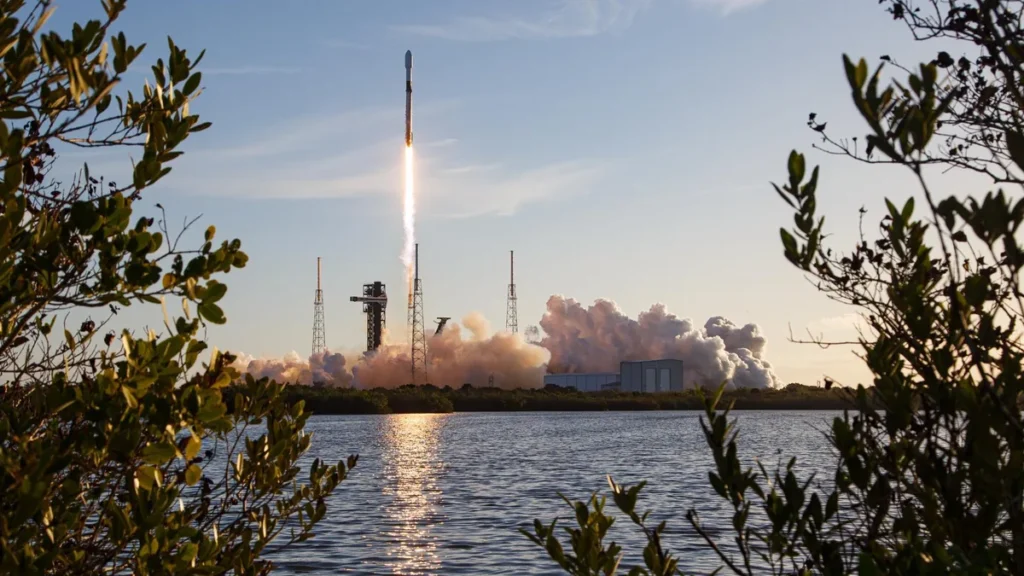
NASA, Northrop Grumman, and SpaceX are targeting a November 29, 2026, launch of the Northrop Grumman CRS-25 mission to the International Space Station, with liftoff set for no earlier than 10:47 a.m. EST.
The same NG-25 flight is listed from Cape Canaveral Space Force Station at 10:49 am ET, with NASA coverage set to begin at 10:25 am ET. The agencies set the target as no earlier than 10:47 a.m. EST. Space Launch Complex 40 at Cape Canaveral Space Force Station in Florida serves as the launch pad.
Northrop Grumman gave the CRS-25 spacecraft the name S.S. James “Jim” A. Lovell, honoring former NASA astronaut Jim Lovell. Lovell flew four missions, including Gemini VII, Gemini XII, Apollo 8, and Apollo 13 around the Moon. The Cygnus XL spacecraft will carry approximately 11,000 pounds of cargo aboard a SpaceX Falcon 9 rocket, delivering science investigations, supplies, and equipment to the station.
NASA astronauts Jessica Watkins and Luke Delaney are set to use the Canadarm2 robotic arm on the station to capture the Cygnus XL on Tuesday, December 1, 2026. Ground controllers will then move the spacecraft to the Unity module’s Earth-facing port, so cargo can be unloaded. The Cygnus XL is scheduled to remain at the International Space Station until May 2027.
Experiments aboard the Cygnus XL are aimed at improving drug delivery for cancer and osteoarthritis, predicting cancer spread, advancing treatments for muscle loss, improving radiation sensing, and advancing food production for future long-duration missions. NASA lists these as highlights of space station research being delivered on this mission.
The prelaunch media teleconference is set for Monday, November 23, 2026, at 12 p.m. streaming on NASA’s YouTube channel. Participants include Gaurang Patel and Jennifer Buchli of NASA’s Low Earth Orbit Program, Dave Schiller of Northrop Grumman, and Jared Metter of SpaceX. Media must contact the NASA Johnson Space Center newsroom by 11 a.m. on November 23 to get call details and should dial in no later than 10 minutes before the start to ask questions.
Congress is in a quiet period. The House and Senate are in recess for the week of November 22-29, 2026, with only pro forma sessions scheduled. A Continuing Resolution expires on December 11, 2026, and lawmakers have not yet agreed on that measure, the National Defense Authorization Act, or a third reconciliation bill containing $350 billion for the military requested by the White House.
Lawmakers return November 30 to address expiring funding and authorization measures before scheduled session endings in December. The House plans to adjourn sine die on December 17, 2026, and the Senate on December 18, 2026, though those dates could change. Democrats are set to take control of both chambers when the 120th Congress begins at noon on January 3, 2027.
Northrop Grumman buys Falcon 9 launches from SpaceX for Cygnus missions because its Antares rocket relied on Ukrainian and Russian hardware that became unavailable after Russia invaded Ukraine in 2022. Northrop Grumman and Firefly are developing a new rocket called Eclipse, and its first launch is now expected in 2027 instead of 2025.
The ESA/JAXA BepiColombo mission entered orbit around Mercury on November 21, 2026, after an eight-year journey. ESA said, “The spacecraft is safe and teams at ESOC are working to understand what happened,” following a thruster burn shorter than planned.
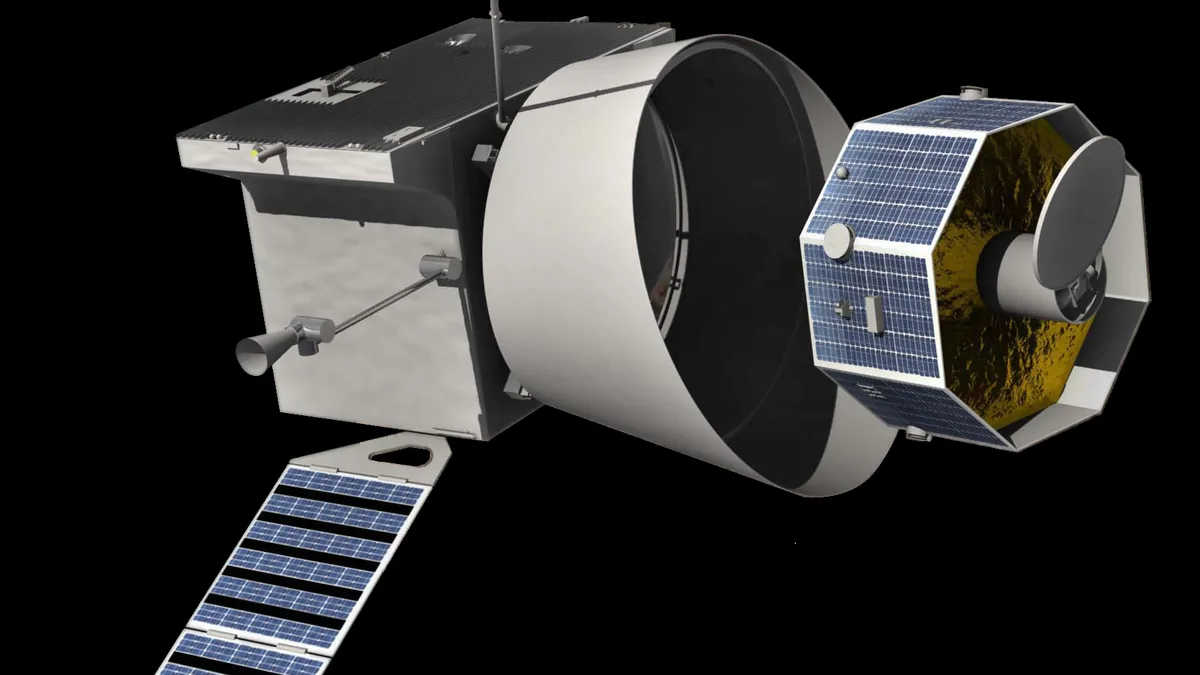
BepiColombo is the second spacecraft to orbit Mercury, following NASA’s Messenger. The mission carries two spacecraft in different orbits: ESA’s Mercury Planet Orbiter and JAXA’s MIO, formerly MMO. If the thruster issue is resolved, the two orbiters will separate on December 9-10, 2026. ESA’s MPO will focus on Mercury’s surface and interior, while JAXA’s MIO will study the magnetic field and magnetosphere.
Public and media events around the mission continue through the week. University College London and Birkbeck, University of London, planned an online event on Thursday, November 26, 2026, featuring four experts involved in the BepiColombo mission. The Mercury Imaging X-ray Spectrometer on the mission came from the University of Leicester, one of several U.K. organizations contributing to the effort. ESA planned a hybrid media-only event at London’s Science Museum on Friday, November 27, 2026.
ESA will livestream the first close-up images of Dimorphos on Wednesday, November 25, 2026, from 1:45-2:30 p.m. EST on ESA TV and YouTube, showing views captured by the Hera spacecraft. Hera reached the Didymos/Dimorphos binary asteroid pair on November 4, 2026, to assess the aftermath of NASA’s DART impact. In 2022, NASA’s DART mission altered Dimorphos’s orbit around Didymos from 11 hours and 55 minutes to 11 hours and 23 minutes, and Italy’s LICIAcube cubesat captured images during the impact.
China’s human spaceflight plans also draw attention. China was preparing to launch Shenzhou-24, carrying its first non-Chinese astronaut to the Tiangong space station, though unofficial sources indicated a launch time of 7:19 p.m. EST on Tuesday, November 24, 2026. As of November 22, 2026, China had not officially announced the date, time, or crew.
Muhammad Zeeshan Ali or Khurram Daud, one of two Pakistani astronauts selected for training in China earlier in 2026, was expected to fly on Shenzhou-24. A November 22, 2026, post on X by Pakistan’s High Commission in Bangladesh said Pakistan’s first state-backed astronaut was set to travel aboard Shenzhou-24 to Tiangong around November 25, 2026, as part of growing Pakistan-China space cooperation. As of November 22, 2026, China had not announced which Pakistani astronaut would fly or the identities of the two Shenzhou-24 Chinese taikonauts.
The Shenzhou-24 crew was expected to join the Shenzhou-23 crew already aboard Tiangong. The Pakistani astronaut would return after about a week with two Shenzhou-23 crew members, while one remains for another six months to complete China’s first year-long mission. China’s CGTN usually livestreams these launches, and the crew announcement usually comes a day before liftoff.
Domestic policy and science meetings fill the rest of the week. The NSF-NASA-DOE Astronomy and Astrophysics Advisory Committee held a hybrid meeting on Monday, November 23, 2026, running from 10:00 a.m. to 5:00 p.m. ET. GNOSIS26, a 24-hour virtual conference, started at 4:00 a.m. EST on Tuesday, November 24, 2026, and ran through Wednesday, November 25. Hayabusa 2026, the 13th Symposium of Solar System Materials, was held Tuesday-Friday, November 24-27, 2026, at JAXA’s Sagamihara Campus in Japan and online, with times local to Japan.
Thanksgiving Day in the United States fell on Thursday, November 26, 2026, and U.S. government offices were closed. The holiday made the week quiet in U.S. space policy as many people take off the days before and after or the entire week.



Join the discussion