Key facts
- SpaceX submitted an FCC application for as many as 1 million satellites designed to serve as solar-powered orbital data centers, per a technical analysis released Sunday, Nov. 22.
- The Nov. 22 assessment separates worst-case model assumptions from confirmed atmospheric data.
- Researchers and regulatory observers urge direct atmospheric sampling of launch plumes and of hardware that re-enters, instead of relying on theoretical modeling.
- The FCC, under Chairman Brendan Carr, is reviewing SpaceX's application together with other commercial filings.
SpaceX filed with the FCC to operate as many as 1 million spacecraft that would serve as solar-powered orbital data centers, satnews.com reported, citing a technical analysis made public Sunday, Nov. 22. SpaceX wants to sidestep limits on terrestrial power grids and land use for artificial intelligence and cloud computing by placing solar-powered processing nodes in low Earth orbit.
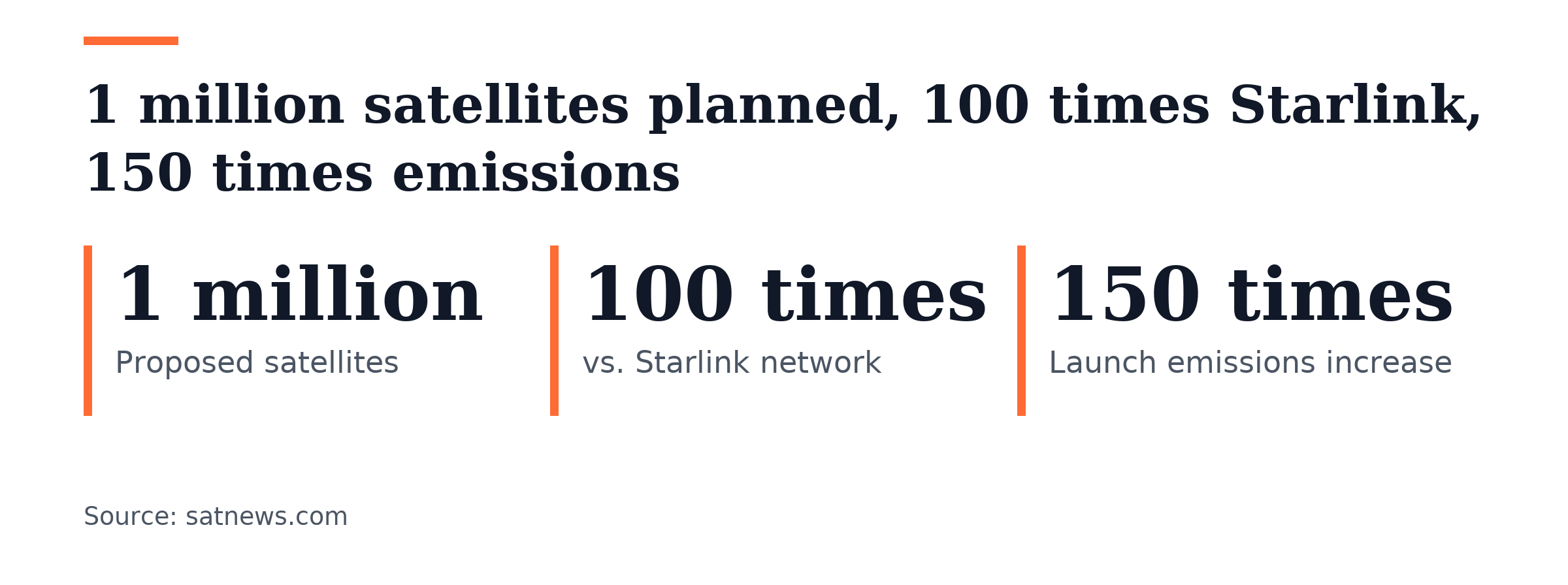
The proposed constellation would be nearly 100 times the size of SpaceX’s current Starlink broadband network. High-efficiency solar arrays would power onboard computing processors on each satellite, with optical inter-satellite links tying the network together instead of operating like traditional communications satellites.
Traffic management across low Earth orbit shells would face severe demands if the network reaches a ceiling of 1 million spacecraft, with automated collision avoidance, dependable deorbit propulsion, and predictable atmospheric burn-up profiles needed to stop long-term debris buildup. In September, the company delivered a formal analysis to the FCC on re-entry debris and collision risk that included spacecraft demisability and collision avoidance metrics.
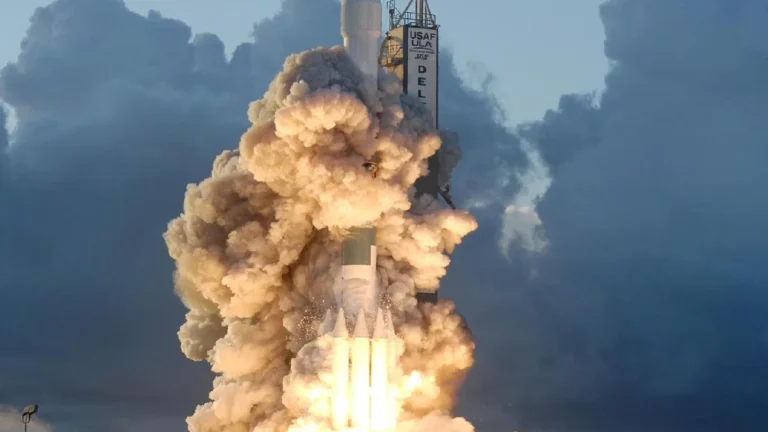
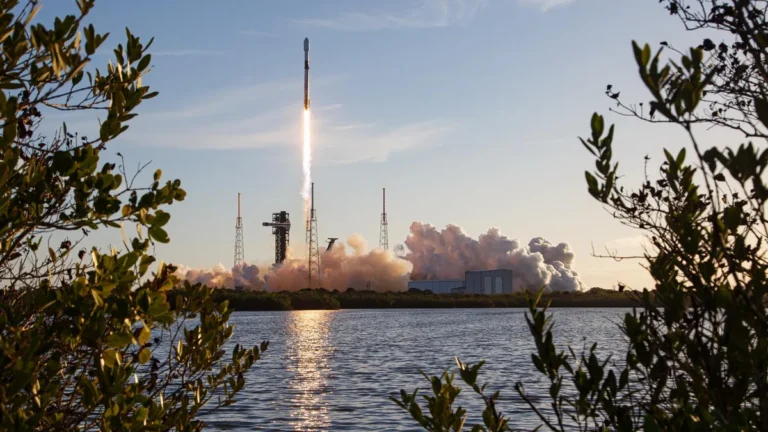
Researchers who study frequent launch and re-entry scenarios warned that expanding an orbital compute network to 1 million spacecraft might lift launch emissions by as much as 150 times and sharply increase upper-atmospheric nitrogen oxides (NOx) and black carbon. The Nov. 22 analysis that modeled emission increases also warned against treating claims of catastrophe as proven. Analysts distinguish modeled outcomes from verified atmospheric evidence.
The Nov. 22 assessment divides worst-case model assumptions from confirmed atmospheric data. Scientists say upper-atmospheric ablation physics and pollutant dispersion remain subjects of active study. For that reason, they argue current measurements do not justify calling the environmental impact inevitable.
Researchers and regulatory observers are calling for direct atmospheric sampling of launch plumes and re-entering hardware rather than dependence on theoretical modeling. The request for direct sampling follows the assessment’s separation of models from measurements. Researchers want to sample launch plumes and re-entering hardware because scientists have not settled ablation physics and pollutant dispersion.
Regulators face growing pressure to include atmospheric emission assessments and orbital carrying-capacity limits in licensing decisions. That pressure builds while the FCC reviews SpaceX’s application alongside competing commercial filings. The reporting ties that pressure to the divide between modeled emissions and real-world measurement.
Under Chairman Brendan Carr, the FCC is reviewing SpaceX’s application at the same time as other commercial filings. Reconciling projected 150-fold emission models with actual measurements will shape environmental rules for next-generation space infrastructure. The company’s initial FCC application earlier this year sought a million-satellite orbital data center system, and months of regulatory proceedings followed.
Join the discussion