Key facts
- The first major data release covers approximately 1,900 square degrees of sky.
- About 14 percent of the planned survey area is covered by this release.
- About 5 percent of the sky is covered by this release.
- The release includes approximately 10,000 sharp images from the VIS and NISP instruments.
The European Space Agency’s Euclid mission launched into space in July 2023 to explore dark matter and dark energy, and it began routine science observations on 14 February 2024. The mission released its first major data set, mapping where stars form across approximately 1,900 square degrees of sky, about 14 percent of the planned survey area and about 5 percent of the entire sky.
The data set includes approximately 10,000 sharp images from the VIS and NISP instruments and more than 160 million spectra. DR1-Foundation records light from more than a billion objects and comprises around 1.7 million GB of data, drawn from around 13 months of observations. The sky coverage equals an area as big as 9500 full Moons.
Earlier Euclid releases included only a few days of observations over around 60 square degrees of sky. Key milestones preceded this release, with first image glimpses in November 2023 and May 2024, the first map piece in October 2024, and preliminary survey data in March 2025 and June 2026. ESA described DR1-Foundation as the first substantial release since the mission’s July 2023 launch.
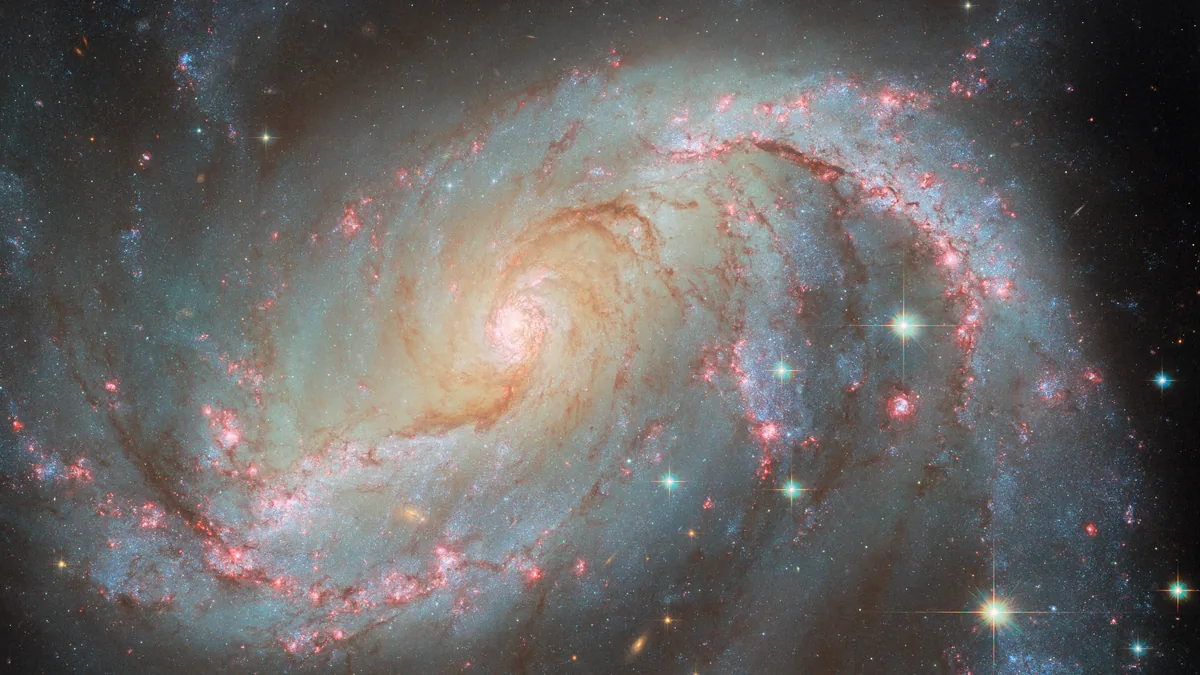
Hydrogen’s H-alpha emission line indicates where new stars form inside galaxies, and Euclid hunts for hydrogen-alpha from star-forming hydrogen gas clouds. Spectroscopy splits light into rainbows, revealing gases and materials present and measuring distances. DR1-Foundation provides spectra for 160 million sources, which scientists will use to hunt for hydrogen-alpha and map the 3D structure of the cosmic web.
Dr. Louis Gabarra of Oxford’s Department of Physics led a study using Euclid’s NISP data to map how and where stars form within galaxies. The Gabarra et al. study appeared on the arXiv preprint server under the title Euclid: Data Release 1 (DR1) – First NISP emission-line maps: Methodology, validation, and applications to galaxy evolution, with DOI 10.48550/arxiv.2611.16504. Euclid’s pipeline measures emission lines, particularly H-alpha, as they shift toward longer wavelengths with cosmic expansion, with greater redshift meaning greater distance. Gabarra said the work almost turns Euclid’s spectrometer into an imager, unlocking the ability to recover spatial information from spectroscopic data.
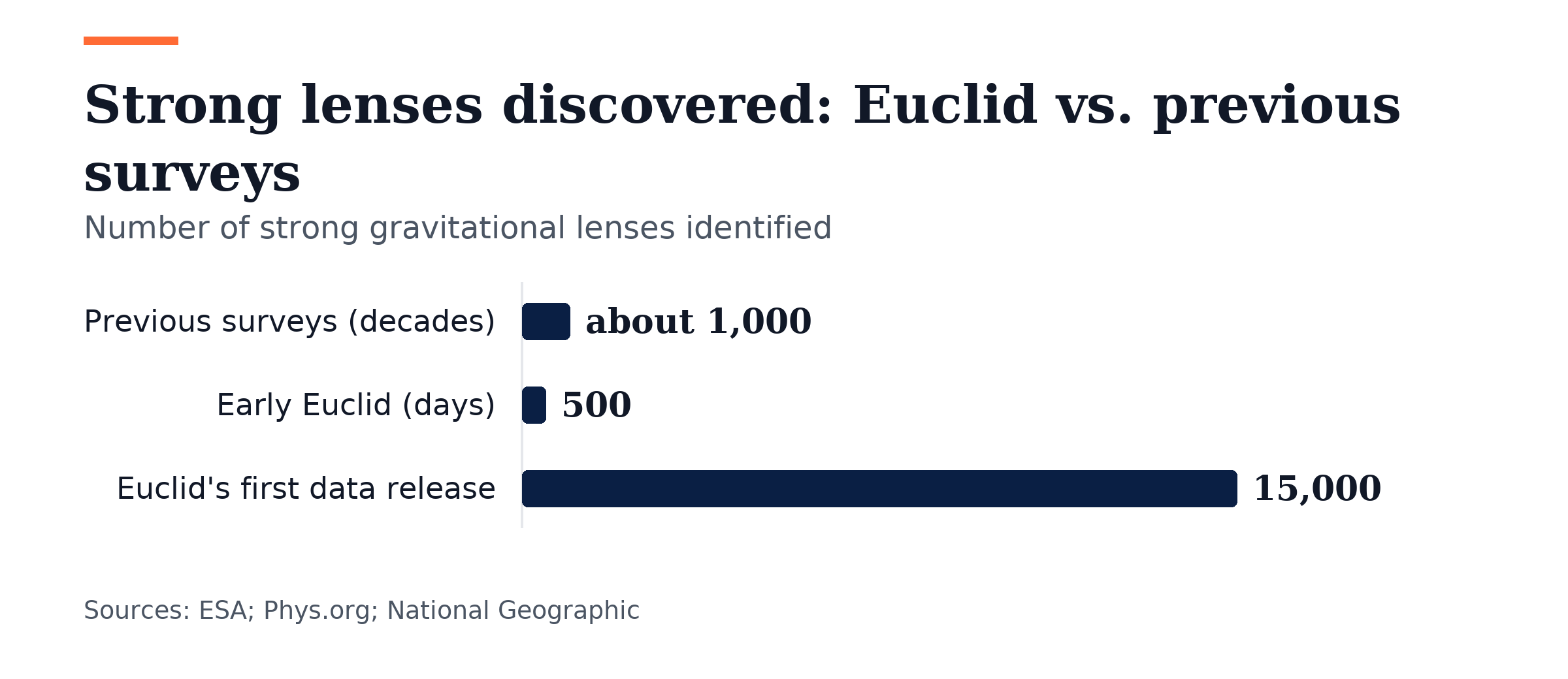
The search revealed 15,000 high-quality strong lenses, making this collection the largest group of strong lenses known. Before Euclid, astronomers had identified about 1,000 strong lenses after decades of modern sky observations. Adam Amara expects Euclid to find hundreds of thousands of strong lenses over the next six years, plus many weak gravitational lensing examples.
The team used trained machine learning models to search for lenses in the data set, with the model trained on early Euclid data released in March 2025 giving it greater performance and accuracy than previous models. Researchers inspected the machine-learning results visually through the citizen science project Space Warps, where thousands of citizen scientists volunteered via Zooniverse. Strong lenses are rare, with only one galaxy in several thousand acting as a lens, and many are too small to see through Earth’s blurry atmosphere.
Strong lensing lets scientists weigh individual galaxies, including their invisible dark matter, and explore how the Universe is expanding. Almost fifty years after the first strong lens was discovered, Euclid can study strong lenses as a population of thousands because all were found by the same telescope in the same way. Rare lens types include compound lenses and the dense centres of spiral galaxies. Compound lenses occur when one foreground galaxy lenses several background galaxies at different distances.
Natalie Lines of the University of Portsmouth and the Euclid Consortium says strong lensing lets scientists weigh individual galaxies including invisible dark matter and explore cosmic expansion. “Over 10 years ago, we forecast that Euclid would revolutionise the field of strong lens discovery. That day is finally here,” Lines said.
Quasars are galaxies whose supermassive black hole cores are dazzlingly bright, representing a brief phase in massive galaxies where material swirls into the central black hole and emits intensely bright light. Euclid discovered ancient quasars dating to when the Universe was just 5 percent of its current age, and DR1-Foundation adds over 60 million more quasar candidates to the tally. Euclid also measures the mass, galaxy count and distance of galaxy clusters, the largest cosmic structures held together by gravity, and reveals collapsing protoclusters, the progenitors of today’s clusters, using direct redshift measures instead of indirect methods.
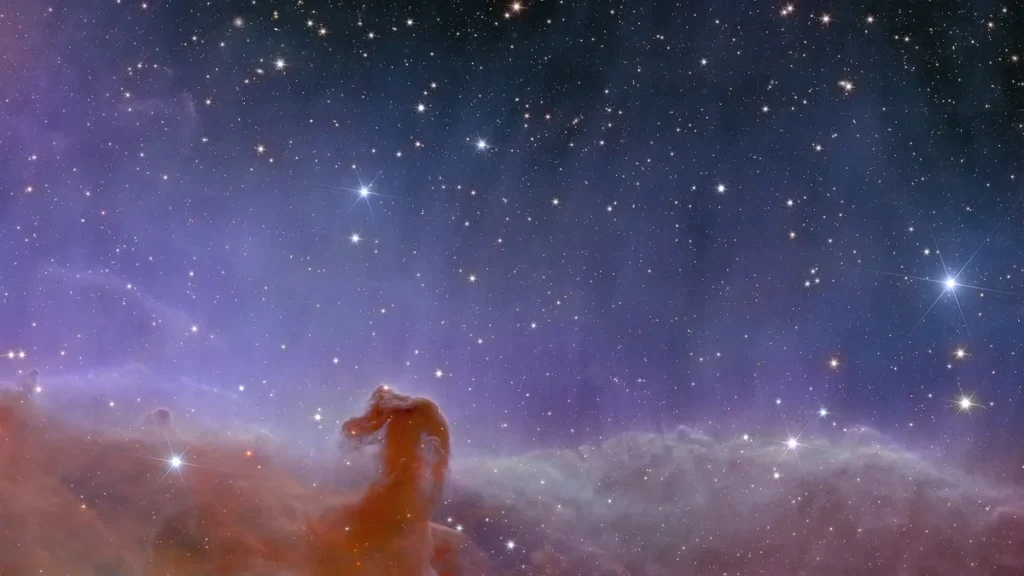
Intracluster light is faint diffuse starlight around the brightest galaxy in a cluster, created by gas stripped during galaxy interactions and mergers, and it acts as a fossil record tracing dark matter tendrils. Euclid images show the Horologium supercluster and Messier 81 group members including Messier 81, NGC 3077, NGC 1291, Holmberg IX and Abell 3128. Euclid’s image of galaxy NGC 6505 shows an Einstein ring, where light forms a circle around the distant object, and strong lenses help understand dark matter because light contortion hints at how much dark matter is present in the foreground galaxy.
Euclid’s four-foot-long telescope mirror captures starlight before a prism-like filter splits it into visible and infrared light. The VIS instrument has 600-megapixel resolution, producing images about five times sharper than images from the ground and 50 times better than many contemporary smartphones. NISP captures infrared light to measure galaxy distances, and when overlaid on visual images it helps build a 3D map of the universe. Euclid sits in a gravitationally stable part of space nearly one million miles from Earth, and the telescope gets more than 100 gigabytes of data each day.
Dark matter and dark energy make up 95 percent of the universe, and scientists cannot directly detect either, so they chart the cosmos by studying galaxy shapes, motion and positions. Dark energy is an unseen force accelerating the expansion of the universe, and recent measurements suggest it may be weakening over time. The cosmos is 13.8 billion years old, and Euclid observes galaxies formed as far back as 10.5 billion years ago.
Euclid traces the last 10 billion years of cosmic history. Galaxies cling to dense knots in the cosmic web, a mesh of filaments extending millions of light-years and made mostly of dark matter. The mission will ultimately cover one-third of the entire sky and will repeatedly zoom in on three specific patches known as the Euclid Deep Fields.
The full Data Release 1 will complete in mid-2027 and will add weak lensing observations and calculations of how galaxies and clusters fit into the cosmic web. Euclid plans to spy billions of galaxies over the next six years. By the end of 2026, Euclid must release one year of observations totaling more than two petabytes, equal to 31 years of top-quality video streaming.
Bruno Altieri, ESA Archive Scientist at ESAC, says the Euclid Data Space platform helps users access, visualize and process Euclid data, with the Euclid Data Space project team credited with storage and sharing of more than a billion objects.
Mike Walmsley, a machine learning researcher and Euclid Consortium scientist at the University of Toronto, compares Euclid’s sky coverage to Hubble’s work over a quarter-century. “Euclid has already taken images of several times more sky than Hubble did in 25 years,” Walmsley said.
ZooBot is an AI program deployed to help classify galaxies, trained on classifications by around 10,000 human volunteers. ZooBot has categorized more than 380,000 galaxies by shape, size and feature, and Mike Walmsley estimates manual review would take about 150 years to inspect every reasonably sharp galaxy in the new Euclid image set.
Aprajita Verma and her group joined the international team mining Euclid data for rare strong gravitational lenses. “Citizen scientists have played a central role in delivering what is the largest set of strong lenses known to date,” Verma said. She says the team knows it has not found everything and that much more Euclid data is still to come, calling the moment pivotal for strong lensing science after nearly 50 years of waiting. Professor Lance Miller of Oxford’s Department of Physics has worked on Euclid since the mission’s selection for implementation in 2011, and he calls the first round of papers just the start and describes an exciting time for astrophysicists.
The Euclid Consortium includes more than 2000 scientists from 300 institutes in 15 European countries, the USA, Canada and Japan, and provides the scientific instruments and scientific data analysis. ESA selected Thales Alenia Space as prime contractor for the satellite and service module, and Airbus Defence and Space for the payload module including the telescope. NASA provided the detectors of the Near-Infrared Spectrometer and Photometer, NISP.


Join the discussion