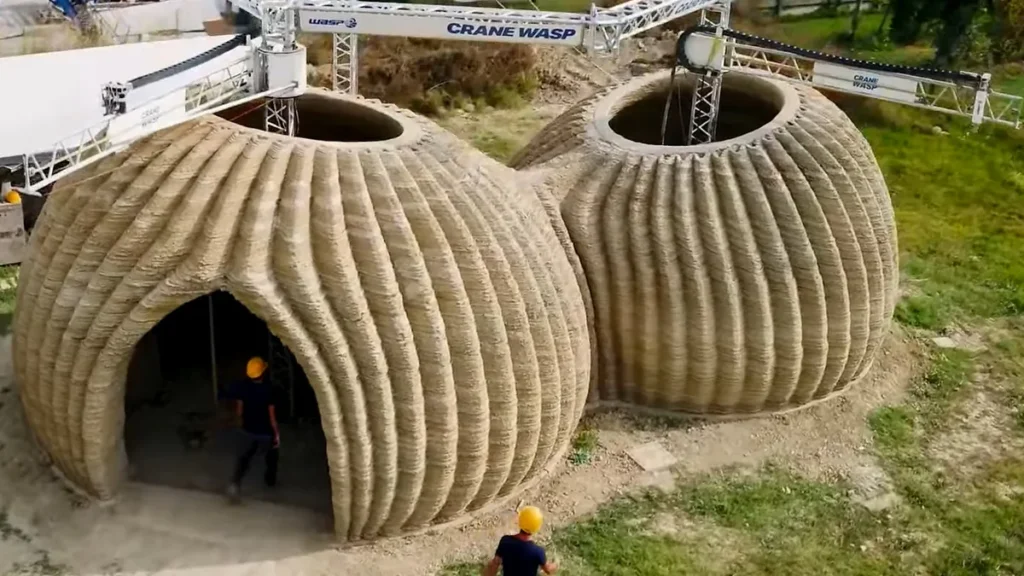
Four research volunteers left NASA’s Mars Dune Alpha habitat on Oct. 31, 2026, after 378 days of isolation, finishing NASA’s second CHAPEA yearlong surface simulation.
Ross Elder, Ellen Ellis, James Spicer, and Matthew Montgomery moved into the roughly 1,700-square-foot, 3D-printed habitat on Oct. 19, 2025, to begin CHAPEA Mission 2, also called Crew Health and Performance Exploration Analog Mission 2. The volunteers had lived without windows, outside sounds, or real-time calls with family and friends for the full duration. NASA’s Johnson Space Center in Houston hosts the habitat.
The crew served as commander and test pilot, medical officer, flight engineer, and science officer, respectively. NASA identifies Ross Elder as commander and test pilot, Ellen Ellis as medical officer, James Spicer as flight engineer and systems specialist, and Matthew Montgomery as science officer. EOTO Tech lists the same four individuals in matching roles.
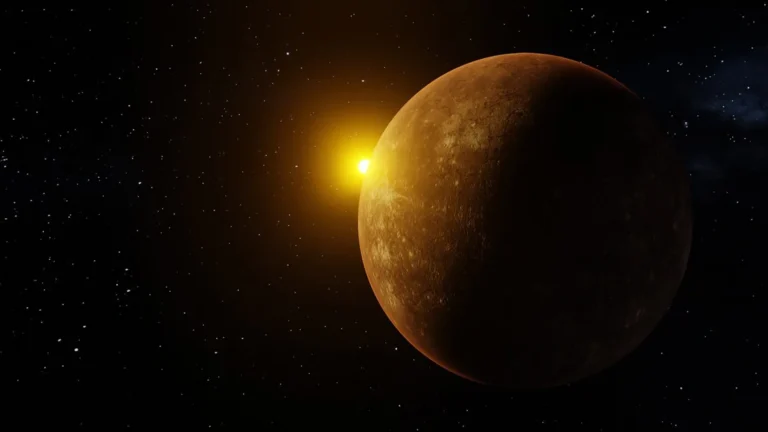
Inside a hangar at the Johnson Space Center sits the 1,700-square-foot, 3D-printed CHAPEA habitat. The crew lived in a space roughly the size of a three-bedroom house. Mars has a radius of 2,106 miles, according to NASA, making it about half the size of Earth, and the planet is 140 million miles away from Earth.
During the simulation, the crew performed simulated Marswalks, robotic operations, habitat maintenance, exercise, and crop cultivation. Peppers and tomatoes were part of the crop growth activities.
Matthew Montgomery helped set up the habitat’s 3D printing capabilities and conducted a seed-germination experiment using a control and simulated Martian soil. Crew members monitored supplies from dish soap to respirator filters and managed food and water while navigating limited resources.
NASA said the crew handled communication delays of up to 22 minutes each way during the mission. CW39 Houston reported that communication delays between Earth and Mars could reach up to 45 minutes each way. Houston Public Media reported that, according to Johnson Space Center Director Vanessa Wyche, the simulation had communication delays between 26 and 44 minutes.
At one point, the crew went a full two weeks without communicating with the outside world. The blackout simulated a potential real-life scenario if the sun were between Earth and Mars. Suzanne Bell, one of the co-investigators on CHAPEA, described the isolation as a sensory deprivation experience, asking people to think of never going outside for 378 days and never seeing anyone else besides the other three crew members.
James Spicer received more than 4,000 emails during the mission, which the crew could only read after leaving the simulation. Friends and family apprised them of life on Earth, and emails were the crew’s only way to communicate with them. Ross Elder joked that the crew’s current events knowledge might have been time-delayed.
The first CHAPEA mission concluded on July 6, 2024, and its four-person crew also spent 378 days in isolation between 2023 and 2024. Researchers will pair the crew’s data with their experiences during two weeks of post-mission evaluations and debriefs.
Grace Douglas, CHAPEA’s principal investigator, said the research will help NASA assess human health and performance risks against resources such as crew time and communication capacity, along with food and water system designs. The Moon Base is humanity’s first lunar outpost, located near the Moon’s South Pole, and Sara Whiting, CHAPEA project scientist, said the data arrives as NASA prepares for astronaut life and work there. Whiting said the timing is urgent for this kind of data.
NASA announced the Moon and Mars Exploration Analog in a July 1, 2026 notice, with the effort beginning no earlier than August 2027. NASA estimates the Moon and Mars Exploration Analog could begin its simulated mission as soon as August 2027, with crew members once again inside Johnson Space Center for a year. Future participants in the Moon and Mars Exploration Analog will simulate months-long flights and surface operations including mock Mars walks, operate a rover at exploration sites past the main habitat, and wear augmented reality goggles to complete astronaut-like tasks through HERA and CHAPEA.
Softonic EN reported that CHAPEA 2 is the second of three planned yearlong simulations. Tech My Money reported that health and performance data from the simulation can help counter human spaceflight risks and support future Artemis and Moon Base missions.
While the CHAPEA crew was inside the habitat, NASA astronaut Jack Hathaway completed a 237-day mission aboard the space station. During the same period, the Artemis II astronauts traveled around the Moon in April and set the record for the farthest humans have traveled from Earth. This occurred during the 378-day CHAPEA isolation period. NASA celebrated 25 years of continuous human presence aboard the International Space Station on Nov. 2, 2025.
Houston Public Media reported that crews went up to the International Space Station and came back to Earth during the 378 days CHAPEA’s team remained in the hangar, providing a comparison of human spaceflight activity during the same period the crew was in isolation. In August, President Donald Trump visited the Johnson Space Center while the crew was still inside, less than a mile away, during the 378 days the crew remained in the hangar.
NASA planned live exit coverage starting at 3 p.m. EDT on Oct. 31 across NASA Johnson’s YouTube and social accounts. The exit ceremony included scheduled remarks from Johnson Center Director Vanessa Wyche and astronaut Jack Hathaway, and NASA scheduled the four volunteers to speak. NASA also arranged a live screen for attending reporters outside the hangar holding the facility, and an in-person subject-matter expert would answer media questions as the crew stepped outside.
Ross Elder said on Oct. 31, 2026, “The goal of putting humans on Mars is achievable, but rather inevitable.” Ellen Ellis said a future Mars crew requires a highly integrated ground team.
She described the mission as a year of living in captivity by choice. Ellen Ellis also said there is a narrowing window of opportunity to maintain U.S. preeminence in space on Oct. 31, 2026.
Suzanne Bell, one of the co-investigators on CHAPEA, said one of the important things is a sensory deprivation experience.

Join the discussion