Key facts
- Glover said the best reason to travel to space is joining the 651 people he identified as able to miss Earth and miss other Earthlings.
- Artemis II launched on April 1, 2026, as the first crewed lunar voyage since Apollo 17 in 1972.
- Glover flew Artemis II with NASA astronauts Reid Wiseman and Christina Koch and Canadian Space Agency astronaut Jeremy Hansen.
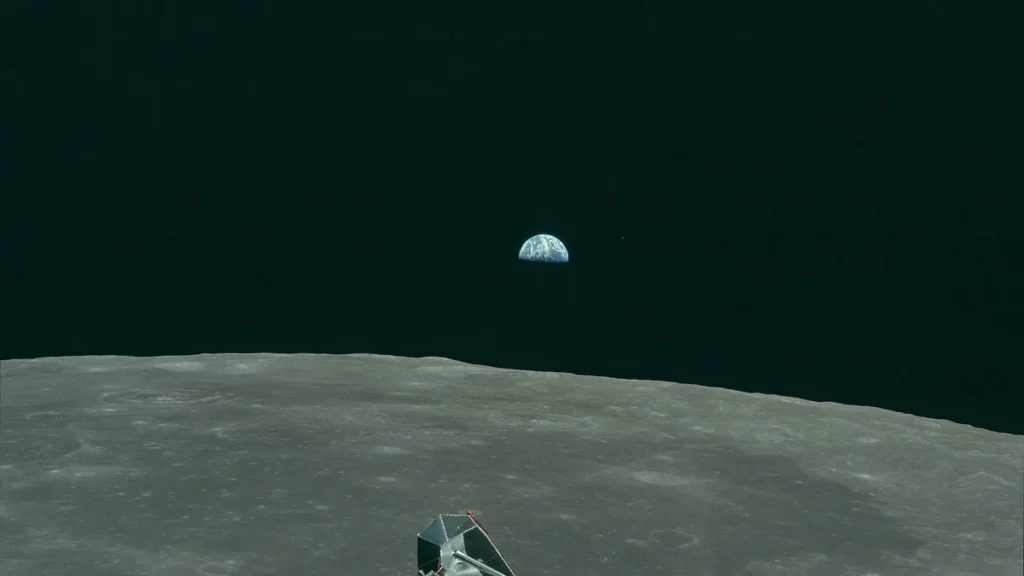
- As Orion passed behind the moon's far side, Earth disappeared below the lunar horizon and radio contact was lost, with the planet reappearing roughly 40 minutes after the spacecraft emerged.
Victor Glover piloted Artemis II around the Moon in April 2026, marking the first time a Black astronaut circled the Moon, and he said missing humanity was his strongest feeling, greater than awe at the view.
Artemis II launched on April 1, 2026, as the first crewed lunar voyage since Apollo 17 in 1972. The crew traveled farther from Earth than any previous humans, setting a new distance record for humanity. Glover flew with NASA astronauts Reid Wiseman and Christina Koch and Canadian Space Agency astronaut Jeremy Hansen. As Orion passed behind the moon’s far side, Earth disappeared below the lunar horizon and radio contact broke, with the planet reappearing roughly 40 minutes after the spacecraft emerged.
Glover spoke on Oct. 18 at the Starmus VIII festival in Tenerife, Canary Islands, during a discussion with former astronaut Chris Hadfield. He said he longed for other people more than he marveled at the sight. Glover said the best reason to travel to space is joining the 651 people he identified as able to miss Earth and miss other Earthlings. He told the festival audience that human spaceflight should not be about playing the daring hero but about experiencing a specific longing for humanity shared by only a small group of people.
The astronaut described a paradox in which greater distance from humanity intensified his desire to connect, calling the moment ultimate disconnection combined with a longing for connection. He said everyone who made the same trip would respond similarly in their own languages about love, joy, hope and inspiration.
The pilot said kindness does not require an extraordinary experience. He urged people to examine nature closely, using examples like a beach walk, ocean waves or a leaf held toward the sun, and said photosynthesis lets a leaf turn sunlight into food while people must choose to feel moved.
The astronaut warned that nonstop technological distraction makes it simple to overlook nearby surroundings, and said familiarity breeds indifference as well as contempt; he calls the alternative the sea level effect, finding astronauts’ wonder and connection on Earth where most people live. He admitted that he sometimes rushes through traffic out of selfishness, though he said he does not have to remain in that mindset. Glover said other humans are the hardest place to find wonder, calling them the greatest miracle in the universe, and noted that people smile at babies but argue once old enough to hold opinions.
The astronaut said he wants to stay involved in this mission for the rest of his life.
The astronaut graduated from Cal Poly in 1999, became a Navy test pilot, and joined NASA’s astronaut corps in 2013. His first spaceflight came in 2020 when he piloted SpaceX’s Crew-1 mission to the International Space Station, a nearly six-month station mission that ran into 2021; during the 168-day stay he became the first Black American astronaut to complete a long-duration mission there.
The astronaut said his first feelings about the Artemis II assignment were negative because he had just returned from space and was doing something else important, but he agreed because his boss asked and dependability matters to him. He described the trip around the Moon as one of the best experiences of his life.
The astronaut said spaceflight, the vacuum, spacecraft and even an untested heat shield do not frighten him, though he fears his children being fatherless, and credits belief in God rather than personal strength for his calm. He distinguished between the danger of spaceflight and the danger of leaving his children without a father, saying the latter is what truly worries him.
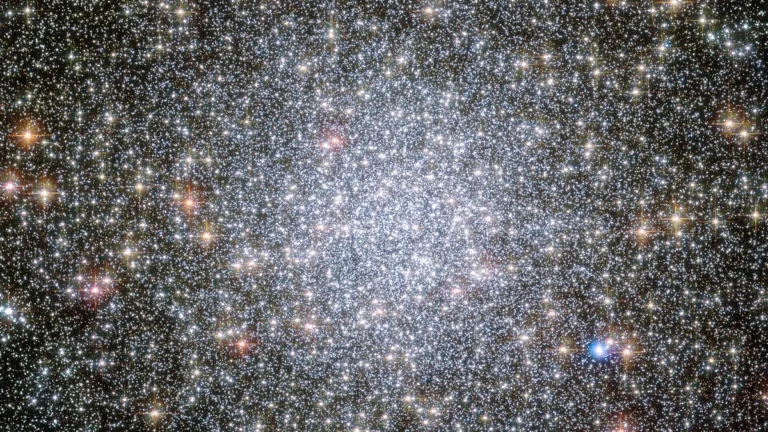
The astronaut said Earth appears about as big as the space between outstretched arms from the space station, but on the Artemis II mission he also saw where the planet sits because they traveled so far away. He said the Milky Way is big and beautiful but contains no stars close to Earth besides the Sun, and that Earth is almost nothing apart from dust and cosmic radiation in space.
The astronaut said seeing Earth from deep space suggested that all people, beliefs, right and wrong connect in the same system, and that humanity needs to figure this out and take care of its spaceship, Earth. He tied this insight to the STARMUS conference’s intersection of science, art and religion, saying they are not separate fields but part of one connected system. Glover observed from space that Earth is an oasis in a universe of almost nothing where humanity exists as one.
The astronaut said technological advances from Mercury, Gemini, Apollo and the space shuttle improved remote medicine, navigation, timekeeping and communication systems and life on Earth. Glover said the space station has flown with humans for 26 years and without people for 28 years, but it did not create the same investment as Artemis and did not captivate people despite being just as dangerous.
The astronaut said people came together for Artemis in a way they have not for COVID or war, and that this unity should remind humanity that people are the same and should work together to protect Earth. Glover advised young people to be resilient, to be lifelong learners, and to be good teammates, saying teamwork is most important because his generation has not done it well and that children should learn from older generations but be better than them.
The space agency said Artemis II commander Reid Wiseman and pilot Victor Glover are leaving active astronaut service but will remain involved in moon exploration as emeritus astronauts—veterans who leave active flight duty but stay involved. NASA announced the change from Cape Canaveral, noting that Glover took a leadership job at California Polytechnic State University. Glover started his California Polytechnic State University role in San Luis Obispo on Sept. 1, coinciding with his retirement from the Navy.
The emeritus astronauts will give their time to train and mentor NASA employees and pass along knowledge for upcoming moon missions. In July, Canadian Space Agency astronaut Jeremy Hansen retired, which leaves Christina Koch as the sole Artemis II crew member remaining on active astronaut rolls. Glover said the change represents opening the aperture rather than closing it down. “this is not a leaving … for me, this is opening the aperture, not closing it down.”
Glover said he plans to keep talking about the connection between faith and science in his own life, which he called outside NASA’s mission but a way to help the agency from the sidelines. Glover said he chose to leave spaceflight behind so he could concentrate on young people and devote more time to his wife and four daughters, three of whom attend Cal Poly while the oldest has graduated.
Wiseman, a retired Navy captain, joined NASA’s astronaut corps in 2009, lived on the International Space Station for more than five months during 2014, and later served as chief astronaut. Donald Trump awarded the Congressional Space Medal of Honor to the Artemis II crew at a Houston ceremony at NASA’s Johnson Space Center.



Join the discussion