Key facts
- The Leonid meteor shower runs from November 6 through November 30, 2026, with peak activity on the night of November 17 into the early morning of November 18.
- Viewers are advised to find a safe dark location away from light pollution like street lights, with an open view of the sky.
- Around midnight near the peak, the Moon will sit below the horizon, meaning reflected light is less likely to spoil the view.
- BBC Weather forecasts often dry skies but large amounts of cloud across many UK areas for Friday and Saturday nights, with a chance of spots of rain or drizzle.
BBC Weather says the Leonid meteor shower runs from Nov. 6 through Nov. 30, 2026, with peak activity on the night of Nov. 17 into the early morning of Nov. 18.
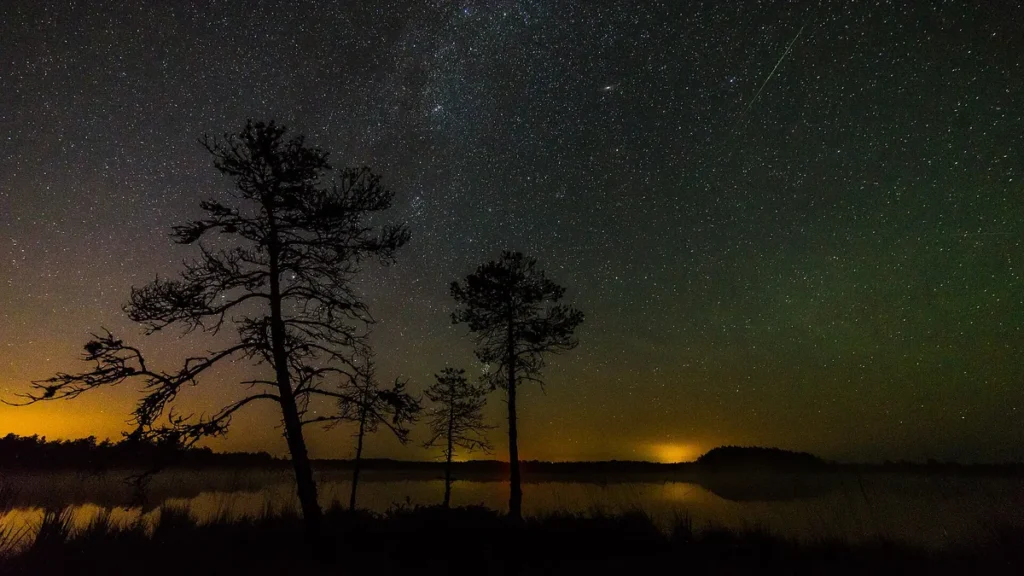
The meteors come from dust particles shed by Comet 55P/Tempel-Tuttle as it orbits the Sun. Earth crosses the debris trail each November, and the particles slam into Earth’s atmosphere at up to 44 miles (71 km) per second. BBC Weather calls them the fastest meteors in the sky.
The nucleus of Comet 55P/Tempel-Tuttle measures 2.24 miles across. The comet is due back in 2031. It sheds particles as its frozen surface nears the Sun, building the stream of debris that Earth meets every year.
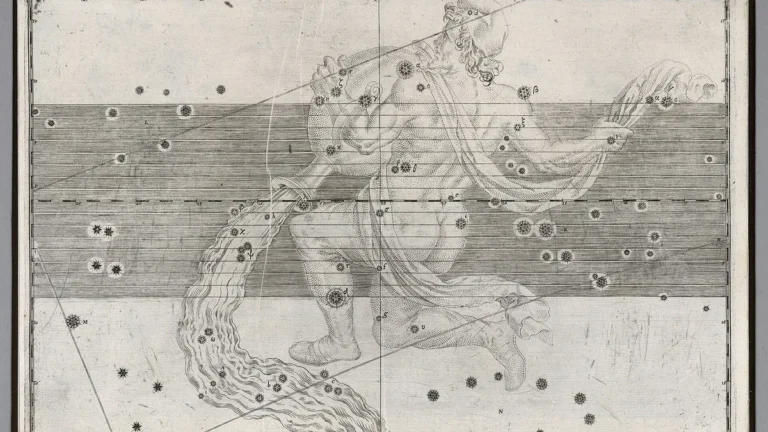
The meteors seem to radiate from near the head of Leo, making that the best area of sky to watch, though they can appear anywhere overhead. Astronomers call this apparent origin point the radiant. The constellation itself is hundreds of light years away and has no physical connection to the meteors.
The best viewing comes around the peak night of Nov. 17 into the early morning of Nov. 18, 2026. Around midnight near the peak, the Moon will sit below the horizon, meaning reflected light is less likely to spoil the view.
Eliot Herman, an astrophotographer in Tucson, Arizona, puts it this way: “The Leonids are always early morning before dawn”. He is describing when the Leonids are best seen.
At its peak, the shower could reach 10 to 15 meteors per hour under ideal conditions, though observers typically see fewer. No great Leonid meteor storm is predicted for 2026. The Epoch Times notes scientists have been caught off guard before, and the last major outburst was in 2001.
The shower is legendary for producing storms roughly every 33 years. In 1966, the Leonids produced thousands of meteors per minute for 15 minutes over the United States. The same historical record describes an 1833 storm with more than 100,000 meteors per hour.
Traditionally the Leonids stormed around the years when Tempel-Tuttle returned, though that is not always the case. The display has let down viewers more than once.
BBC Weather predicts dry skies but heavy cloud across many UK areas on Friday and Saturday nights, with possible spots of rain or drizzle. The best chances for clear skies on Friday and Saturday nights are in southern and western England and Wales; northern England, Northern Ireland and Scotland are expected to be cloudier. Overnight temperatures will also drop into single figures with a possible touch of frost.
More of the UK should be clear by Sunday night, though fog may form where the sky stays clear for long. Fog presents an additional viewing obstacle even when clouds clear.
Temperatures will fall to single figures overnight with a chance of frost in a few locations, so anyone watching the night sky for long should wrap up warmly. BBC Weather suggests dressing warmly for extended sky-watching.
Viewing conditions look particularly good around the mid-November peak compared with the opening weekend. The improved conditions are tied to the Moon being below the horizon around midnight. BBC Weather offers this encouragement to viewers who miss the start of the shower.
UK readers can check hour-by-hour cloud, fog and temperature details for their location on the BBC Weather website or mobile app. It serves as a practical tool for people planning to watch the shower this weekend, alongside the weekend cloud and frost forecast.
A 20-to-30-minute period gives eyes time to adapt to the darkness for the best chance of spotting meteors. BBC Weather and Around Prague give the 20-to-30-minute window, while ScienceDaily says roughly 30 minutes. This dark adaptation helps observers see fainter streaks.
No binoculars or telescope are required since viewers can see the meteors without optical aid. Experts recommend a wide open space with a full view of the night sky. NASA-derived guides also stress that none of the November skywatching highlights requires optical equipment.
Viewers should find a safe dark location away from light pollution such as streetlights, with an open view of the sky. An open area provides the best view. City dwellers should search for minimal light pollution. Weather remains a wildcard because clouds can block the sky.

Moonlight can erase shooting stars and lower how many are visible, making the moon the main hazard for meteor hunters. The first quarter moon sets as the Leonids’ radiant rises, and any time after midnight is worth trying.
Leo is highest around 4 a.m. to 6 a.m. local time. Observers should watch the entire sky rather than only the radiant point. Meteors can display long trails when moving away from Leo; they may appear as short blips near the constellation or vanish because of foreshortening, and can appear anywhere.
The recommendation includes a lawn chair and blanket, or a wide-angle lens for photos. For photographers stuck with moonlight, Eliot Herman advises working the moon into their compositions because several meteors will likely still appear in the pictures.
Eliot Herman of Tucson, Arizona, captured Leonid stills from his backyard using automated, ultra-wide-angle lenses. Herman called the Leonids the greenest meteors he sees. The Southern Taurids run from September 20 through November 20, 2026. The Northern Taurids run from October 20 through December 10, 2026.
The Southern Taurids peaked between Nov. 4 and Nov. 5, though activity continues through Nov. 20. It is known for bright fireballs rather than large numbers, with observers likely seeing only a handful per hour. They appear alongside the Leonids in November’s skywatching outlook.
The Northern Taurids should peak the night of Nov. 11 into Nov. 12, with the moon about 5 percent illuminated versus about 22 percent during the Southern Taurids peak. ScienceDaily places the Northern Taurids’ highest activity near November 12, with about five meteors per hour possible under ideal viewing conditions.
Less moonlight means darker skies, making it easier to see faint meteors that brighter conditions would wash out. ScienceDaily lists the Southern Taurid meteor shower as peaking near November 5 and notes the chance of exceptionally bright fireballs.
Mars and Jupiter will sit about 1.2 degrees apart low in the southeastern sky before sunrise on Nov. 15 and Nov. 16. Jupiter will be brighter, while Mars will appear reddish. The pairing is a separate November skywatching highlight mentioned alongside the meteor showers.
The full supermoon will peak on November 24, 2026, beginning a run of three straight supermoons. Viewers should look east at sunset on November 24 when the Moon rises, NASA advises.
When a full Moon lines up with a relatively close point in its elliptical orbit around Earth, the Moon seems somewhat larger and brighter, though the difference is often subtle. The November 24 event begins a run of three straight supermoons, with more in December and January.
The full Moon will rise around sunset on November 24 and may appear larger because of the Moon illusion, which makes the Moon seem enormous near the horizon. This occurs after the Leonid peak.
Voyager 1 has reached the point where light takes 24 hours to travel from Earth, marking the farthest a human-made object has gone from our planet. ScienceDaily reports the milestone, citing NASA’s Jet Propulsion Laboratory.
The Shine Bright for Voyager’s Light-Day activation marks the Voyager 1 milestone on November 17, NASA says. People are invited to celebrate the spacecraft’s achievement as part of November’s sky events.
A light-day equals the distance light travels in 24 hours. At that distance, a radio message from Earth takes a full day to reach Voyager 1. An immediate reply would take another 24 hours, so a round trip lasts about 48 hours. Voyager 1 is heading generally toward Ophiuchus.
Shooting lights come from fragments from comets or asteroids hitting the atmosphere. Debris moves in vast streams along the orbits of parent objects as Earth crosses those streams each year. Friction drives speeds up to 45 miles per second.


Join the discussion