Key facts
- NGC 7293, the Helix Nebula, shines at magnitude 7.3 but spans 13 arcminutes across, so its light is spread over a wide area and its surface brightness is low.
- The Helix Nebula can be found with large binoculars or any small telescope.
- At 7 A.M. EST on November 7, 2026, the Moon passes 1.1 degrees due south of Venus.
- Near Venus shines Spica, Virgo's alpha star at magnitude 1.0, lying 1.3 degrees northeast of the planet with both roughly side by side above the horizon in morning twilight.
Venus is the morning star of the week, visible above the eastern horizon before sunrise on November 7, 2026. As the column puts it, “Venus is our (morning) star of the week, capturing attention above the eastern horizon before sunrise.” On the morning of November 7, 2026, at 7 A.M. EST, Venus and the Moon sit 1.1 degrees apart, with the Moon due south of the planet.
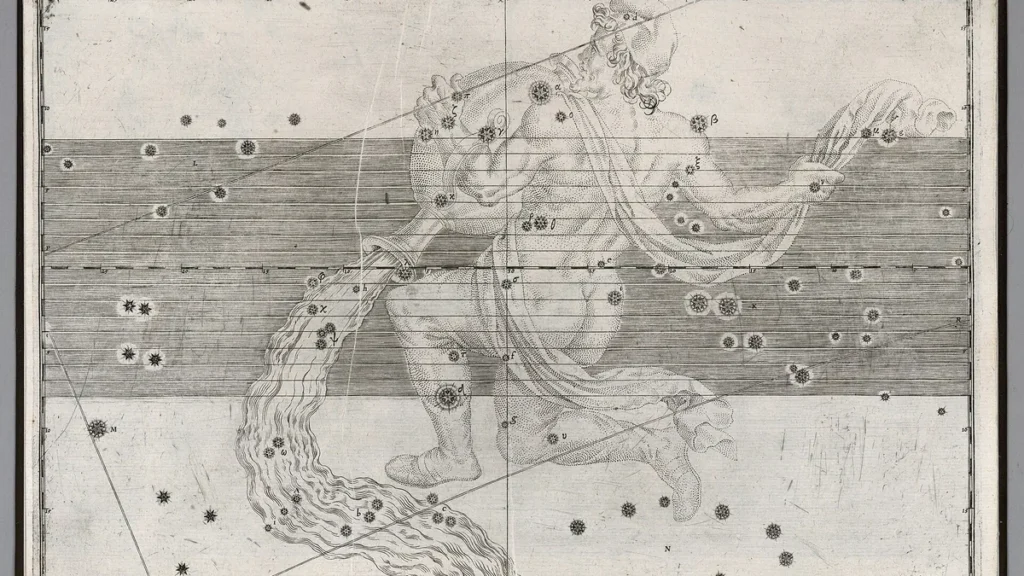
The Helix Nebula, cataloged as NGC 7293, shines at magnitude 7.3 on the brightness scale astronomers use, where lower numbers mean brighter objects, but spreads its light across 13 arcminutes (an angular measurement), giving it low surface brightness that makes it a deep-sky test despite the bright total magnitude. Because it sits close to the celestial equator, the Helix is at least partly visible from both hemispheres at certain times of year, including Northern Hemisphere skies during this week. It sits in southeastern Aquarius, roughly 7.7 degrees southwest of magnitude 3.3 Skat, also called Delta Aquarii, with the 5th-magnitude star 66 Aquarii about halfway between Skat and the nebula as a stepping stone; observers find Skat via Fomalhaut, then scan lower right toward 66 Aquarii. “Given its visual magnitude of 7.3, NGC 7293 is visible with the help of a small binocular.”
Large binoculars or any small telescope can show the Helix, and more magnification reveals more, with larger amateur scopes showing structure in the ring of glowing gas around the central white dwarf. Through higher magnification the northern and southern edges of the gas ring appear brighter than the eastern and western sides. The glowing gas was once part of the central star itself, which puffed up and blew away its outer layers as it aged, leaving the white dwarf behind.
The week opens under dark, moonless conditions. On Friday, November 6, 2026, sunrise comes at 6:35 A.M. and sunset at 4:52 P.M., with moonrise at 3:56 A.M., moonset at 3:16 P.M., and the Moon a 5 percent waning crescent. By Saturday, November 7, 2026, sunrise is 6:36 A.M., sunset 4:51 P.M., moonrise 5:01 A.M., moonset 3:40 P.M., and the Moon has faded to a 1 percent waning crescent. Those slim crescents set early, leaving dark evenings for the Helix Nebula.
Look an hour before sunrise and the pair stands about 6 degrees high in the east, climbing as the sky brightens. Venus at magnitude minus 4.5 blazes high above the slim crescent, whose western limb shows just a bare light as daylight fades across the near side of the Moon. The glow called earthshine lights the Moon’s shadowed face, created by sunlight bouncing off Earth, so the unlit portion glows faintly alongside the bright planet.
Spica, Virgo’s alpha star at magnitude 1.0, lies 1.3 degrees northeast of Venus, and the pair stands side by side above the horizon as morning twilight brightens around November 7 through 9. Sky-Tonight’s upcoming-events list for November 6 through 12, 2026, includes the Moon near Venus and Spica on November 6-7 and Venus near Spica on November 8-9; the guide notes that visibility depends on location, local time, weather, and light pollution. Sky-Tonight labels the event “November 6–7: Moon near Venus and Spica”.
By November 10, 2026, the planet stands to Spica’s upper right and due west of the star, ending the close pairing as prograde motion pulls the two apart. Come November 11, 2026, Venus shines at magnitude minus 4.7 in the eastern sky before dawn. An hour before sunrise the planet stands just to Spica’s upper right, and both stand about 10 degrees high as they rise.
On November 11, 2026, Venus reaches a stationary point among Virgo’s stars at 10 A.M. EST, ending retrograde westward motion; after that the planet resumes eastward prograde motion and swings north of Spica. A telescope view on November 11, 2026, shows Venus as a crescent only 10 percent lit, its disk stretching 53 arcseconds.
Mercury glows at magnitude 1.2 on November 11, 2026, barely 1.5 degrees above the horizon and roughly 13 degrees to the east or lower left of Venus. An unobstructed, flat horizon is required, and the planet rises with brightening twilight, having emerged after inferior conjunction on November 4 as a difficult low-altitude target for binoculars.
Sunday, November 8, 2026, brings sunrise at 6:37 A.M., sunset at 4:50 P.M., moonrise at 6:07 A.M., moonset at 4:08 P.M., and a New Moon phase. The New Moon arrives at 2:02 A.M. EST on November 9, 2026, creating dark skies suited to comet hunting. Monday, November 9, 2026, brings sunrise at 6:38 A.M., sunset at 4:49 P.M., moonrise at 7:12 A.M., moonset at 4:40 P.M., and a 1 percent waxing crescent Moon, so the evening stays dark as well.
Comet 161P/Hartley-IRAS shines at about 10th magnitude on November 9, 2026, nearly 50 degrees above the western horizon two hours after the Sun sets, in far northern Aquila close to the Sagitta border. Altair serves as a guide, and the comet sits 7.7 degrees north-northeast of Altair. On November 9, 2026, Alpha Sagittae—closer but fainter at 4th magnitude—sits 2.3 degrees north of the comet. A small scope can catch the comet, and larger apertures give better views; at high magnification the southern side of the comet should look sharper as the object plows into the solar wind.
The Coathanger asterism, Collinder 399 in Vulpecula, lies roughly 5 degrees northwest of the comet or roughly 4 degrees northwest of Alpha Sagittae. It looks like a line of stars cut by a small curve reaching south, and open cluster NGC 6802 sits at its eastern edge. Viewed in binoculars or any telescope at low magnification, the asterism is an easy target.
Jupiter and its Galilean moons come up shortly before midnight on November 8, 2026, along with the stars of western Leo, and observers farther east get the better view. The pair rises in the east with Jupiter just under 5 degrees to the northwest of Regulus, while fainter Mars stays roughly 3 degrees above the planet. The transit show begins when Io’s shadow crosses onto the eastern limb at 1:29 A.M. EST on November 8, 2026. When the shadow show starts, Callisto sits closest to Jupiter on the east, Io lies just east of Callisto, Ganymede is farthest east, and Europa hides behind the planet in occultation; identifying the disks correctly matters because several Galilean moons cluster near Jupiter.
The moons move quickly that morning: Europa comes back into view from behind Jupiter’s eastern limb around 1:54 A.M. EST, Callisto starts its transit at 2:07 A.M. EST, Io passes north of Europa around 2:23 A.M. EST, and Io moves into its own transit about 2:42 A.M. EST. Within half an hour Io passes Callisto and moves to its west, and Io’s shadow departs Jupiter’s western limb at 3:45 A.M. EST on November 8, 2026. The moons and the shadow then race across Jupiter’s disk. About an hour and a quarter after that, Io egresses, while Callisto’s transit ends about 5:51 A.M. CST as Midwest twilight brightens.
Saturn’s moon Iapetus reaches greatest eastern elongation on November 10, 2026, standing 9.4 arcminutes east of Saturn. At eastern elongation the icy moon turns its darker hemisphere toward Earth, dimming Iapetus to nearly magnitude 12. Around 9 P.M. local time on November 10, 2026, Saturn reaches its highest point, some 50 degrees above the southern horizon, just below Pisces and far to the upper left of Fomalhaut. This is the recommended time to hunt Iapetus and to view Saturn’s disk, rings, and brighter moons.
Saturn’s disk spans 19 arcseconds while its rings stretch about 43 arcseconds and show the southern side, and Titan, at mid-8th magnitude, sits just over 2 arcminutes from the planet to the west. Tethys lies west of Saturn at 10th magnitude; Dione and Rhea are to the east, and a suitable scope can reveal all three closer to the planet. Tuesday, November 10, 2026, brings sunrise at 6:39 A.M., sunset at 4:48 P.M., moonrise at 8:15 A.M., moonset at 5:19 P.M., and a 4 percent waxing crescent Moon, so dark evenings continue.
The waxing crescents thicken through the rest of the week: an 8 percent Moon on November 11, 2026, a 14 percent Moon on November 12, 2026, and a 21 percent Moon on November 13, 2026. At midnight EST on November 10, 2026, the Moon, a waxing crescent, passes 0.3 degree south of Antares, though the pair is not visible at that time. The Moon sets around sunset and Antares has not yet emerged from twilight, so the close pass is not practically observable together.
M34 is an open cluster of about 100 stars at mid-5th magnitude in western Perseus, near the Andromeda border. The cluster sits 5.2 degrees west-northwest of Algol, magnitude 2 and also called Beta Persei, and spans roughly half a degree, about the Full Moon’s size. Astronomers believe the cluster spans about 14 light-years and sits 1,400 light-years away. Low magnification works best, in binoculars or a small scope of about 4 inches, revealing several dozen stars brighter than 12th magnitude.
The Moon reaches apogee, the farthest point from Earth in its orbit, at 12:50 P.M. EST on November 13, 2026, at a distance of 252,040 miles (405,619 kilometers). On November 13, 2026, magnitude 2 Mirach, also called Beta Andromedae, is about 60 degrees up in the east by 7 P.M. local time. The cool reddish M-type giant lies about 200 light-years away and shines nearly 2,000 times brighter than the Sun.
The Ghost of Mirach is NGC 404, a faint smudge roughly 4 arcminutes across and just 6.8 arcminutes northwest of Mirach; it glows at 10th magnitude and requires a big scope. NGC 404 is a far more distant elliptical galaxy at 8 million to 10 million light-years, beyond the Local Group’s gravitational bounds, and it looks like a ghostly image of bright Mirach.
Senior editor Alison Klesman’s weekly observing column for November 6 through 13, 2026, in Astronomy Magazine, sends Northern Hemisphere readers to Venus above the eastern horizon before sunrise and to the Helix Nebula under moonless evening skies. The column gives daily timing and viewing context for bright planets and diffuse nebulae for Northern Hemisphere amateur astronomers across the full week.
The column comes from senior editor Alison Klesman of Astronomy magazine. She holds a Ph.D. in astronomy and has studied topics from minor planets to supermassive black holes.



Join the discussion